UK Prime Minister Keir Starmer is expected to unveil a timetable for his departure from office signalling the beginning of a leadership transition that could propel Andy Burnham into Downing Street within months and mark yet another dramatic chapter in Britain’s increasingly turbulent political landscape.
The anticipated announcement follows days of intense speculation about Starmer’s future after the Greater Manchester mayor secured a commanding victory in the Makerfield by-election, a result that transformed long-running leadership whispers into a full-scale debate about who should lead the governing Labour Party into the next phase of its administration.
According to senior government figures, Starmer is expected to outline his intentions outside Number 10 Downing Street, potentially setting in motion a process that would see Britain appoint its seventh Prime Minister in just over a decade.
Until recently, Downing Street had maintained that Starmer intended to honour his pledge to resist any leadership challenge. Following Burnham’s return to Westminster, officials publicly insisted the Prime Minister remained prepared to fight for his position despite growing unrest within Labour ranks.
However, pressure has apparently increased behind the scenes. According to reports, Transport Secretary Heidi Alexander and Foreign Secretary Yvette Cooper have asked Keir Starmer to establish an exit strategy. Home Secretary Shabana Mahmood and Energy Secretary Ed Miliband have also done so following Labour’s disastrous election results last month.
While several options remain under consideration, the most likely scenario would see Starmer remain in office until the autumn, allowing Labour to manage a controlled transition ahead of its annual party conference at the end of September. Such a timetable would also provide Burnham with an opportunity to prepare for a return to national leadership responsibilities after nearly a decade outside Westminster politics.
The emerging plan reflects growing recognition within Labour that Burnham has become the overwhelming favourite to succeed Starmer should the Prime Minister step aside.
Despite the significance of recent events, reports suggest Starmer and Burnham have not discussed any transition plans since the Makerfield result, underlining the delicate political dynamics currently unfolding within the party.
The prospect of a leadership handover has also attracted international attention. In an unexpected intervention, United States President Donald Trump appeared to reference Starmer’s impending departure in a post on his Truth Social platform.
“Keir Starmer will resign as Prime Minister of The United Kingdom. He failed badly on two very important subjects- IMMIGRATION AND ENERGY (OPEN NORTH SEA OIL!). I wish him well!”
Donald Trump
This comments added another layer of intrigue to an already volatile political situation and highlighted the global interest surrounding Britain’s leadership future.
Questions Linger Over Labour Leadership Contest
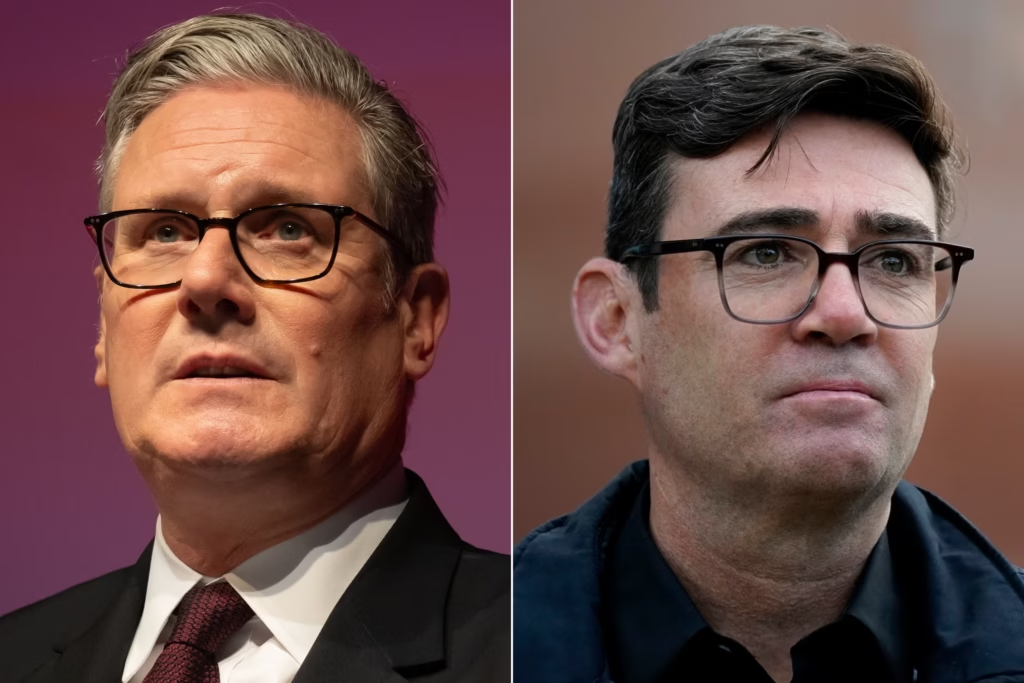
Although Burnham is widely regarded as the frontrunner to replace Starmer, uncertainty remains over whether Labour will ultimately hold a contested leadership election or move toward a consensus transition.
One of the key figures shaping that debate is former Health Secretary Wes Streeting, who has repeatedly indicated that he would be prepared to enter a leadership contest if one is held.
Streeting, who resigned from the cabinet amid efforts to increase pressure on Starmer, has reportedly claimed the support of 81 Labour Members of Parliament enough to secure a place on a leadership ballot should the process move forward.
His allies insist that position remains unchanged. However, many Labour lawmakers increasingly believe a contest may never materialise.
Nevertheless, there are indications that some party members would welcome a leadership race.
Supporters of a contest argue that Burnham’s policy platform should be tested publicly and that party members deserve an opportunity to debate competing visions for Labour’s future. There is also speculation that one or more female cabinet ministers could enter the race to ensure the contest does not become an exclusively male affair.
The days ahead could be crucial for Starmer. According to reports, at least seven cabinet colleagues have privately asked him since May to think about his future for the benefit of the party and the nation, despite the fact that he has so far escaped public resignations from ministers and has not encountered any new public calls to leave since the Makerfield outcome.
Business Secretary Peter Kyle, one of the Prime Minister’s loyal supporters, has also acknowledged the scale of the challenge.
“I don’t want to come on here and be delusional that there is no process, there are no forces at work which are challenging the prime minister as leader. That is clearly the case.”
Peter Kyle
Kyle added that Starmer remained focused and “very mindful of the interests of the country,” despite the political uncertainty.
Moreover, Kyle warned against repeating the mistakes that contributed to political instability under previous Conservative administrations.
“We are a tight group of people, and we are now facing a period of political uncertainty, and we need to find a way to get through this that puts the country first. This is what we are trying to do.”
Peter Kyle
He further urged the party to “learn the lessons of the Tories and make sure that any change that may or may not happen is done in a functional way, and in a way that keeps the government focused on the needs of the people.”
As Britain awaits Starmer’s expected announcement, Labour finds itself at a crossroads. The coming weeks could determine not only the future of the Prime Minister but also the direction of a government elected with enormous expectations and now confronting the realities of power, public scrutiny and internal dissent.
For Burnham however, the path to Downing Street appears closer than ever.