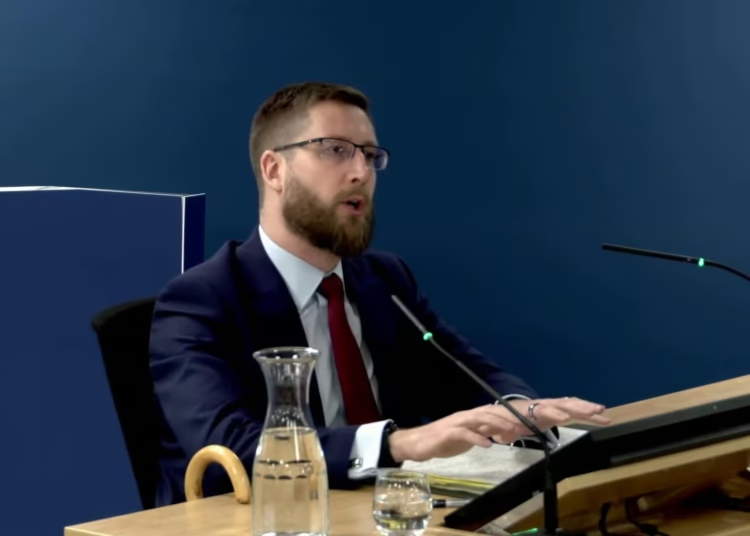
The political uncertainty engulfing Britain’s governing Labour Party is beginning to carry significant consequences for government and the wider economy, according to former Cabinet Secretary Simon Case, who has warned that prolonged leadership speculation risks undermining decision-making, increasing borrowing costs and distracting ministers from pressing national challenges.
Case, who served as the United Kingdom’s most senior civil servant between 2020 and 2024 under four different Prime Ministers, delivered the warning as pressure continues to mount on Prime Minister Sir Keir Starmer following Andy Burnham’s victory in the closely watched Makerfield by-election.
The result has intensified speculation about the future of Labour’s leadership and fuelled growing calls within the party for Starmer to outline a timetable for his departure rather than face a potentially divisive leadership contest.
What began as a local parliamentary contest in northern England has rapidly evolved into a national political drama, with Burnham’s return to Westminster widely viewed as the strongest indication yet that a serious challenge to Starmer’s leadership may be imminent.
The Prime Minister, Keir Starmer has so far rejected calls to step aside and has repeatedly insisted that he intends to remain in office. Downing Street has also reiterated that position, stating that Starmer was “getting on with the job” and remained “determined to fight for his job.”
Behind the scenes, however, reports suggest pressure is growing from within his own government.
Transport Secretary Heidi Alexander and Foreign Secretary Yvette Cooper are understood to be among senior cabinet figures urging the Prime Minister to provide clarity about his future plans and consider a managed transition that could avoid a lengthy internal contest.
Meanwhile, allies of Burnham have publicly encouraged Starmer to use the weekend to reflect on the concerns being raised by ministers, Members of Parliament and even his family.
The Greater Manchester politician’s supporters, along with those of another potential contender, Wes Streeting, have deliberately avoided media appearances following the by-election result. Political observers interpret the move as an effort to give Starmer space to reconsider his position without appearing to intensify pressure publicly.
The unfolding situation has drawn attention from figures well beyond Westminster’s political circles, including Case, whose tenure as Cabinet Secretary coincided with one of the most turbulent periods in modern British politics.
During his four years in office, he worked alongside Boris Johnson, Liz Truss, Rishi Sunak and Keir Starmer, witnessing firsthand the challenges that frequent leadership changes can create for government administration.
Simon Case warned that uncertainty surrounding the Prime Minister’s future represented more than a political problem.
He argued that prolonged speculation over leadership can have tangible economic consequences and weaken the government’s ability to address critical policy issues.
“The amount of money we are paying for the enormous level of debt that the country has are going up with every moment of uncertainty.”
Simon Case
Britain is already grappling with significant fiscal pressures, and economists have repeatedly warned that rising borrowing costs could place additional strain on public finances at a time when the government faces competing demands on spending.
For Case, however, the economic impact represents only part of the problem.
He also warned that political energy and attention are increasingly being diverted away from issues affecting ordinary citizens.
“While politicians are having conversations amongst themselves about who should be leader,” he stated, valuable time is being lost in addressing “issues of real significance to people up and down the country in the health service and education.”
Burnham’s Rise Raises Questions About Labour’s Future Direction
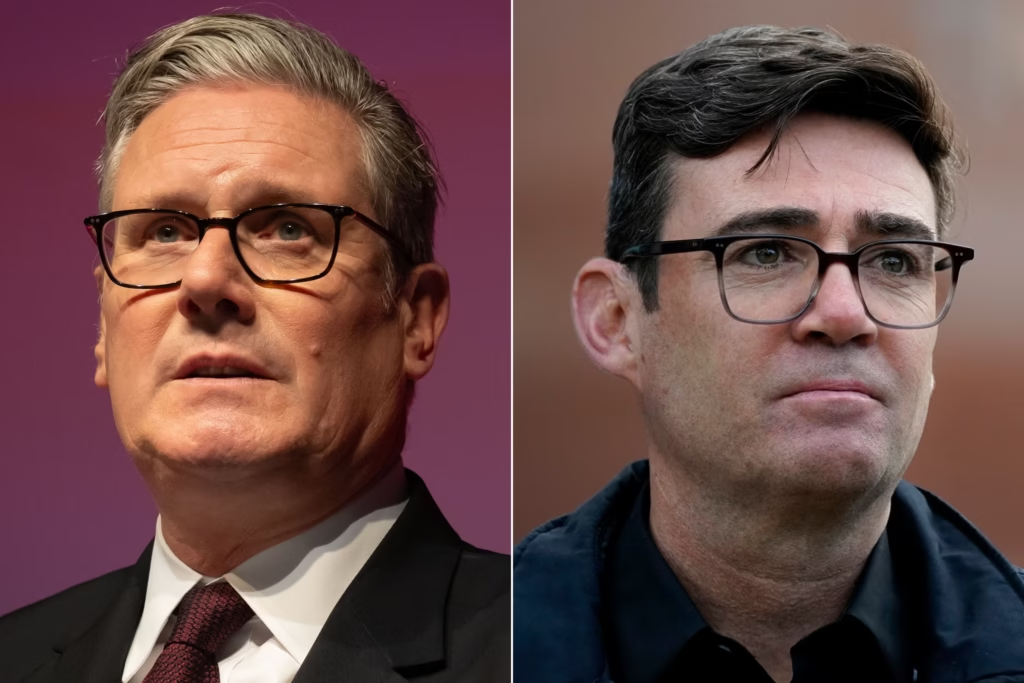
The latest developments have reinforced perceptions that Andy Burnham is emerging as the most significant challenger to Starmer’s leadership since Labour returned to power in 2024.
Although Burnham has not formally launched a leadership campaign, his Makerfield victory has dramatically altered the political landscape within the governing party.
For many Labour MPs, the by-election result has become a referendum on the party’s future direction and a signal that members may be open to new leadership ahead of the next general election, which is expected in 2029.
Starmer’s allies continue to argue that replacing a sitting Prime Minister would be both risky and unnecessary. They point to his success in leading Labour from its devastating 2019 defeat to a landslide election victory just five years later.
Yet critics within the party contend that Labour’s declining popularity and mounting internal tensions require fresh leadership capable of reconnecting with voters.
Drawing on his experience at the centre of government, Simon Case noted that leadership uncertainty often results in key decisions being postponed as ministers and officials wait to see who will ultimately hold power.
“Current decisions aren’t being taken that are desperately needed on how much money we should be spending on defence.”
Simon Case
The former Cabinet Secretary suggested that periods of political transition frequently slow the machinery of government, making it harder to implement reforms and respond effectively to emerging challenges.
READ ALSO: Undav Brace Sinks Ivory Coast at the Death