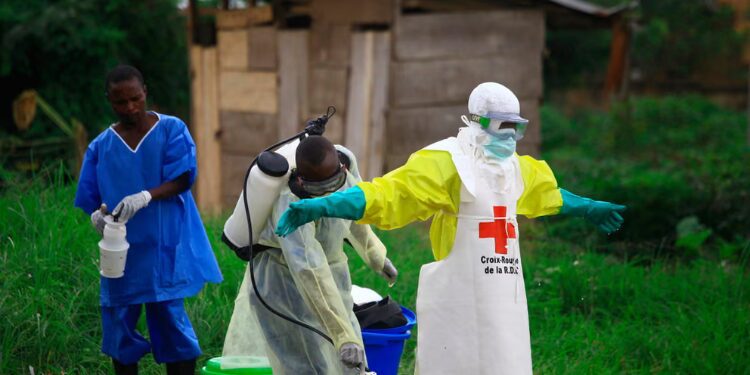
Zambia has cleared two suspected Ebola cases following laboratory testing, but remains on high alert as neighbouring Democratic Republic of Congo (DRC) battles a rapidly expanding outbreak of the rare Bundibugyo strain of the virus.
The Zambian government announced that both suspected cases tested negative for Ebola, but officials warned that the danger of the disease entering the country remains high.
This development comes amid increased regional worry as confirmed and suspected Ebola illnesses continue to climb in the DRC, with cases reportedly reported in nearby Uganda.
According to a statement made by Zambia’s Ministry of Health, the Zambian government has increased surveillance and screening measures at border entry points and within communities to detect probable infections immediately.
“Zambia has developed screening tools and protocols, which are already being used to screen for Ebola at entry points into Zambia and on people within the country who have Ebola-like symptoms.”
Zambia’s Ministry of Health
The outbreak in DRC has become one of the most closely watched public health emergencies in Africa.The Congolese government reported that suspected cases linked to the Bundibugyo strain had risen to 1,028, highlighting the scale of the challenge facing health workers attempting to contain the disease.
Moreover, World Health Organization (WHO) warned that the outbreak presents unique difficulties because the virus circulated undetected for an extended period in densely populated communities before it was officially identified. That delay has complicated efforts to trace contacts and isolate infected individuals.
The Bundibugyo strain, first identified nearly two decades ago in Uganda’s Bundibugyo district, currently has no approved vaccine.
While candidate vaccines and treatments are being evaluated, health professionals indicate that early detection, rapid diagnosis and community engagement remain the most effective tools for containing the outbreak.
WHO Urges Vigilance as Ebola Outbreak Spreads Across Central and East Africa.
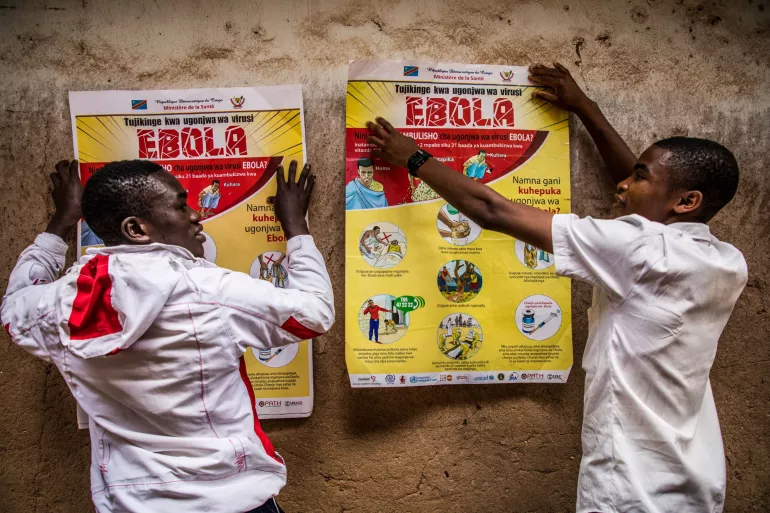
According to WHO, Ebola initially causes flu-like symptoms including fever, fatigue, headache, muscle pain and sore throat before progressing to vomiting, diarrhoea and, in severe cases, internal and external bleeding and multiple organ failure.
Health experts have repeatedly stressed that the virus spreads through close contact with infected individuals, making family members and caregivers particularly vulnerable.
Anaïs Legand, a WHO Technical Officer, emphasised that, “It’s a disease that you get when you care for someone, for your husband or your partner or your child or your mother.”
She added, “You get it when you want to help someone with symptoms, and this is terrible,” urging communities to avoid physical contact with individuals showing signs of infection and to seek medical assistance immediately.
Legand further stated that the disease remains highly lethal, with mortality rates from previous outbreaks ranging between 30 and 50%. “Five out of 10 people are likely to die,” she added, while emphasizing that improved medical care and faster diagnosis can significantly improve survival rates.
“We can scale up optimized intensive care. We can support the communities to recognize the symptoms early to get early diagnostics, so that they can receive the level of care they need.”
Anaïs Legand
According to WHO, community participation will be critical to stopping the outbreak. Previous Ebola responses have shown that trust, public awareness and local cooperation are essential to identifying cases quickly and preventing further transmission.
The global health agency noted that a recently infected patient in the DRC recovered fully and was discharged from the hospital, demonstrating that successful treatment outcomes are possible when care is provided early.
At the same time, WHO and international partners are accelerating efforts to identify effective therapies and preventive measures.
Moreover, for people exposed to confirmed cases, WHO is also prioritising evaluation of the oral antiviral obeldesivir as a potential post-exposure preventive treatment.
Despite these efforts, health officials emphasised that the outbreak is unfolding under exceptionally difficult conditions. The epicentre lies in eastern DRC, a region plagued by years of armed conflict, displacement and humanitarian crises. “This outbreak is happening in a very complex context,” Legand said, noting that more than 1.2 million people in Ituri province alone require humanitarian assistance.
She explained that “the issue that we have in the field is not necessarily an issue of resources,” adding, “it’s an issue of access.”
The closure of Bunia airport, a key transport hub in the affected region, has further complicated efforts to move personnel and supplies, although humanitarian flights continue under special arrangements.
READ ALSO: Parliament Passes Controversial Human Sexual Rights and Human Values Bill