Ghana’s ambitious debt restructuring programme has achieved a major milestone, with the country signing bilateral agreements with five creditor nations under the G20 Common Framework, according to the International Monetary Fund (IMF).
The development marks a critical step toward restoring long-term debt sustainability and investor confidence, signaling renewed optimism for the country’s economic recovery.
The IMF, in its latest report following a two-week mission to Accra from September 29 to October 10, 2025, confirmed that the debt restructuring process is progressing smoothly. The agreements, it said, follow the earlier signing of a Memorandum of Understanding (MoU) with the Official Creditor Committee, underscoring Ghana’s determination to meet its financial obligations and rebuild credibility in the global financial market.
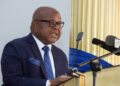
IMF Mission Chief, Ruben Atoyan, described the development as a “significant milestone” that demonstrates Ghana’s commitment to comprehensive debt treatment.
“The comprehensive debt restructuring is progressing well. Following the signing of a Memorandum of Understanding with the Official Creditor Committee under the G20 Common Framework, bilateral agreements have been concluded with five countries.”
Ruben Atoyan
Ghana Engages Remaining Creditors for Final Debt Treatment
While the agreements with the five nations represent tangible progress, the government remains in active talks with its remaining commercial creditors to finalise all debt treatment arrangements. The IMF expressed optimism that these ongoing negotiations will soon conclude, paving the way for full debt sustainability and reduced fiscal pressure on the economy.

The Fund noted that Ghana’s debt outlook has already improved, buoyed by an upgraded macroeconomic forecast, enhanced fiscal discipline, and ongoing structural reforms. These developments are part of Ghana’s broader three-year Extended Credit Facility (ECF) programme worth SDR 2.242 billion (approximately US$3.2 billion), approved in May 2023 to stabilise the economy and restore growth after years of fiscal challenges.
The IMF further confirmed that a staff-level agreement has been reached on Ghana’s fifth review under the ECF programme, pending formal approval by the Fund’s management and Executive Board. Upon approval, Ghana will access SDR 267.5 million (about US$385 million), bringing total disbursements to around US$2.8 billion since the start of the programme.
Economic Stability Taking Root
The IMF’s assessment highlights that macroeconomic stabilisation is taking root, reflecting stronger-than-expected economic performance. Ghana recorded impressive growth in the first half of 2025, primarily driven by the services and agricultural sectors, both of which have remained resilient in the face of global headwinds.
The Fund also noted that Ghana’s external position has strengthened, supported by robust gold and cocoa exports and the strong performance of the cedi, which has been among Africa’s best-performing currencies this year. According to Mr. Atoyan, “The positive momentum is expected to continue into 2026, with growth projected at 4.8 per cent.”
Inflation, which had surged in previous years, is now projected to remain within the Bank of Ghana’s target band, while international reserves have risen beyond programme expectations. These indicators suggest that the country’s macroeconomic fundamentals are gradually improving, reinforcing investor confidence and setting the stage for sustained growth.

Fiscal and Monetary Policy Gains Recognition
The IMF commended Ghana’s government for maintaining strong fiscal performance, citing a primary surplus of 1.1 per cent of GDP for the first eight months of 2025. The performance puts Ghana on course to achieve its 1.5 per cent surplus target by the end of the year — a development that underscores the government’s commitment to prudent fiscal management.
Monetary policy has also seen significant improvement. The Bank of Ghana (BoG) has reduced its policy rate by 650 basis points to 21.5 per cent as inflation continues to decline. The central bank has additionally developed a new framework for foreign exchange operations aimed at smoothing market volatility and strengthening external buffers.
The IMF described these policy actions as “critical measures” that support the ongoing stabilisation process and build the foundation for a resilient financial system.
A notable highlight in the IMF’s report was Ghana’s progress in addressing long-standing energy sector inefficiencies. The government has successfully renegotiated power purchase agreements (PPAs) and implemented improved payment structures under the Cash Waterfall Mechanism, helping to reduce arrears and improve sector viability.
These interventions, the Fund observed, have not only restored confidence among independent power producers but also contributed to the country’s broader fiscal sustainability efforts. The energy sector’s stability remains crucial for industrial growth and private sector competitiveness.
IMF Commends Government’s Commitment
The IMF hailed Ghana’s “strong commitment to fiscal discipline, structural reform, and financial stability,” describing the latest developments as a “significant step toward long-term debt viability.”

During its mission in Accra, the IMF delegation met with key officials including Finance Minister Ato Forson, Bank of Ghana Governor Johnson Asiama, and other senior government representatives. Discussions centered on strengthening macroeconomic performance, sustaining fiscal reforms, and ensuring effective implementation of debt restructuring agreements.
The Fund reaffirmed its readiness to continue supporting Ghana through technical assistance, financial support, and policy advice aimed at consolidating gains made under the ECF programme.
With debt restructuring progressing steadily, macroeconomic indicators stabilising, and fiscal discipline improving, Ghana’s economic outlook appears increasingly positive. The government’s proactive engagement with creditors, coupled with prudent reforms, is expected to restore full debt sustainability and unlock fresh growth opportunities.
If the current momentum is maintained, Ghana could enter 2026 with a stronger fiscal position, a resilient currency, and renewed investor confidence; all key ingredients for sustained economic transformation.
READ ALSO: Eritrea, TPLF Accused Of Colluding To Attack Ethiopia