• About
  • Advertise
  • Privacy Policy
  • Contact
Monday, May 18, 2026
  • Login
The Vaultz News
  • Top Stories
  • News
    • General News
    • Education
    • Health
    • Opinions
  • Economics
    • Economy
    • Finance
      • Banking
      • Insurance
      • Pension
    • Securities/Markets
  • Business
    • Agribusiness
    • Vaultz Business
    • Extractives/Energy
    • Real Estate
  • World
    • Africa
    • America
    • Europe
    • UK
    • USA
    • Asia
    • Around the Globe
  • Innovation
    • Technology
    • Wheels
  • Entertainment
  • 20MOBPL2DNew
  • Jobs & Scholarships
    • Job Vacancies
    • Scholarships
No Result
View All Result
The Vaultz News
  • Top Stories
  • News
    • General News
    • Education
    • Health
    • Opinions
  • Economics
    • Economy
    • Finance
      • Banking
      • Insurance
      • Pension
    • Securities/Markets
  • Business
    • Agribusiness
    • Vaultz Business
    • Extractives/Energy
    • Real Estate
  • World
    • Africa
    • America
    • Europe
    • UK
    • USA
    • Asia
    • Around the Globe
  • Innovation
    • Technology
    • Wheels
  • Entertainment
  • 20MOBPL2DNew
  • Jobs & Scholarships
    • Job Vacancies
    • Scholarships
No Result
View All Result
The Vaultz News
No Result
View All Result
in Banking

BoG Hikes Forex Bureau Licence Renewal Fee by 150%

M.Cby M.C
October 26, 2025
Reading Time: 4 mins read
BoG Hikes Forex Bureau Licence Renewal Fee by 150%

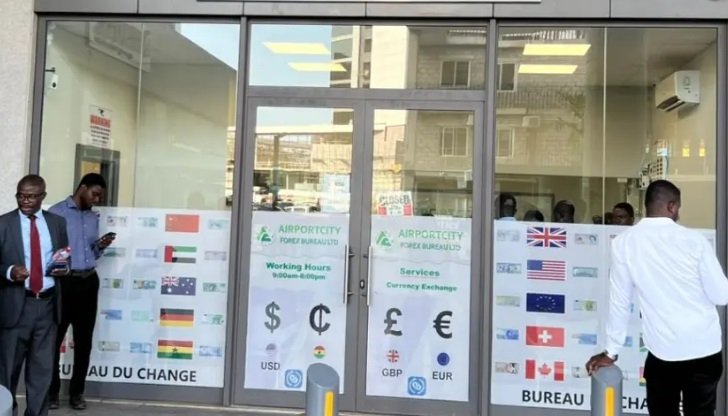
The Bank of Ghana (BoG) has announced a significant increase in the biennial licence renewal fee for Foreign Exchange Bureaux (FEBs), raising it from GH¢800 to GH¢2,000.  

The move, representing a 150 percent hike, takes immediate effect and forms part of the Central Bank’s broader regulatory reforms aimed at strengthening supervision and sustainability within the foreign exchange sector. 

According to a statement issued by the Bank of Ghana, the revised fee structure applies to all licensed Foreign Exchange Bureaux operating across the country. The Central Bank emphasized that the decision is aligned with efforts to improve the financial integrity of the forex bureau system and ensure that operators adhere to high standards of compliance and professionalism. 

The BoG explained that the revision forms part of its ongoing reforms to enhance the effectiveness of regulatory oversight over other financial institutions, including forex bureaux, microfinance institutions, and savings and loans companies. 

ADVERTISEMENT

“The revision is part of ongoing reforms to strengthen the regulatory oversight of the Bank of Ghana and to ensure the sustainability of operations in the sector,” the statement read. 

This adjustment comes amid renewed efforts by the Central Bank to sanitize the foreign exchange market, improve transparency, and curb illegal currency trading activities. Over the years, the BoG has been working closely with stakeholders to ensure that only compliant and financially sound bureaux operate within Ghana’s forex ecosystem. 

Enforcement of Licensing Requirements 

Under the new directive, all Foreign Exchange Bureaux are required to renew their licences every two years (biennially), no later than two months before the expiry date of their current licence. This requirement, the BoG noted, is in line with Section 10 of the Foreign Exchange Act, 2006 (Act 723) and Paragraph 8 of Bank of Ghana Notice No. BG/GOV/SEC/2003/2 under the Revised Forex Bureau Regulations. 

By enforcing the two-month renewal window, the BoG seeks to ensure a smoother renewal process and avoid lapses that could disrupt operations. The Central Bank urged bureau operators to comply strictly with this directive, noting that failure to do so could attract sanctions, including the suspension or revocation of licences. 
BoG Hikes Forex Bureau Licence Renewal Fee by 150% 3

The upward review has sparked discussions among forex bureau operators, with mixed reactions emerging from various quarters. While some operators view the increase as a necessary measure to enhance regulatory efficiency, others have expressed concern about the financial burden it could place on smaller operators. 

An operator based in Accra, who preferred anonymity, said, “The increase is quite steep, especially for smaller bureaux with limited profit margins. We understand the need for regulatory reforms, but we hope the BoG will consider flexible payment arrangements for smaller players.” 

However, others have welcomed the move, citing the need for stronger regulation and the importance of maintaining operational sustainability. “The BoG’s oversight is critical for maintaining confidence in the forex market. A higher licence fee could help fund better supervision and curb illegal operators who distort exchange rates,” another operator noted. 

Ensuring Sustainability in the Forex Market 

The BoG’s move to increase the renewal fee is also seen as a strategic effort to promote sustainability within Ghana’s forex bureau industry. With over 400 licensed bureaux across the country, the Central Bank aims to streamline operations and weed out inactive or non-compliant entities. 

The revised fee, according to industry analysts, is likely to encourage only serious and compliant players to remain in the market, thereby improving efficiency and transparency in foreign exchange transactions. Moreover, the fee increase could provide additional resources for the BoG to enhance its monitoring capabilities, invest in digital systems, and support continuous education for forex bureau operators. 

ADVERTISEMENT

The Bank of Ghana has advised all Foreign Exchange Bureaux to contact the Licensing and Approval Office of the Other Financial Institutions Supervision Department for any further clarification regarding the new fee structure or renewal procedures. 

The Central Bank also reminded operators that failure to renew licences within the stipulated timeframe may result in penalties or suspension from the official list of licensed bureaux. This reminder forms part of the BoG’s broader push to ensure that all forex bureaux operate within the legal framework governing foreign exchange transactions in Ghana. 

The latest fee adjustment underscores the Central Bank’s commitment to maintaining a stable, transparent, and well-regulated financial ecosystem. In recent years, the BoG has implemented several policy reforms targeting the non-bank financial sector to enhance resilience and protect consumers. 

READ ALSO:Government Urged to Fast-Track Ratification of Ewoyaa Lithium Lease 

Sign Up to Our Newsletter

Fresh updates, Straight to your inbox

Tags: Bank of GhanaBoGBoG Licence FeesCentral Bank of GhanaExchange Rate RegulationFinancial Regulationfinancial sector reformsForeign Exchange BureauxForex BureauForex Bureau Operatorsforex market GhanaGhana EconomyGhana Forex NewsLicence Renewal FeeRegulatory Oversight
Share21Tweet13Share4SendSend
Please login to join discussion
Previous Post

Government Urged to Fast-Track Ratification of Ewoyaa Lithium Lease 

Next Post

Minority Accuses Mahama’s Government of Silencing Free Speech With Cybersecurity Bill

Related Posts

Ecobank Ghana PLC Breaks Silence After Supreme Court Judgement
Banking

Ecobank Ghana PLC Breaks Silence After Supreme Court Judgement

May 17, 2026
Ghana Defies Odds With Record Financial Growth
Banking

Ghana Defies Odds With Record Financial Growth

May 16, 2026
Fidelity Demands Africa Own Its Digital Future At a time when Africa’s digital economy is accelerating at an unprecedented pace, Fidelity Bank Ghana has delivered one of the strongest messages yet on the continent’s technological future. The bank made a bold and urgent case for Africa to stop depending on foreign controlled digital systems and begin building its own infrastructure capable of retaining value, strengthening currencies, and driving long term economic sovereignty. As one of the key sponsors of the 3i Africa summit, Fidelity Bank did not just show up to participate. It arrived with a message that resonated deeply across conference halls and policy discussions. Fidelity Bank emerged as one of the loudest voices championing a future where African nations control the very digital rails that power their economies. Digital Infrastructure Is The New Economic Power One of the defining moments of the summit came during a high level panel discussion on digital public infrastructure, where Adeline Aryee delivered a statement that immediately captured the attention of participants. She declared that if Africa builds its own digital rails, it naturally retains the value created by those systems. Her message was clear and uncompromising. In previous decades, national infrastructure was measured by roads, bridges, ports, and airports. Today, the true engines of economic power are payment platforms, identity systems, financial technology ecosystems, and digital marketplaces. According to Aryee, digital public infrastructure is no longer a luxury. It is now a strategic national asset. Her remarks struck at the heart of one of Africa’s most pressing economic concerns. Despite growing digital adoption, many transactions across the continent still pass through foreign payment systems, resulting in value leakage and continued pressure on local currencies. Ghana’s Success Story Becomes A Continental Blueprint Aryee highlighted Ghana’s progress in financial inclusion, mobile payments, and digital banking, describing the country as an emerging model for other African economies. Over the years, Ghana has invested heavily in domestic payment systems such as GhIPSS and its flagship platform, Gh-link. These systems have significantly expanded access to financial services while promoting digital transactions across urban and rural communities. Yet Aryee argued that inclusion alone is no longer enough. The next chapter for Africa, she insisted, must focus on ownership. She questioned why local transactions continue to depend on foreign rails when domestic infrastructure already exists. According to her, such dependence creates unnecessary external exposure and limits the continent’s ability to fully capture the economic benefits of its growing digital market. Her comments triggered intense debate among summit participants, many of whom acknowledged the urgent need for policy reforms and infrastructure investments. Market Driven Innovation Takes Center Stage Beyond infrastructure, Fidelity Bank also made a strong case for innovation that begins with real market needs. During the Ecosystem Roundtable on platforms, talent, and digital markets, Prince Osei Hyeaman-Addai shared insights from the bank’s years of digital financial innovation. He stressed that successful digital products are not built in boardrooms or based on assumptions. Instead, they are created by listening carefully to the market and understanding customer pain points. According to him, the market itself reveals the problems that need solving, the type of platform required, and the path toward scalable growth. His comments reflected a growing shift in African fintech circles, where customer centered design is becoming essential for product adoption and long term relevance. Trust And Credibility Remain The Real Currency Prince also emphasized that technology alone does not guarantee success. In his view, trust, credibility, and strong operational structures remain the real foundations of successful innovation. He noted that while investor interest in African fintech continues to rise, startups must prove they can deliver sustainable solutions, maintain transparency, and build products that respond to local realities. This perspective reflects Fidelity Bank’s own journey in digital transformation. Over the years, the bank has built strategic collaborations with leading fintech players, including IT Consortium, helping pioneer wallet to bank integrations and mobile financial solutions in Ghana. These partnerships have helped position Fidelity as one of Ghana’s most innovation driven financial institutions. A Defining Moment For Africa’s Digital Future Fidelity Bank’s participation at the 3i Africa Summit 2026 was more than a corporate appearance. It was a strategic declaration. At a time when Africa is racing to build competitive digital economies, the bank’s message was impossible to ignore. Africa cannot simply consume technology created elsewhere. It must own the infrastructure, shape the platforms, and capture the value generated by its digital future. As conversations from the summit continue to ripple across financial and policy circles, one thing is becoming increasingly clear. Africa’s next economic revolution may not be built on oil, gold, or minerals. It may be built on digital rails designed, owned, and powered by Africans. READ ALSO: IMF Ghana Review Ends in Dramatic Cliffhanger Fidelity Demands Africa Own Its Digital Future At a time when Africa’s digital economy is accelerating at an unprecedented pace, Fidelity Bank Ghana has delivered one of the strongest messages yet on the continent’s technological future. The bank made a bold and urgent case for Africa to stop depending on foreign controlled digital systems and begin building its own infrastructure capable of retaining value, strengthening currencies, and driving long term economic sovereignty. As one of the key sponsors of the 3i Africa summit, Fidelity Bank did not just show up to participate. It arrived with a message that resonated deeply across conference halls and policy discussions. Fidelity Bank emerged as one of the loudest voices championing a future where African nations control the very digital rails that power their economies. Digital Infrastructure Is The New Economic Power One of the defining moments of the summit came during a high level panel discussion on digital public infrastructure, where Adeline Aryee delivered a statement that immediately captured the attention of participants. She declared that if Africa builds its own digital rails, it naturally retains the value created by those systems. Her message was clear and uncompromising. In previous decades, national infrastructure was measured by roads, bridges, ports, and airports. Today, the true engines of economic power are payment platforms, identity systems, financial technology ecosystems, and digital marketplaces. According to Aryee, digital public infrastructure is no longer a luxury. It is now a strategic national asset. Her remarks struck at the heart of one of Africa’s most pressing economic concerns. Despite growing digital adoption, many transactions across the continent still pass through foreign payment systems, resulting in value leakage and continued pressure on local currencies. Ghana’s Success Story Becomes A Continental Blueprint Aryee highlighted Ghana’s progress in financial inclusion, mobile payments, and digital banking, describing the country as an emerging model for other African economies. Over the years, Ghana has invested heavily in domestic payment systems such as GhIPSS and its flagship platform, Gh-link. These systems have significantly expanded access to financial services while promoting digital transactions across urban and rural communities. Yet Aryee argued that inclusion alone is no longer enough. The next chapter for Africa, she insisted, must focus on ownership. She questioned why local transactions continue to depend on foreign rails when domestic infrastructure already exists. According to her, such dependence creates unnecessary external exposure and limits the continent’s ability to fully capture the economic benefits of its growing digital market. Her comments triggered intense debate among summit participants, many of whom acknowledged the urgent need for policy reforms and infrastructure investments. Market Driven Innovation Takes Center Stage Beyond infrastructure, Fidelity Bank also made a strong case for innovation that begins with real market needs. During the Ecosystem Roundtable on platforms, talent, and digital markets, Prince Osei Hyeaman-Addai shared insights from the bank’s years of digital financial innovation. He stressed that successful digital products are not built in boardrooms or based on assumptions. Instead, they are created by listening carefully to the market and understanding customer pain points. According to him, the market itself reveals the problems that need solving, the type of platform required, and the path toward scalable growth. His comments reflected a growing shift in African fintech circles, where customer centered design is becoming essential for product adoption and long term relevance. Trust And Credibility Remain The Real Currency Prince also emphasized that technology alone does not guarantee success. In his view, trust, credibility, and strong operational structures remain the real foundations of successful innovation. He noted that while investor interest in African fintech continues to rise, startups must prove they can deliver sustainable solutions, maintain transparency, and build products that respond to local realities. This perspective reflects Fidelity Bank’s own journey in digital transformation. Over the years, the bank has built strategic collaborations with leading fintech players, including IT Consortium, helping pioneer wallet to bank integrations and mobile financial solutions in Ghana. These partnerships have helped position Fidelity as one of Ghana’s most innovation driven financial institutions. A Defining Moment For Africa’s Digital Future Fidelity Bank’s participation at the 3i Africa Summit 2026 was more than a corporate appearance. It was a strategic declaration. At a time when Africa is racing to build competitive digital economies, the bank’s message was impossible to ignore. Africa cannot simply consume technology created elsewhere. It must own the infrastructure, shape the platforms, and capture the value generated by its digital future. As conversations from the summit continue to ripple across financial and policy circles, one thing is becoming increasingly clear. Africa’s next economic revolution may not be built on oil, gold, or minerals. It may be built on digital rails designed, owned, and powered by Africans. READ ALSO: IMF Ghana Review Ends in Dramatic Cliffhanger Fidelity Demands Africa Own Its Digital Future
Banking

Fidelity Demands Africa Own Its Digital Future

May 15, 2026
Absa Bank Ghana Empowers Academic City University College With Money Skills
Banking

Absa Bank Ghana Empowers Academic City University With Money Skills

May 14, 2026

Sign Up to Our Newsletter

Fresh updates, Straight to your inbox

Recent News

Dani Carvajal displays the Uefa Champions League trophy together with his man of the match award in 2024 UCL final

Real Madrid Confirm Carvajal Departure After 23-Year Association

May 18, 2026
President John Dramani Mahama speaking at the 79th World Health Assembly in Geneva, Switzerland

President Mahama Challenges WHO: Reform Must Be Real, Not Ritual

May 18, 2026
IRAWMA 2026

Black Sherif Claims First IRAWMA Win

May 18, 2026
United Nations

UN Warns Anti-LGBTIQ+ Laws Are Expanding in Countries Worldwide

May 18, 2026
President John Dramani Mahama speaking at the 79th World Health Assembly in Geneva, Switzerland

Mahama Unveils Ghana’s ₵3bn Health Boost At Geneva Assembly

May 18, 2026
Next Post
Hon. Kojo Oppong Nkrumah

Minority Accuses Mahama’s Government of Silencing Free Speech With Cybersecurity Bill

The Vaultz News

Copyright © 2025 The Vaultz News. All rights reserved.

Navigate Site

  • About
  • Advertise
  • Privacy Policy
  • Contact

Follow Us

Welcome Back!

Login to your account below

Forgotten Password?

Retrieve your password

Please enter your username or email address to reset your password.

Log In
No Result
View All Result
  • Top Stories
  • News
    • General News
    • Education
    • Health
    • Opinions
  • Economics
    • Economy
    • Finance
      • Banking
      • Insurance
      • Pension
    • Securities/Markets
  • Business
    • Agribusiness
    • Vaultz Business
    • Extractives/Energy
    • Real Estate
  • World
    • Africa
    • America
    • Europe
    • UK
    • USA
    • Asia
    • Around the Globe
  • Innovation
    • Technology
    • Wheels
  • Entertainment
  • 20MOBPL2D
  • Jobs & Scholarships
    • Job Vacancies
    • Scholarships

Copyright © 2025 The Vaultz News. All rights reserved.

This website uses cookies. By continuing to use this website you are giving consent to cookies being used. Visit our Privacy and Cookie Policy.

Discover the Details behind the story

Get an in-depth analysis of the news from our top editors

Enter your email address