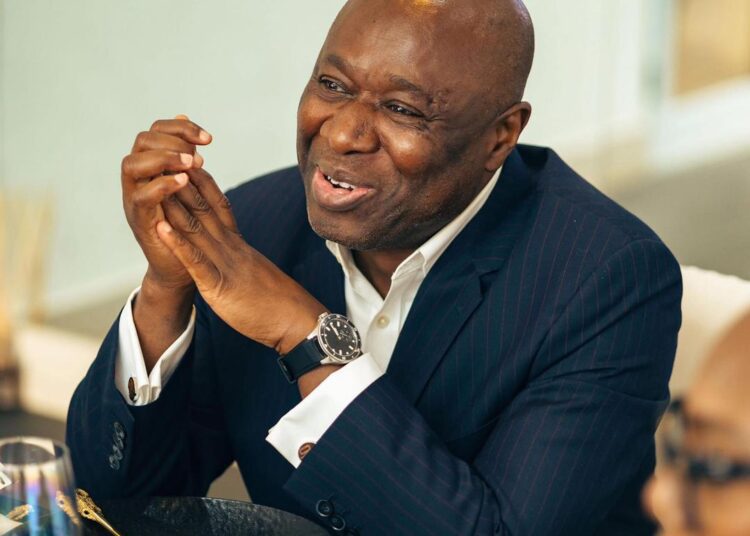
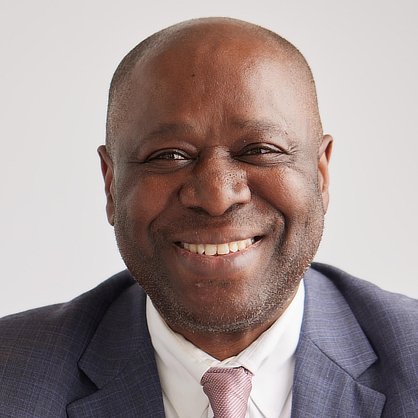
Dr. Ohene Aku Kwapong, a Fellow at the Center for Democratic Development (CDD-Ghana) and a distinguished graduate of MIT and Columbia University, has called for a bold national decision to adopt a second national language to preserve Ghana’s unity, strengthen education, and safeguard the country’s modernization process.
Reacting to the Minister of Education’s directive making the use of mother tongue languages compulsory in Ghana’s basic schools, Dr. Kwapong argued that while the policy may appear progressive, it risks deepening confusion if Ghana fails to establish a clear national linguistic identity.
“We cannot go into 2050 with 70-plus dialects and languages. We will be enslaved again. The same confusion of problems we refuse to rise above will hold us back.”
Dr Ohene Aku Kwapong, CDD-Ghana Fellow and MIT/Columbia Graduate
According to Dr. Kwapong, Ghana’s linguistic diversity, while culturally rich, is increasingly becoming a developmental bottleneck. He described the country’s language situation as “a wild world of almost over 50 languages and dialects being catered for or fought over by parents — a recipe for disaster.”
He warned that without a deliberate effort to unify the nation through a second national language, the fragmentation would worsen and hinder social and educational progress.
Misrepresentation of UNESCO Study
Citing a long-standing UNESCO study, Dr. Kwapong explained that instruction in local languages does indeed enhance learning, but many African countries, including Ghana, have misunderstood its core findings.
“The UNESCO study — unfortunately, always conducted for low-income countries, not high-income ones — says instruction in a local language does help learning, but only because of the burden of learning a new language together with learning other things”.
Dr Ohene Aku Kwapong, CDD-Ghana Fellow and MIT/Columbia Graduate
He pointed out that there is a major assumption in that study that is often overlooked. “Local language helps when that local language is a national language that facilitates communication for students both at home and among themselves in communities outside the classroom,” he clarified.
According to him, that is not necessary if the country adopts the medium of instruction as a national local language, meaning, in Ghana’s case, if English were to be taught from infancy.
Dr. Kwapong stressed that Ghana’s current multilingual policies have created confusion, with no coherent linguistic direction. “We are misreading the research if we do not choose or come up with a second national language; the problem gets worse,” he said.

Best Examples
He pointed to countries such as Singapore and Tanzania as examples of how serious nations have handled linguistic diversity to build cohesion and progress.
“This same study is what made Singapore choose one language among eight as a national language. It is also what made Tanzania create a new national language out of a Swahili variant.
“Many countries made bold decisions to choose a second national language and move to the tri-level language model. That is what we need to be serious about.”
Dr Ohene Aku Kwapong, CDD-Ghana Fellow and MIT/Columbia Graduate
In his view, Ghana must not allow linguistic indiscipline to become yet another national problem like illegal mining or corruption, stressing that “Let’s have the courage and the ingenuity to do something big — to recombine our four big languages into one second national language. The work has already been done.”
Creation of National Institute of Languages
To achieve this, Dr. Kwapong proposed the creation of a National Institute of Languages, a specialized institution tasked with guiding Ghana’s linguistic evolution, researching potential language combinations, and implementing policies that can transition the country into what he calls “modernity through unity.”
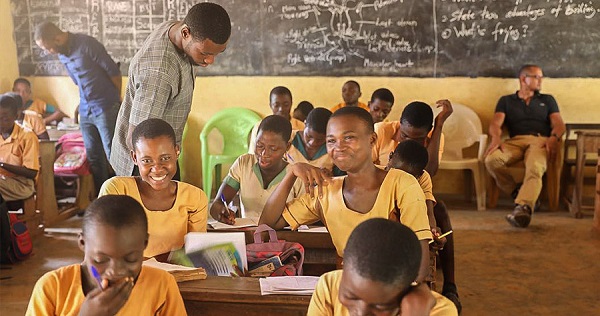
Dr. Kwapong’s argument rests on the belief that all Ghanaian languages share a deep-rooted linguistic ancestry that can serve as a foundation for unification.
“All Ghanaian languages descend from Proto-Niger-Congo — around 3500 BCE — but the four languages that dominate Ghanaians are our opportunity to begin to solve the Tower of Babel problem”.
Dr Ohene Aku Kwapong, CDD-Ghana Fellow and MIT/Columbia Graduate
He identified these four major languages as Twi, Ewe, Dagbani, and Ga, noting that they are the most widely spoken and represent the major linguistic families in Ghana.
Twi, spoken by approximately 9.1 million people across Central and Southern Ghana, comprises the Asante, Akuapem, and Fante varieties and is part of the Kwa branch of the Niger-Congo family, while Ewe, with 3.82 million speakers in the Volta Region and across Togo and Benin, belongs to the Volta-Niger subfamily.
Also, Dagbani, spoken by over 1.16 million people in Northern Ghana, falls under the Mole-Dagbani group of the Gur languages, while Ga, spoken by about 745,000 people in Greater Accra, is linguistically related to Twi but occupies a distinct subgroup within the Kwa family.
“These four languages — Twi, Ewe, Dagbani, and Ga — dominate Ghana’s linguistic map. They represent a historical opportunity to recombine our language DNA into a second national language that is authentically Ghanaian but functionally unifying.”
Dr Ohene Aku Kwapong, CDD-Ghana Fellow and MIT/Columbia Graduate
Failure not an Option
Dr. Kwapong argued that a deliberate, research-backed merger of these major linguistic families could yield a modern, inclusive national language — one that both respects Ghana’s heritage and fosters national unity. He cautioned that failure to act decisively could have grave consequences for the nation’s intellectual and economic future.
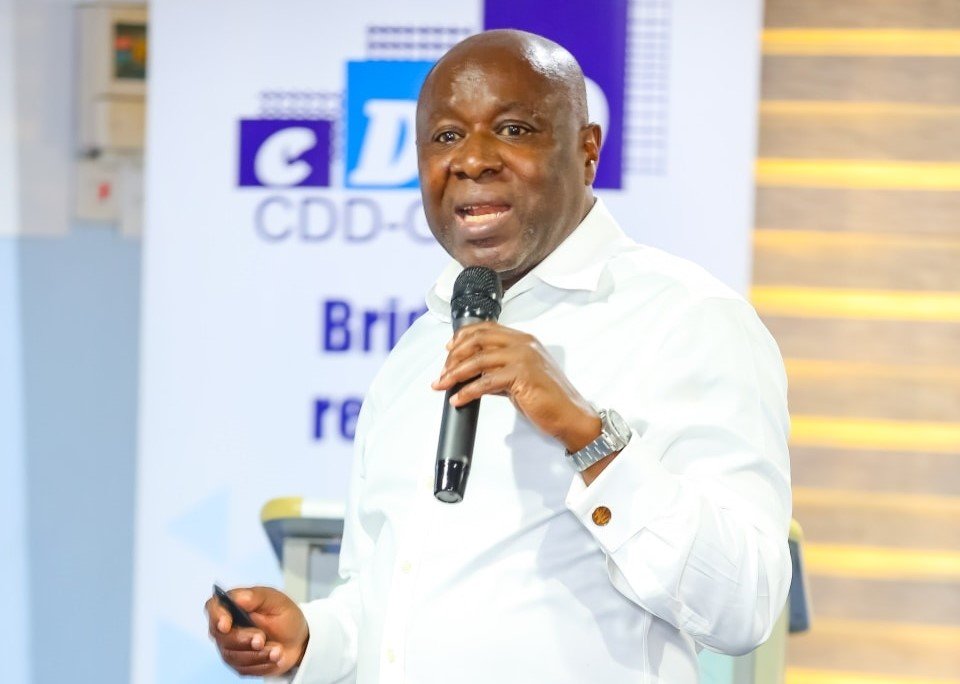
“Every country has a Tower of Babel problem. Any country that does not solve that problem by 2050 will remain at the bottom of nations in a world where knowledge excels.
“Unless you want to continue to slave yourselves to others’ ambitions and remain a consumer, you must solve your language problem.”
Dr Ohene Aku Kwapong, CDD-Ghana Fellow and MIT/Columbia Graduate
Dr. Kwapong maintained that language is not just a tool for communication but a critical driver of innovation, nation-building, and identity. For him, Ghana cannot modernize, industrialize, or globalize effectively if it cannot even speak to one another in a unified national tongue.
He urged the government, academia, and civil society to support a forward-looking national language policy that blends Ghana’s linguistic strengths with global competitiveness. Dr. Kwapong concluded by urging Ghanaians to view language reform as a national priority, not just a cultural project.
READ ALSO: Ghana’s HDI Rising; Economic Stability and AI to Boost Further