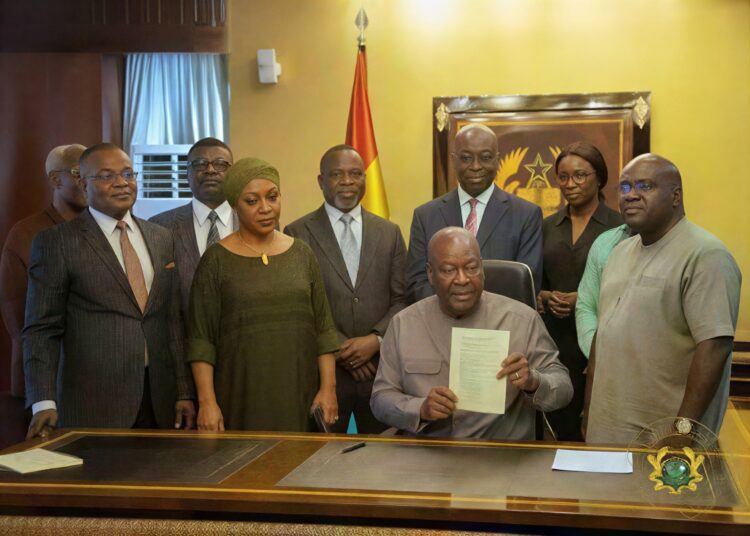
Parliament’s Majority Chief Whip, Rockson-Nelson Etse Kwami Dafeamekpor, has said the newly assented Legal Education Bill introduces a new framework for professional legal training across the country. He explained that all institutions seeking to train professional lawyers will undergo accreditation under the new legal regime.
In his view, the law became operational immediately after presidential assent and shifted the administration of legal education into a new regulatory structure. Faculties currently offering LLB programmes will therefore have to apply for accreditation before continuing under the new arrangement.
The Majority Chief Whip stated that the Ghana School of Law will also undergo the same accreditation process as other institutions. He added that the institution will no longer enjoy an exclusive position within professional legal training.

Attention has also turned to the Makola campus and students expected to enter the professional programme this year. The South Dayi MP explained that the transitional provisions within the law will protect students already undergoing professional legal training under the “saving provision.”
“Makola itself will have to apply for accreditation, so there is nothing like Makola under this law because it must be accredited. However, under the saving and transitional provisions, which I believe is Section 93, the current system of training professional lawyers, as well as students who are already in the programme, will be maintained. They will continue to be trained under the existing system as though they were admitted under the new law.”
Honourable Rockson-Nelson Etse Kwami Dafeamekpor
Honourable Dafeamekpor indicated that government intends to move quickly with implementation to avoid disruptions in the academic calendar. He disclosed that the Attorney General has already initiated steps toward operationalising the new framework.
The law also establishes a Council for Legal Education and Training to regulate legal education nationwide. Officials are expected to secure interim funding and administrative structures for the council within the year.
Honourable Dafeamekpor explained that the council will supervise admissions, accreditation and institutional standards across the country. He added that the implementation process will include inspections, verification exercises and regulatory approvals before institutions commence professional training.
He said the revised curriculum will place greater emphasis on advocacy, drafting, moot court exercises and practical legal procedure, producing lawyers with stronger professional competence and practical experience.
Majority Rejects Minority Claims Over Entrance Examination Confusion
The Majority Chief Whip dismissed claims from the Minority in Parliament questioning the status of entrance examinations under the new Legal Education Act. He maintained that the law took immediate effect after presidential assent and required full compliance from all institutions.
Concerns raised by Vincent Ekow Assafuah suggested that public commentary from the Majority had created uncertainty over whether prospective students would sit entrance examinations this year. Honourable Dafeamekpor rejected that interpretation and insisted that no confusion exists within the legal framework.
He further challenged claims linked to a scheduled examination notice attributed to the Independent Examination Council. Honourable Dafeamekpor explained that checks carried out after the publication showed the notice was no longer available on the council’s official platform.

The South Dayi MP maintained that the law contains no provision delaying implementation after assent. He stressed that any practice inconsistent with the new legislation would require adjustment under the regulatory structure now in force.
Honourable Dafeamekpor added that future admission procedures will fall under the authority of the proposed Council for Legal Education and Training. He explained that no institution will be permitted to introduce independent admission requirements without regulatory approval.
Under the new framework, admission standards will be harmonised across all accredited law schools. He indicated that the council will determine the approved mode of admission after consultations with relevant stakeholders.
The South Dayi MP urged prospective students and the public to study the law carefully before drawing conclusions. He maintained that much of the public commentary stems from misinterpretation of the legislative provisions.
Honourable Dafeamekpor said Vincent Ekow Assafuah misread the timing of the presidential assent to the law. He added that the Old Tafo MP “tried to hoodwink the people” by suggesting the delay in assent meant the law would not be implemented.
“He has ceased to pay attention to the processes and tries to do politics with everything. That is not what we want. This is a major reform we are introducing, and I believe it is in the interest of all of us to ensure effective implementation so we can benefit from it. What we are looking for is benefit.”
Honourable Rockson-Nelson Etse Kwami Dafeamekpor
In response to whether the Ghana School of Law could continue to conduct independent examinations after accreditation under the new regime, the Majority Chief Whip explained that any future examination process will require approval from the regulatory council. He noted that a uniform national standard will guide admissions across all accredited professional law schools.
End of Ghana School Monopoly Expected to Attract Foreign Students
Government expects the new Legal Education Act to expand access to professional legal training and reduce pressure on the Ghana School of Law. The reforms are also projected to position Ghana as a regional destination for legal education within West Africa.
The South Dayi Member of Parliament said the previous system created severe limitations for LLB graduates seeking professional legal training. He noted that thousands of Ghanaian graduates pursued legal education abroad because of restricted access at home.
He pointed out that countries such as Sierra Leone, The Gambia, Kenya and Rwanda had benefited from Ghanaian students seeking alternative training opportunities. He explained that many of those students paid international fees in foreign jurisdictions.
Honourable Dafeamekpor argued that the new law could reverse that trend and retain significant foreign exchange within Ghana’s economy. He added that expanded access across accredited institutions would create new opportunities for legal training nationwide.

He further stated that Ghana could eventually attract foreign students once multiple institutions receive accreditation to offer professional legal training. He explained that the reform will end the long-standing monopoly of the Ghana School of Law and widen options available to students across the country.
Under the existing arrangement, the Ghana School of Law served as the principal avenue for professional legal training. The new legislation now allows universities and other accredited institutions to participate in the training process after meeting strict regulatory standards.
He cited institutions such as the University of Ghana, University of Cape Coast and the Ghana Institute of Management and Public Administration as potential participants within the new framework. He added that several private institutions are also expected to apply for accreditation under the law.
The legislation further directs the Justice Minister to introduce regulations within 12 months to guide implementation. These regulations are expected to define fee structures, institutional standards and operational guidelines for legal education nationwide.
READ ALSO: Mahama Signs Legal Education Bill into Law, Ends Makola’s 66-Year Monopoly