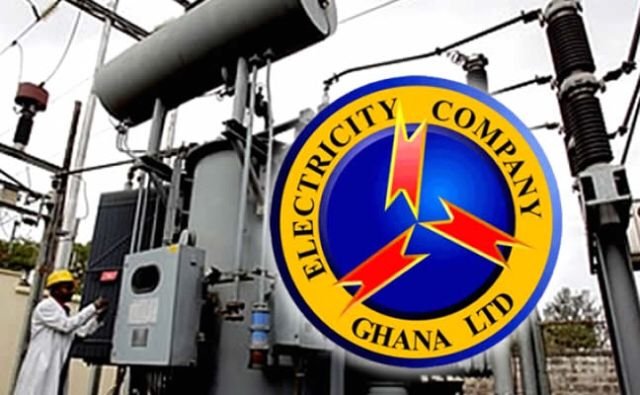
Electricity Company of Ghana (ECG) has commissioned 37 new transformers across the Greater Kumasi Metropolis to bolster electricity supply and eliminate persistent low-voltage issues.
This strategic deployment, executed within the Ashanti West operational zone, is a cornerstone of a broader capital investment initiative supported by the Ministry of Energy.
By targeting infrastructure that has become aged or critically overloaded, the utility aims to modernize the local grid to match the rapid urbanization of the region.
“Every transformer has its capacity, and the maximum electricity load it can carry. Once we identified transformers reaching full capacity or operating above 70 per cent, we upgraded some from 100kVA to 200kVA, 200kVA to 315kVA.”
Ing. George Amoah, the Regional General Manager for ECG Ashanti West
This major network expansion is specifically engineered to relieve the intense pressure on existing assets that have been operating at or near their maximum thresholds.
As Kumasi continues to evolve into a primary commercial powerhouse, the surge in demand has frequently pushed distribution equipment beyond sustainable limits.
Consequently, the new installations serve as a vital intervention to ensure that the distribution network can accommodate the current and future energy requirements of this growing hub without compromising equipment integrity.

Strategic Infrastructure Upgrades and Financial Investment
The project, which carries a substantial price tag of approximately GH¢10.94 million, involves more than just the placement of new units; it includes the extensive stretching of high-tension and low-voltage lines to create a more robust mesh.
Communities set to experience immediate relief include Ahinsan, Abuakwa, Adum, Danyame, Kokoben, Bibiani, Suame, and Offinso.
These areas have historically struggled with “brownouts” or fluctuating power quality, which Ing. Amoah noted necessitated the upgrades to “stabilise local supply and reduce outages linked to overloading.”
Beyond the 37 new units, the utility has proactively integrated another 36 transformers specifically to replace defunct or faulty units.
This secondary phase has reached critical institutions and neighborhoods such as Afia Kobi SHS, Twedie, Patasi Police Depot, andDenkyemuoso. By replacing broken-down components alongside the new commissions, ECG is effectively performing a “total health check” on the Ashanti West grid, ensuring that both new and existing service points operate at peak efficiency.

Technical Impact on Power Stability and System Losses
From a technical standpoint, the installation of these higher-capacity transformers directly addresses the physics of voltage drop.
When a transformer is overloaded, the voltage delivered to households and businesses can dip significantly below the standard 230V, causing appliances to malfunction or fail to start. By upgrading units from 100kVA to 200kVA or higher, ECG increases the “headroom” of the local grid.
This ensures that even during peak evening hours, the voltage remains stable and consistent across the entire circuit.
Furthermore, these investments are designed to curb “system losses” the energy that dissipates as heat when current travels through overloaded wires and inefficient transformers.
Regional Engineer Ing. Emmanuel Osei Amoako emphasized that as Kumasi grows at an accelerated rate, the ability to manage this load becomes a matter of economic necessity.
“These new transformers will help meet the growing electricity demand in the areas where they were installed,” Amoako stated, highlighting that the increased capacity effectively “future-proofs” the neighborhoods against the next wave of urban development.
Strengthening Network Resilience and Public Cooperation
While the physical infrastructure is being bolstered, ECG is also turning its attention to the human element of grid management.

The company has secured approval for even further installations, signaling that the current GH¢10.94 million spend is just the beginning of a long-term modernization roadmap.
This “rolling” upgrade strategy is intended to move the Ashanti Region away from reactive maintenance and toward a proactive, high-reliability distribution model that supports industrialization and residential comfort alike.
However, the utility warns that these multimillion-cedi investments remain vulnerable to external threats.
To protect the newly commissioned hardware, ECG has issued a stern warning against vandalism and illegal connections, which remain the primary drivers of artificial overloading.
Residents are urged to act as “network guardians” by reporting suspicious activities. As the Ministry of Energy continues to funnel capital into these upgrades, the longevity of Kumasi’s new power stability will depend heavily on the community’s commitment to protecting the infrastructure that now powers their daily lives.
READ ALSO: “Inclusion Without Protection Is a Trap,” Haruna Warns at 3i Africa Summit