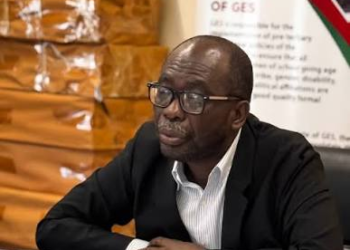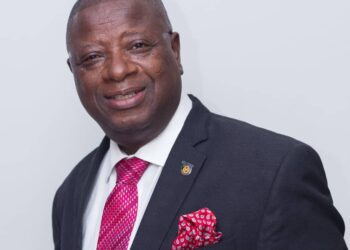

The Public Relations Officer (PRO) for the Ghana Education Service (GES), Mr. Daniel Fenyi, has proffered an analysis on the ongoing debate on the issue of senior high school students being compelled to trim their hair, arguing for the relevance of the rule in the modern Ghanaian context.
Mr. Fenyi’s analysis focused on whether the rule is one that is outmoded and must therefore be abolished due to its colonial roots or whether it is of relevance for the sake of uniformity.
Many have argued that the said rule compelling senior high school students to keep their hair short is of no relevance and has no impact on character modeling and ensuring discipline, as some education experts and authorities have argued, including the minister for education.
Arguments against the rule have cited its colonial antecedents, emphasizing that Ghana as a country has come a long way to still be clinging to an outmoded colonial rule that is of no relevance yet subjects students to, among other struggles, emotional, identity, and psychological ones.
Mr. Fenyi does not dispute the fact that the rule is a colonial inheritance. He affirmed that within the systems of the missionaries, during the colonial period, students were made to trim their hair. However, he noted the relevance of the rule then and how relevant it is in the modern Ghanaian context.

“It is true that the haircut regulation was inherited from colonial missionary education. The early British and European missionaries associated modesty and cleanliness with short hair, compelling African girls to conform to Western grooming standards.
“Historically, that rule was more ideological than hygienic. It symbolized the missionaries’ conviction that civilization required cultural uniformity. This historical origin is undeniable, yet origins alone cannot determine current relevance.”
Mr. Daniel Fenyi, Public Relation Officer (PRO), Ghana Education Service (GES)
He further argued that it is not enough to seek the abolishment of a rule just because it has colonial roots, making the point that there are several institutions, laws, and practices that have colonial antecedence, yet they have since served the Ghanaian citizenry for decades.
Mr. Fenyi stated that “our entire education system, the English language, Christianity, the court system, the parliamentary systems, etc are all colonial heritages.” “Shall we abolish them as well?” He queried.
“The truth is that nations grow not by rejecting history but by reforming and contextualizing it. What matters is not where a law began, but whether it continues to serve a useful purpose within present realities.”
Mr. Daniel Fenyi, Public Relation Officer (PRO), Ghana Education Service (GES)
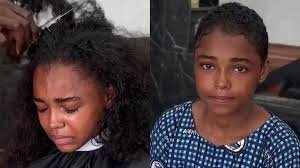
He further emphasized that the haircut rule is not kept just because it was inherited from the colonial systems but rather because of its relevance and the purpose it continues to serve.
“Over the decades, the haircut policy has evolved from a colonial imposition into a Ghanaian educational convention that promotes order, simplicity, and uniformity. Teachers no longer invoke it to mimic the British missionary classroom; they defend it as a pragmatic rule for managing large numbers of adolescents within boarding institutions.
“The logic of the rule has therefore been decolonized; its purpose is now Ghanaian, and its function is administrative and moral rather than imperial.”
Mr. Daniel Fenyi, Public Relation Officer (PRO), Ghana Education Service (GES)
“The purpose of the school environment is not to indulge every personal impulse; it is to direct impulses toward productive ends. Uniformity is not oppression; it is pedagogy.” He added.
The spokesperson for the Ghana Education Service (GES) noted that the opponents of the rule often argue that forbidding girls to keep their natural or braided hair is a violation of freedom of expression and personal rights and a betrayal of African heritage.
However, he emphasized these arguments constitute an appeal to emotions, adding that they “collapse under the weight of educational pragmatism.”
He emphasized that “a school is not a democracy of preferences” but “a disciplined environment for intellectual and moral formation. Freedom must operate within boundaries if learning is to flourish.”

Mr. Fenyi further cited the comparison often being made between the Ghanaian situation and practices in high schools of countries in other parts of the world, especially in Europe and America.
He emphasized that such comparisons must take into consideration the modalities and the structures of the education systems in Ghana and the other supposed exemplary countries, emphasizing that the difference cannot be overlooked.
“In most of Europe and America, over 90 percent of high school students are day students who live at home. Their grooming, nutrition, and discipline are primarily supervised by parents. The school merely provides academic instruction.
“In Ghana, however, approximately 80 percent of SHS students are boarders. Teachers and housemasters act in loco parentis, responsible for every aspect of students’ welfare.”
Mr. Daniel Fenyi, Public Relation Officer (PRO), Ghana Education Service (GES)
He therefore emphasized that in the Ghanaian context, institutional uniformity is not optional and therefore indispensable, further emphasizing that boarding schools cannot efficiently manage thousands of teenagers from varied socio-economic backgrounds if every student insists on personal fashion choices and how such choices should be regulated.
READ ALSO: Private Producers Deliver Better Results Than State Plants – IPP Boss