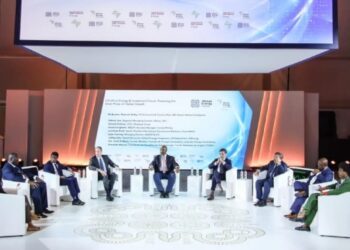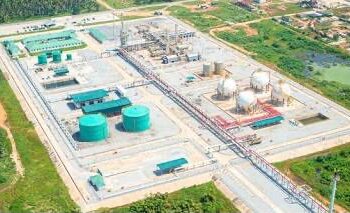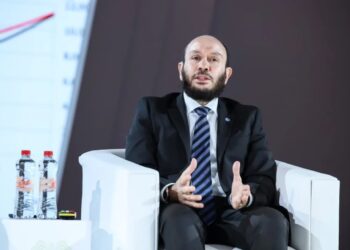

The Chief Executive Officer of the Independent Power Producers (IPPs), Dr. Elikplim Apetorgbor, has refuted claims that state-owned power plants generate electricity at a cheaper cost than privately-owned facilities, arguing that Independent Power Producers are, in fact, more efficient and deliver better long-term value to Ghana’s energy sector.
Dr. Apetorgbor made the comments while addressing discussions surrounding the cost structure and performance of Ghana’s power generation industry. He described the notion that state-owned plants are cheaper to operate as “technically inaccurate” and based on incomplete cost analysis.
“In your intro, you mentioned that state-owned power plants are cheaper than independent power plants. That is not factual.
“Many of the state-owned plants are almost at the end of their lifespan and have already recovered their capital costs, while most IPPs are newer and still recovering their investments in addition to energy charges.”
Dr. Elikplim Apetorgbor, Chief Executive Officer of IPPs
Efficiency vs. Cost Misconception
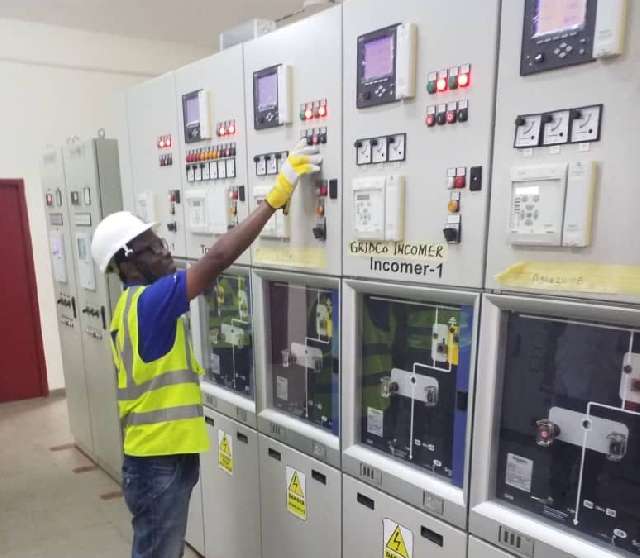
According to Dr. Apetorgbor, the apparent difference in tariffs between IPPs and state-owned facilities stems primarily from capital recovery obligations, not operational inefficiency.
He explained that once investment costs are accounted for, the private plants often outperform their state-owned counterparts in fuel efficiency and energy output. “Private producers operate with far more efficient technologies, yielding significantly higher energy output per unit of fuel consumed,” he said.
“For instance, if you give one million cubic feet of gas to a state-owned plant, it may generate about one megawatt of power.
“The same volume of gas to an IPP could produce up to 6.5 megawatts. That means state-owned plants could be operating at only about 25 percent of the efficiency levels of IPPs.”
Dr. Elikplim Apetorgbor, Chief Executive Officer of IPPs
He added that modern combined-cycle technologies deployed by IPPs have revolutionised energy generation, reducing fuel usage, one of the biggest cost components in the power sector by as much as 40 percent.
“Advanced technologies make all the difference.
“The problem is not the private sector; it’s how we assess cost without factoring in efficiency and performance.”
Dr. Elikplim Apetorgbor, Chief Executive Officer of IPPs
Dr. Apetorgbor also proposed innovative ways to address Ghana’s growing energy sector debts and cash flow challenges.
He recommended that government monetize state-owned thermal assets to generate funds for the Electricity Company of Ghana (ECG) and to pay off portions of the sector’s legacy obligations.
“That would create a win-win situation by improving efficiency and unlocking capital that is currently tied up in aged, underperforming assets.”
Dr. Elikplim Apetorgbor, Chief Executive Officer of IPPs
He also rejected the widespread notion that Ghana is burdened with excess power capacity, explaining that much of what is labeled as “overcapacity” is in fact idle capacity, energy generation potential that remains unused due to limited demand or poor transmission linkages.
“We don’t have overcapacity; we have idle capacity.
“If we have contracted 200 megawatts and consume only 100, the remaining 100 can be sold to neighbouring countries that are hungry for power.”
Dr. Elikplim Apetorgbor, Chief Executive Officer of IPPs
He called for regulatory flexibility to facilitate cross-border energy trade within the West African Power Pool (WAPP) framework. “Rather than letting generation capacity sit idle, let’s monetize it through exports,” he urged.
Renewable Energy as a Strategic Complement
Addressing questions on the role of renewable energy in Ghana’s energy future, Dr. Apetorgbor urged policymakers to treat renewables as part of national energy security, rather than as secondary or symbolic development goals.
“Large-scale solar projects, for instance, should complement our thermal generation and shield us from the volatility of fuel supply and price hikes.
“Renewables are not an alternative; they are a complement to a diversified, resilient energy mix.”
Dr. Elikplim Apetorgbor, Chief Executive Officer of IPPs
He added that integrating renewables into Ghana’s power mix could help stabilise prices and ensure long-term energy independence while supporting environmental sustainability goals.
Dr. Apetorgbor called for a more balanced approach to energy sector reform, one that values both public and private sector contributions while ensuring fair regulatory treatment.
He stressed that IPPs remain indispensable to Ghana’s energy stability, having provided the majority of the country’s generation capacity since the onset of the power sector liberalisation era.
Dr. Apetorgbor called for greater collaboration between government, regulators, and private investors, insisting that the energy sector’s sustainability depends on efficiency, transparency, and a clear appreciation of cost realities.
READ ALSO: BoG’s $1.15bn FX Injection Sparks Clash with IMF and World Bank Over Cedi Stabilization