The World Bank’s latest report on “Commodity Markets Outlook” coincides with Ghana’s macroeconomic stability, based mainly on commodity performance and gains, defined as a commodity-stabilizing-economy.
The report, which examined the commodity prices for the current year and 2026, revealed essential insights for Ghana into the true fabric of building a sustained economic stabilization, where diversification is ideal.
In a time when Ghana’s macroeconomy is restored and stabilized, and all the indicators beep green, the World Bank calls for diversification, innovation, transparency, and market-based pricing—measures that build lasting resilience to commodity price volatility. Ghana’s growth stems from the increased export of major national commodities due to a surge in global prices.
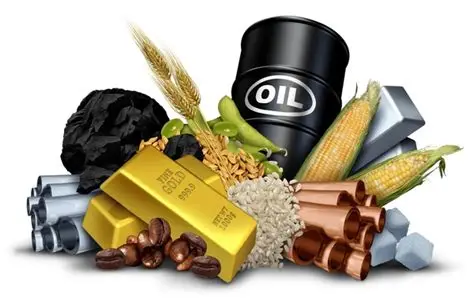
According to the World Bank, commodity prices are projected to drop by 7% by the end of 2025 and 2026, driven by frail global economic growth, persistent policy uncertainty, and increased supply of major commodities like gold and oil. The commodity prices for 2026 are projected to fall to their lowest in six years, implying that using commodities to stabilize the economy is not a long-term solution.
“Commodity prices are expected to decline by about 7% overall this year, reflecting subdued global economic activity, elevated trade tensions and policy uncertainty, and ample global supply of oil. In 2026, commodity prices are forecast to fall by a further 7%, a fourth consecutive year of decline, as global growth remains sluggish and the oil market oversupplied.”
World Bank, Commodity Markets Outlook Report, October 2025
Commodity Markets
According to Indermit Gill, the World Bank Group’s Chief Economist and Senior Vice President for Development Economics, “Commodity markets are helping to stabilize the global economy,” adding that “falling energy prices have contributed to the decline in global consumer-price inflation.”
For Ghana, the decline in inflation was not so much influenced by energy prices. Energy prices increased across the board in 2025. As fuel prices at the pumps fluctuated with some notable drops, there were increases in regulated electricity tariffs. However, due to the significant appreciation of the Ghana Cedi, the fuel prices were relatively lower compared to the past year. The whole component chain reflected this phenomenon.


Global food prices are projected to fall by 6.1% in 2025 and 0.3% in 2026. In 2026, coffee and cocoa prices are said to decline as supply increases. Fertilizer prices are projected to pick up to 21% by the end of 2025, but ease to 5% by 2026. This, however, will erode farmers’ profit margin.
Ghana is expected to increase its cocoa supply in the next harvest as the government has taken measures to improve yield, such as increasing the producer price of cocoa to incentivize cocoa farmers and free distribution of fertilizers for the cocoa farmers.
The price of precious metals has hit a record high in 2025 as many central banks increase purchases to increase their reserves to back their economic performances. Gold price is anticipated to grow by 42% in 2025, a mineral believed to be the most enduring substance in periods of economic uncertainty. It is, however, foreseen to surge further by 5% in 2026.
Gold preserves Ghana’s international reserves and serves as a major export commodity for the country. The price of gold is determined in the international market. Though Ghana benefits from the gold price hike this year, its current performance is not guaranteed going forward. Though the commodity will never cease to be relevant, its value fluctuates over time.
The World Bank, therefore, argues that the current respite gained from commodity trade will not last. The government of Ghana is encouraged to use this period of ‘goodwill’ to “get their fiscal house in order, make economies business-ready, and accelerate trade and investment.”
Charting Ghana’s Economic Future
According to the report, inventory controls, production quotas, and trade restrictions have stabilized some commodity prices in the past but have not realized lasting results. International agencies like the Organization of the Petroleum Exporting Countries (OPEC) lose their market power when commodities surge with the introduction of more participants due to high prices.
The World Bank recommends that governments should embark on diversification, increase productivity and standardization, invest in innovation and technology, ensure data transparency, and allow the market to determine prices to enhance resilience to price volatility in the long term.
The way forward for Ghana is to use the current macroeconomic stability based on commodity performance as a springboard to propel the country to the next stage of the development process. The government must ensure that there is effective and efficient infrastructure expansion through the government’s flagship program, ‘the Big Push’ program.
More manufacturing industries will boost Ghana to the next level of development. The 24-Hour Economy project should also be realized soon to ensure the processing of raw material before export and to create more job opportunities. The current Artificial Intelligence (AI) should be used to be innovative as a country to provide more opportunities for the youth, women, and children.
The future is bright for Ghana, looking at the current stage of economic growth and projections made by international rating agencies. However, the government needs to be fiscally disciplined, focused, and transparent to sustain the growing economy.
READ ALSO: October Inflation Falls to 8% – Boon for Consumers, Signal of Policy Success