
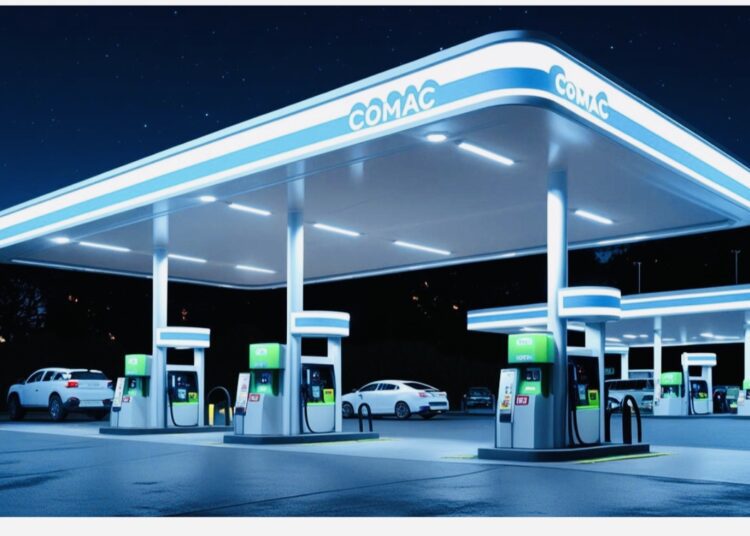
The Chamber of Oil Marketing Companies (COMAC) has expressed growing frustration over what it describes as persistent regulatory lapses within Ghana’s petroleum tax administration system, warning that the situation poses serious risks to oil marketing companies and the broader economy.
In a statement signed by its Chief Executive Officer and Industry Coordinator, Dr. Riverson Oppong, the Chamber said its repeated requests for regulatory intervention have not yielded the needed corrective action, despite the implications for compliance and operational stability.
COMAC noted that a critical error within the tax administration framework continues to expose its members to avoidable risks.
“This error exposes oil marketing companies to unnecessary compliance risks and potential penalties, undermining confidence in the fairness and consistency of the tax administration process.”
Dr. Riverson Oppong, CEO of COMAC and Industry Coordinator

According to COMAC, the unresolved issue has placed oil marketing companies in a difficult position, where adherence to existing regulatory timelines conflicts with discrepancies embedded in the Ghana Revenue Authority’s (GRA) systems.
The Chamber argues that this disconnect creates uncertainty and increases the likelihood of penalties, even when companies act in good faith.
“The continued lack of response and corrective action represents a disregard for the legitimate concerns of industry stakeholders.”
Dr. Riverson Oppong, CEO of COMAC and Industry Coordinator
COMAC stressed that beyond compliance challenges, the regulatory lapse is disrupting day-to-day operations of oil marketing companies, forcing them to divert resources to manage avoidable administrative complications.
Implications for the Petroleum Sector

The Chamber warned that the issue goes beyond individual companies and could have far-reaching implications for Ghana’s petroleum sector.
It noted that failure to promptly resolve regulatory inconsistencies sets a troubling precedent for regulatory engagement and responsiveness.
“The situation not only disrupts the operations of oil marketing companies but also sets a troubling precedent for regulatory engagement within Ghana’s petroleum sector.”
Dr. Riverson Oppong, CEO of COMAC and Industry Coordinator
The Chamber further cautioned that unresolved regulatory bottlenecks could weaken the sector’s resilience at a time when stability is critical to national energy security.
COMAC emphasized that the petroleum downstream industry plays a vital role in sustaining economic activity, transportation, and industrial production across the country.
COMAC also highlighted the potential impact on consumers and the wider economy if the issue remains unaddressed. According to the Chamber, regulatory lapses of this nature could trigger a chain reaction affecting fuel availability and pricing.
“The ongoing regulatory lapses pose serious challenges not only to industry players but also to consumers, the broader national economy, and international investor confidence.”
The Chamber argued that Ghana’s reputation as a predictable and well-regulated investment destination could be undermined if regulatory concerns raised by industry stakeholders are consistently overlooked.
Demands for Immediate Action

In response to the situation, COMAC has called on the GRA to take immediate and transparent action to resolve the matter. Central to the Chamber’s demands is the correction of the tax remittance due date in the GRA’s system to align with the approved regulatory timeline.
COMAC also urged the Authority to reduce what it described as excessive bureaucracy that hampers effective and timely decision-making, as well as to promptly resolve all outstanding requests for regulatory intervention submitted by its member companies.
Despite its strong criticism, the Chamber reaffirmed its commitment to compliance and collaboration. It stressed that oil marketing companies remain willing partners in ensuring transparency and efficiency within the tax administration process. COMAC said it remains committed to full compliance and continued partnership with the GRA in the interest of sector stability.
Meanwhile, an official of the Ghana Revenue Authority has indicated that steps are already being taken to address the concerns raised by COMAC.
Although details of the corrective measures were not immediately available, the assurance suggests that engagements between the regulator and industry players may be ongoing.
Industry observers say a swift and transparent resolution will be critical to restoring confidence and preventing further escalation. As the petroleum sector continues to play a strategic role in Ghana’s economic development, stakeholders will be watching closely to see how the concerns raised by COMAC are addressed in the coming weeks.
READ ALSO: Analyzing the Game-Changing GoldBod, Putting Loss in Perspective