The operations of the Ghana Gold Board (GoldBod) and its establishment have been questioned by many, following the report by the IMF of the Domestic Gold Purchasing Program (DGPP) making a significant loss of US$ 214 million.
The broader picture puts the loss in perspective, where the significance of the GoldBod can be objectively established.
The mandate of GoldBod, according to its establishing Act, is to formalize gold buying, stop smuggling, and channel gold to the Bank of Ghana (BoG) to build reserves, supporting the Ghana Cedi and providing forex for national needs – such as paying for imports or settling debt – complementing BoG’s forex stabilizing efforts through a structured, transparent national purchasing mechanism with GoldBod taking over the small-scale sector from the BoG by early 2026.
According to the CEO of GoldBod, Mr. Sammy Gyamfi, Esq., the 8 months old GoldBod is a “non-subverted state agency, whose operations in 2025 have largely been one of an agent role for the BoG,” adding that the agency is therefore “paid a statutory Assay Fee of 0.258 percent and a service charge of 0.5 percent for services it renders to the Bank of Ghana, as per the 2023 Gold Purchase Agreement between the PMMC and the BoG.”
BoG Financing Gold Purchases from GoldBod
According to a mining expert, in financing gold purchase from GoldBod, the Bank of Ghana does not raise a loan from the bond market to shore up the Cedi or print money to buy gold, as done under the previous government era. BoG summons the commercial banks and informs them of the Bank’s intent to inject money into the forex market. After indicating the dollar amount they will need, the commercial banks will bring the Cedi equivalent, which the BoG uses to purchase the gold from GoldBod.

The GoldBod purchases the gold on behalf of the Bank of Ghana as an off taker for the Bank. The gold is subsequently exported, gaining dollar revenue, which is then returned to the commercial banks to replace the Cedi equivalent they provided to the Bank of Ghana earlier.
The mining expert termed this a brilliant scheme for financing domestic gold purchases, which he suggested the Ghana Cocoa Board learn from. He revealed that the Bank of Ghana and GoldBod have not been proactive in their communication and public outreach on this matter.
Possible Causes of the BoG Loss
Analysts have deduced, from the IMF and BoG reports on the gold purchase loss, that certain basic yet overlooked positive economic indicators may be the source of the loss.
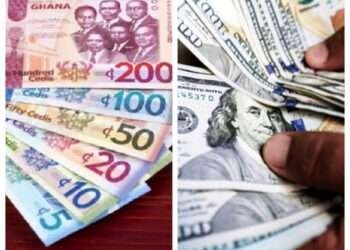
The Ghana Cedi’s appreciation could be a double-edged sword that although it has supported the current stability of the Ghanaian economy by reducing inflation, it has disadvantaged the economy in gold revenue reporting. Since gold is priced and sold globally in the United States dollars, the differential in Cedi received from gold sales with an appreciated Cedi will be less than what is received a year ago with a depreciated Cedi.
Therefore, the stronger the Ghana Cedi, the lower the Cedi equivalent of gold revenue. Analysts settle that if the Cedi had remained above the current exchange rate, the losses would be lower or non-existent.
Analysts, again, attributed the loss to the Bank of Ghana’s use of short-term financial instruments. With interest rates significantly higher than the treasury bill rate this year, the cost of BoG’s purchases becomes higher. If the eventual sale of the gold does not significantly outperform those high interest costs, a financial loss is recorded on the balance sheet.
GoldBod Resolving an Inherited Situation
In 2016, a huge smuggling activity in Ghana was revealed by the disparity between the United Arab Emirates (UAE) record of US$ 7 billion gold import from Ghana and Ghana’s official record of US$ 5 billion gold export to the UAE. This revealed a US$ 2 billion worth of gold Ghana has lost through smuggling, which could be extended to estimate similar losses annually.

The GoldBod was established to solve the smuggling problem by streamlining the gold purchase and export in Ghana to save the country billions of dollars annually. For a country to be able to harness the full benefits of its natural resources, it needs to approach them with a vision and a strategy. The efforts will come at a certain cost, especially in the case of GoldBod.
The GoldBod is mandated to institute a traceability scheme to trace gold from the mine to the market. The essence is to prevent illicit gold from entering the supply chain in accordance with the guidelines of the OECD and the Financial Action Task Force.
According to analysts, previous attempts at curtailing illegal mining in Ghana have resorted to the use of brute force, which has not worked. GoldBod is the game-changer as it combines compliance enforcement with incentives by buying the gold at the international market rate to attract Ghanaian miners to sell their gold to GoldBod.
This initiative comes at a cost. The cost of operation is absorbed by the Bank of Ghana in GoldBod’s formative period, as it is unable to trade on its own. The GoldBod, is therefore, trading as an agent for the Bank of Ghana in building up reserves for the country.
The purchase of the gold by BoG from GoldBod pumps billions into the Ghanaian economy. The innovation from the Bank of Ghana is to use money within the economy, from the commercial banks, to purchase the gold. The dollars received from gold exports are used to shore up the Ghanaian local currency.
This has resulted in the macroeconomic stability the economy has gained with record low inflation, stable fuel prices, and immense benefits to the imports of businesses. Some analysts mentioned that focusing on the US$ 214 million loss stated by the IMF alone destroys the broader economic benefits the GoldBod and the BoG have made.
READ ALSO: Bullish Wave Hits GSE as Investors Party Into Year-End With Nearly 80% Market Surge