
The Governor of the Bank of Ghana, Johnson Asiama, has revealed that the country’s recent macroeconomic stabilisation efforts will come with notable accounting consequences in the central bank’s 2025 financial statements.
Dr. Asiama explained that while the economy has made significant progress, the financial records of the Bank will reflect the cost of achieving that stability.
According to Dr. Asiama, the strengthening of the Ghana cedi, alongside policy interventions, has introduced valuation effects on the Bank’s foreign currency holdings. “The Cedi appreciation produces a valuation effect on foreign currency assets. None of these affect the Bank’s ability to fulfil its mandate,” he assured.
His remarks underscore a broader theme that stabilisation policies, while beneficial to the economy, often carry financial implications for central banks, especially in periods of currency volatility and structural reforms.
Impact of debt restructuring on income
A major contributor to the anticipated financial outcomes is Ghana’s Domestic Debt Exchange Programme. Dr. Asiama noted that the restructuring exercise significantly reduced income generated from the Bank’s holdings in government securities.
He explained that the shift in terms under the programme altered expected returns, creating a direct impact on the Bank’s revenue streams. This development, while necessary for restoring debt sustainability, has come at a cost to the central bank’s balance sheet.
The Governor also highlighted that efforts to reduce inflation came with additional interest costs. Monetary tightening, aimed at absorbing excess liquidity, required sustained open market operations, which in turn increased the Bank’s financial burden.
Gold Programme and Exchange Rate Dynamics
Another critical factor discussed was the Gold Programme, which has been central to rebuilding Ghana’s external reserves. While the initiative has delivered tangible benefits, it has also introduced structural costs.
“The Gold Programme carried a structural cost that has now been significantly reduced,” Dr. Asiama stated. He further elaborated on the complexities surrounding exchange rate dynamics within the programme.
“The exchange rate gap between the gold market rate at which gold is bought and the interbank rate at which it is recorded on BoG’s books, played a role in creating accounting costs.”
Dr. Asiama
These disparities, though technical in nature, reflect the challenges of managing multiple exchange rate mechanisms within a stabilising economy.
Strong Macroeconomic Recovery Indicators
Despite these financial implications, the Governor painted a positive picture of Ghana’s macroeconomic trajectory. He pointed to several key indicators that highlight the success of recent policy measures.
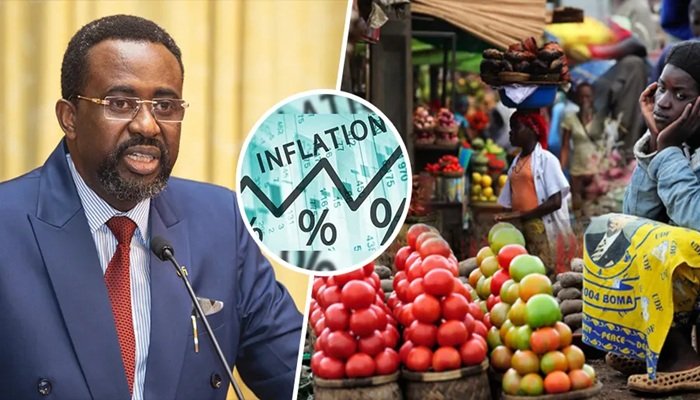
Inflation has declined sharply to 3.2 percent as of March 2026, signaling a significant turnaround from previous highs. External reserves have surged to a record US$14.5 billion, providing a strong buffer against external shocks.
The cedi has also appreciated by 41 percent, reflecting improved confidence in the economy and the effectiveness of foreign exchange reforms. In addition, the banking sector is now better capitalised and has resumed extending more credit to businesses and households.
Dr. Asiama attributed these gains to decisive policy actions, including aggressive monetary tightening and strategic interventions in the foreign exchange market.
2026 Outlook Amid Global Uncertainty
The Governor cautioned that the global economic environment remains uncertain. Rising crude oil prices, now above US$100 per barrel, present potential risks to Ghana’s stability.
However, he expressed confidence in the country’s preparedness. Ghana, he noted, has entered this period with stronger buffers than at any point in recent history.
The Bank’s priorities for 2026 will focus on maintaining credit quality, strengthening banking governance, promoting export finance, and sustaining the gains achieved through stabilisation.
These focus areas are expected to consolidate the progress made while addressing emerging challenges in both domestic and global markets.
Key Policy Questions
Meanwhile, critical policy questions have been asked by experts. The key interest is in the choice between fixed and managed exchange rate frameworks and which approach would best suit Ghana’s economic context.
They also raised concerns about the rising prominence of virtual assets and digital currencies. Questions were posed about how the Bank intends to regulate this space and ensure financial stability in an evolving digital economy.
Additionally, the continued high cost of imported goods and its impact on households has been another concern. While acknowledging improvements in macroeconomic indicators, there is the need to address the gap between economic stability and lived experiences.
Balancing stability and public impact
Dr. Asiama’s presentation reflects the balance central banks must maintain between achieving macroeconomic stability and managing the financial implications of policy actions.
While the accounting effects may present short-term challenges for the Bank of Ghana, the broader economic gains suggest that the country is on a path toward sustained recovery.
As Ghana navigates an uncertain global environment, the focus will remain on preserving stability, strengthening institutions, and ensuring that economic progress translates into tangible benefits for citizens.
READ ALSO: Private Sector Dominates Ghana’s Bad Loans