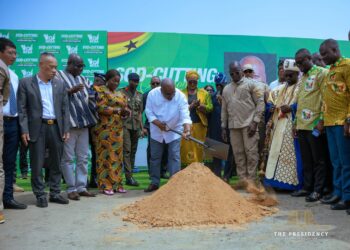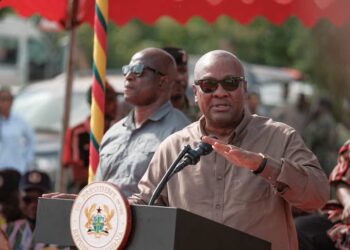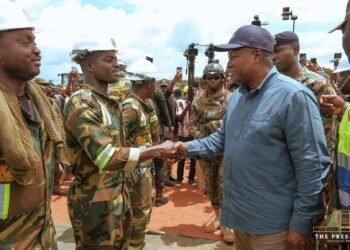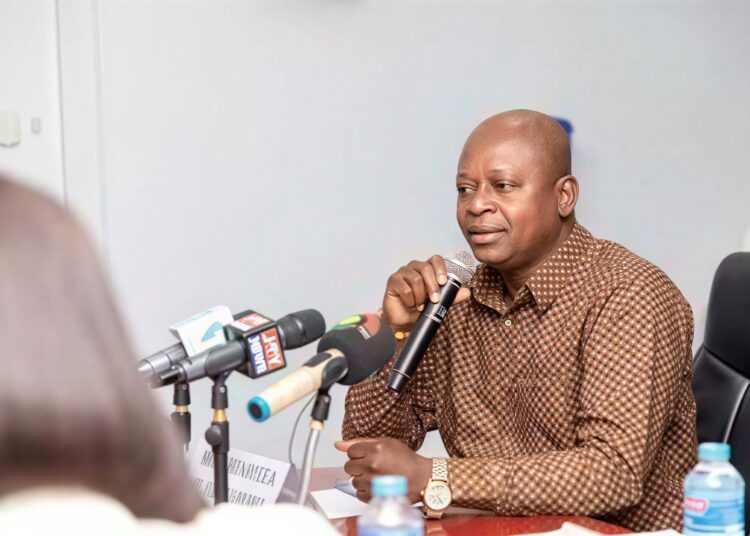
Transport Minister Joseph Bukari Nikpe has officially relaunched the 15-kilometre passenger rail service connecting Kojokrom, Sekondi, and Takoradi at a ceremony on Friday. The line had been inactive since 2023 due to maintenance lapses and funding constraints under the previous administration.
The Minister said the return of the shuttle service marks the continuation of a vision initiated by President John Mahama in 2012 to modernize Ghana’s infrastructure. Although the line briefly operated in 2016, services were discontinued soon after the change in government.
He reiterated that the President’s goal is to improve transportation and connectivity for the people. He added that a functioning economy cannot exist without an efficient transport system, which is why the President remains committed to revamping the rail sector, leading to the relaunch of the Takoradi–Sekondi–Kojokrom rail line today.
“The goal of the President is to improve connectivity and transportation for our people. You cannot have a well-functioning economy when the transport sector is not functioning. That is why the President is committed to revamping the rail sector, and that is why the Takoradi–Sekondi–Kojokrom line has been relaunched today.”
Joseph Bukari Nikpe, Transport Minister
He stressed the critical role of a strong transport system in driving economic activity, adding that the revived Takoradi–Sekondi–Kojokrom route follows the operational success of the Tema–Mpakadan line, which serves more than 6,000 passengers weekly.

Government will assess passenger usage on the western corridor to measure its impact on commuting and local commerce. The Minister also expressed appreciation to Amandi for agreeing, through negotiations, to construct an additional eight kilometres of rail at no cost to the state.
Reliable transport remains essential to economic activity in the Western Region, particularly for workers and traders. Residents of Eshiem and Ketan now have direct access to Takoradi for daily business and professional engagements.
On labour issues, the Minister addressed longstanding salary arrears, confirming that eight months of outstanding wages owed to railway workers have been paid. He added that the remaining arrears are expected to be cleared by the end of the month as part of efforts to stabilize the sector.
He reiterated that affordable public transport is a core responsibility of government, adding that previous service disruptions were caused by inadequate funding and neglect of critical infrastructure.
Looking ahead, the Ministry plans to strengthen the railway’s sustainability by linking lines to mining areas across the region. Transporting bulk cargo to ports is expected to provide a more viable revenue stream than relying solely on passenger services.
By combining freight and passenger operations, the government aims to achieve cost recovery and secure the long-term viability of the railway network. The Minister said the rail sector remains central to the country’s industrialisation agenda.
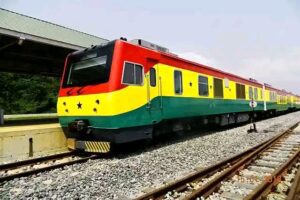
Government Targets Cargo Integration To Sustain Rail Operations
The Minister outlined plans to incorporate mineral haulage into the national rail strategy, stating that cargo transport to ports will generate revenue to support passenger services.
He explained that while passenger trains serve an important public function, the movement of bulk goods offers stronger economic returns. “When we are able to move cargo to the ports, we will be able to break even and sustain operations,” he added.
The Kojokrom line relaunch is expected to pave the way for expanded projects linking the Western Region’s mineral resources to export hubs. The Minister says measures are being put in place to prevent past operational challenges through improved oversight and consistent funding.
Engineers have been tasked with upgrading existing tracks to handle increased cargo volumes and frequency. The dual-use approach is expected to maximise returns on state investment in the railway sector.
The Minister contrasted the current direction with previous years of inactivity, when infrastructure deteriorated due to disuse. He maintained that the rail sector is now a priority within the national development agenda.
The restoration of the service is already easing transport challenges for commuters who previously depended on costlier and slower road options. Businesses in Takoradi are also anticipating increased activity as movement of people and goods improves.
Minister Nikpe assured that further upgrades will be carried out along the Kojokrom–Sekondi–Takoradi corridor, with the aim of building an efficient and accessible railway system for the country.
READ ALSO: “Dating people my age is super stressful”- OliveTheBoy