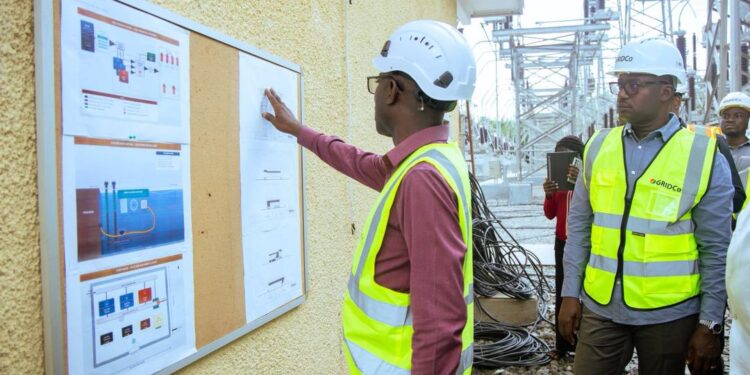
Hon. John Abdulai Jinapor, Minister for Energy and Green Transition, has discloseds that the emergency restoration works at the Akosombo Switchyard, which suffered a devastating fire on 23 April 2026, are on schedule with the new temporary control room slated for completion by the end of September 2026.
This critical infrastructure project aims to replace the facility destroyed in the April incident, which crippled the nation’s power transmission capabilities and resulted in widespread electricity supply disruptions.
The replacement of the destroyed control room is a pivotal step in stabilizing Ghana’s energy sector. Following the fire, which incinerated the switchyard’s control, protection, monitoring, and communication systems, the entire 1,020MW capacity of the Akosombo Generating Station was effectively isolated from the national grid.
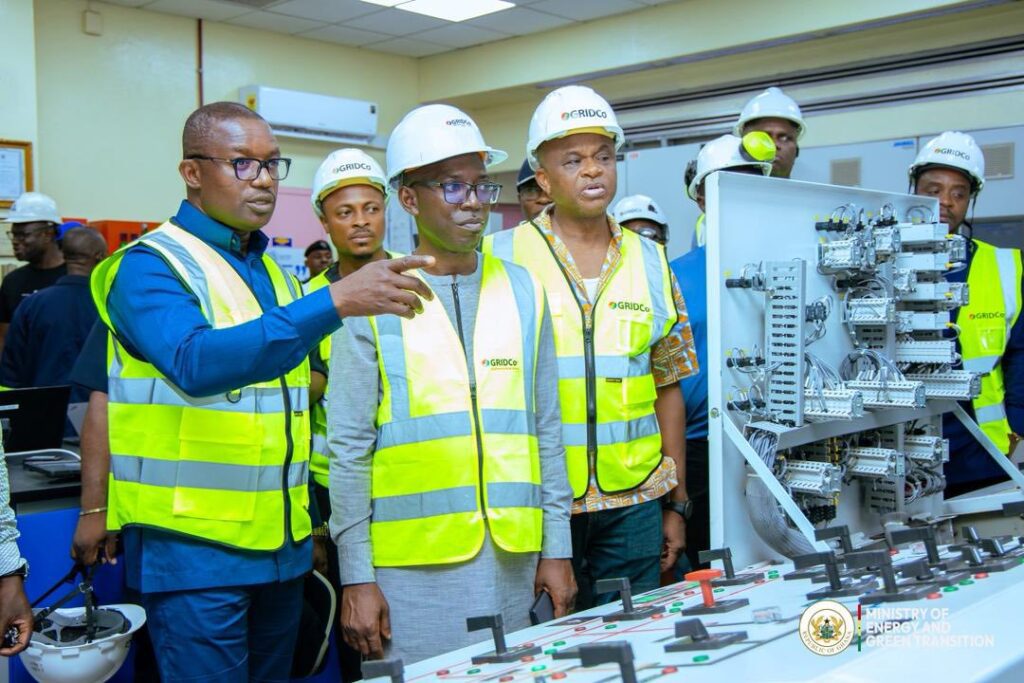
“The Temporary Control Room, which will be housed with modern control systems, is expected to be completed by the end of September 2026.”
Hon. John Abdulai Jinapor

The government’s move to install a temporary facility equipped with modern control systems is designed to provide immediate relief while simultaneously incorporating enhanced fire protection protocols.
These safeguards are intended to secure both the interim setup and the future permanent infrastructure, ensuring that the vulnerabilities exposed by the April fire are permanently addressed.
Engineering Resilience and Grid Stability
The path to restoring the national grid required significant innovation from the Ghana Grid Company (GRIDCo) and the Volta River Authority (VRA).
In the wake of the disaster, engineers implemented an adaptive bypass solution that allowed the Akosombo station to resume power dispatch despite the loss of the primary control room.

By re-engineering the transmission configuration and manually mapping protection schemes, technical teams prevented a prolonged nationwide blackout.
The upcoming temporary control room serves as a “high-tech nerve center,” a crucial component that facilitates real-time monitoring of electricity flow and demand.
Experts note that such facilities are essential for maintaining grid frequency and voltage levels.
According to industry standards, modern control systems utilize Supervisory Control and Data Acquisition (SCADA) technology to detect equipment anomalies such as overheating or voltage fluctuations before they cascade into full-scale system failures.
By automating load-balancing processes, the new facility will significantly reduce the risk of future supply shortages, allowing operators to redirect power from overloaded stations to areas with higher demand.
Enhancing National Transmission Reliability
The integration of an ultra-modern permanent control room, currently in the planning stages, represents a long-term strategic investment for Ghana.
This facility is expected to feature advanced predictive analytics and AI-driven fault detection capabilities.

As noted by the Minister, the focus is not merely on returning to the status quo, but on building a more “resilient and reliable” transmission backbone.
Reliable transmission infrastructure is the foundation of economic stability. By reducing the reliance on manual configurations and providing engineers with sophisticated situational awareness tools, the government aims to minimize the impact of future environmental or technical disturbances.
This systemic upgrade is expected to improve grid efficiency by up to 20%, cutting waste and ensuring that power generation from the Akosombo plant is dispatched with higher precision, thereby reducing the probability of load-shedding events and supporting the operational needs of businesses and households across the country.
Strategic Future-Proofing for Energy Security
The government’s comprehensive response to the Akosombo incident extends beyond the immediate restoration of hardware.
By engaging diverse power sector stakeholders, the Ministry is aligning the national grid with international best practices for energy security.
This includes the implementation of rigorous fire protection systems that go beyond standard requirements, ensuring that critical control nodes are shielded from physical threats.
The transition toward a fully modernized control architecture is also a key component of Ghana’s broader energy transition strategy.
As the national grid evolves to accommodate more diverse energy sources, the ability to manage complex inputs and unpredictable shifts in supply will become increasingly important. The successful completion of the September 2026 deadline will mark a significant milestone in Ghana’s efforts to bolster its infrastructure against systemic shocks, ultimately fostering a more stable, sustainable, and reliable electricity supply for all citizens.
READ ALSO: MTN, Clydestone Rescue Market Amid Banking Stock Losses