Ghana is seeking to build on recent improvements in its upstream petroleum sector by encouraging fresh investment, expanding exploration activities, and sustaining production gains that have begun to reverse years of declining output.
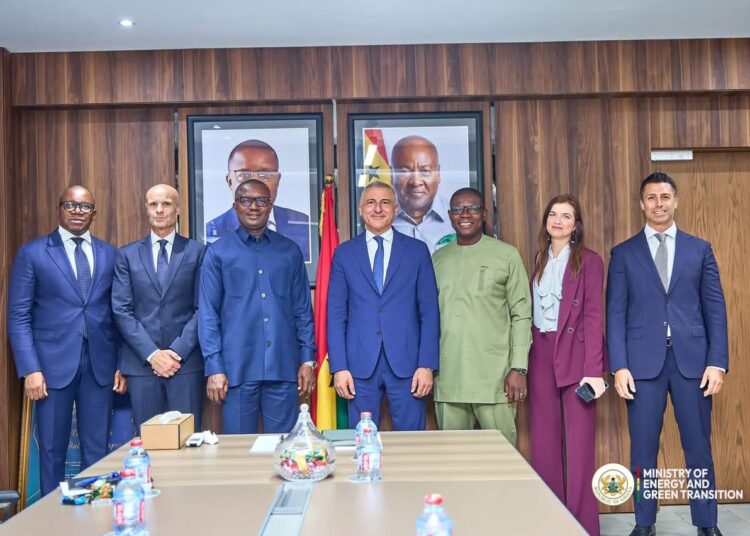
The latest development came as the Minister for Energy and Green Transition, Dr John Abdulai Jinapor, met with the leadership of Italian energy company ENI to review the company’s performance in Ghana and discuss future investment opportunities.
The engagement comes at a time when government is placing renewed emphasis on increasing oil and gas production to strengthen energy security, support power generation and improve petroleum revenues, while maintaining Ghana’s attractiveness as an investment destination for international oil companies.
Focus Shifts from Production Recovery to Long-Term Growth
According to the Minister, discussions with the ENI delegation centred on the company’s recent operational performance, ongoing exploration activities and plans for future field development.
The delegation was led by Guido Brusco, Chief Operating Officer of Global Natural Resources at ENI, who oversees the company’s core oil and gas portfolio.

Dr. Jinapor commended ENI for helping reverse production decline in Ghana’s upstream sector through the successful drilling of new wells and for maintaining high operational performance across its assets.
I commended the company for reversing the production decline, achieving significant milestones through the successful drilling of new wells, record gas production of 282 MMSCF, which supports power generation, and maintaining an outstanding operational reliability of over 99.9%.
Dr. John Abdulai Jinapor, Minister for Energy and Green Transition
The Minister also disclosed that discussions covered appraisal drilling, future investment plans and possible field extensions, signalling government’s intention to sustain production beyond current developments.
The meeting reinforces government’s broader objective of encouraging existing operators to invest further in Ghana’s mature petroleum assets while continuing exploration to unlock additional reserves.
Record Gas Production Strengthens Power Supply
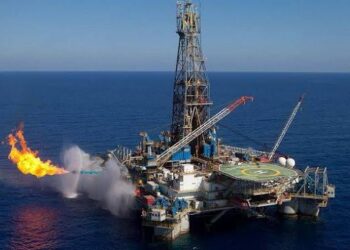
One of the most significant outcomes highlighted during the meeting was ENI’s record gas production of 282 million standard cubic feet (MMSCF) per day, which continues to play a critical role in Ghana’s electricity generation.
Natural gas has become the backbone of Ghana’s thermal power sector, supplying fuel to several generating plants and helping reduce reliance on more expensive liquid fuels.
Higher domestic gas production also contributes to lowering fuel import requirements while improving the reliability of electricity generation.

This aligns with government’s broader efforts to strengthen energy security through increased utilisation of indigenous natural gas, an objective that has featured prominently in recent policy discussions.
The importance of domestic gas infrastructure has also featured in recent debates surrounding the proposed second Ghana Gas Processing Plant, with several policy stakeholders arguing that expanding local gas processing capacity remains essential to supporting long-term industrial growth and reliable power generation.
Exploration Remains Central to Ghana’s Petroleum Strategy
Beyond current production, the meeting also examined ENI’s ongoing exploration programme, including appraisal wells and prospects for expanding existing fields.
Exploration remains critical to Ghana’s upstream industry, as mature fields naturally experience production declines over time.

Identifying additional commercially viable reserves and extending existing fields can help sustain national production levels while preserving future petroleum revenues.
The discussions therefore suggest that government is looking beyond immediate production gains and focusing on maintaining Ghana’s long-term upstream competitiveness.
Stable Investment Climate Remains Government’s Priority
Dr. Jinapor reiterated government’s commitment to providing a predictable policy environment capable of attracting continued investment into the petroleum sector.
I reaffirmed Government’s commitment to maintaining a stable, transparent, and investor-friendly environment that encourages responsible investment, expands production, strengthens energy security, and delivers lasting benefits for the people of Ghana.
Dr. John Abdulai Jinapor, Minister for Energy and Green Transition
Maintaining investor confidence has become increasingly important as African petroleum-producing countries compete for exploration capital while balancing energy transition commitments.

Industry analysts have consistently argued that regulatory certainty, transparent fiscal policies and timely approvals remain key factors influencing investment decisions in the upstream sector.
Government’s engagement with ENI therefore reflects a broader strategy of strengthening relationships with existing operators while encouraging additional investment in Ghana’s petroleum industry.
Why the Meeting Matters
The discussions come against the backdrop of improving performance across parts of Ghana’s upstream sector.
Recent drilling campaigns by operators, including Jubilee’s ongoing production recovery, have demonstrated that mature offshore fields can continue delivering significant output when supported by sustained investment and advanced reservoir management.
For Ghana, maintaining that momentum carries implications beyond crude oil production alone.
However, analysts continue to emphasise that increased production alone will not guarantee broader economic benefits unless petroleum revenues are managed efficiently and investments translate into long-term national development.
Higher oil and gas output can strengthen petroleum revenues, improve foreign exchange earnings, support domestic power generation and create opportunities for further investment throughout the energy value chain.
The government’s continued engagement with major international operators such as ENI therefore signals an effort not only to sustain production growth, but also to position Ghana’s upstream petroleum sector for the next phase of investment and resource development.
READ ALSO: Ecobank Makes History With $450 Million World’s First Nature Bond