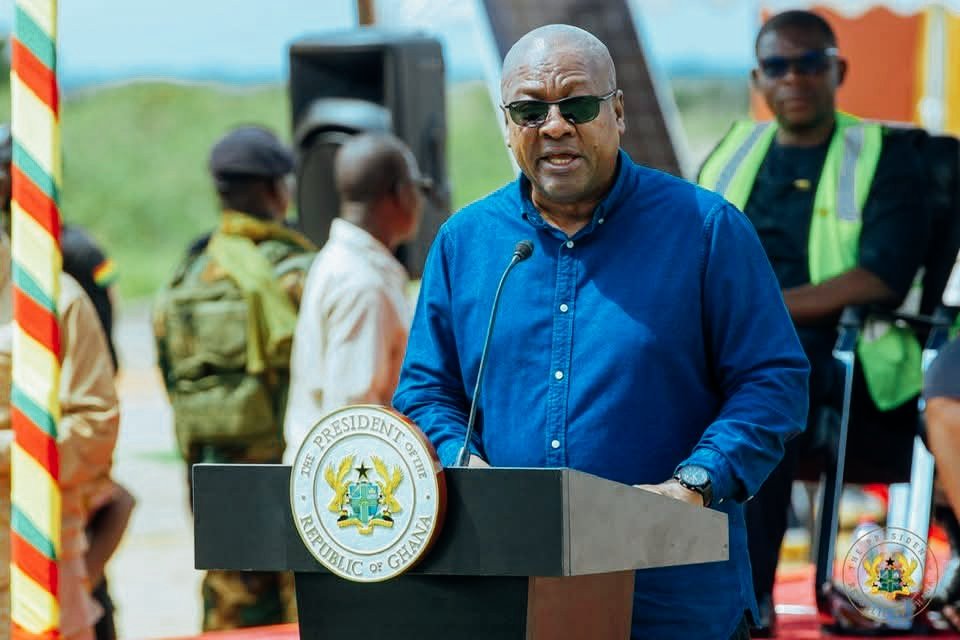
President John Dramani Mahama has unveiled Ghana’s latest renewable energy initiative, the Solar for Industries Project, describing it as a transformative step toward building a clean, reliable, and affordable power base to sustain the nation’s 24-hour economy and industrial recovery agenda.
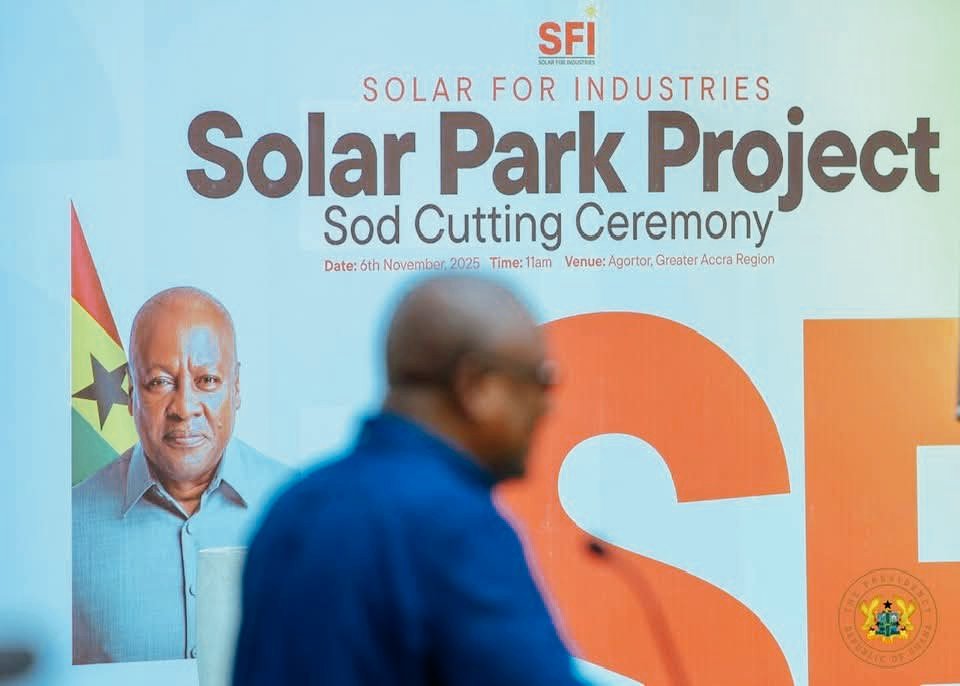
Speaking at the sod-cutting ceremony for the Multi-purpose Solar Energy Project at the Dawa Industrial Park in Agotor on Thursday, November 6, the President said the project represents far more than a conventional power investment, it is a symbol of Ghana’s readiness to lead Africa’s renewable industrial revolution.
“The Solar for Industries Project is not just a power plant.
“It is a message that Ghana is prepared to lead the next phase of Africa’s industrial renaissance, energised by the sun, propelled by innovation, and upheld by our collective determination.”
President John Dramani Mahama
The project, developed by Paxola in partnership with Quam Investments, the International Finance Corporation (IFC), and Chinese EPC contractors, is designed to power manufacturing and export zones across the country.
It forms a crucial part of the government’s broader energy diversification and industrialization strategy under the Ministry of Energy and Green Transition.
Powering Industry Through Clean Energy
President Mahama emphasised that the new solar project would provide the foundation for sustainable industrial expansion, particularly for Ghana’s special economic and manufacturing zones, where access to stable and affordable electricity remains a critical bottleneck.


“This milestone brings together energy, innovation, and industry under one bold vision.
“Today’s ceremony is not just about turning the soil to cut sod, it’s about turning a page in how we power our growth, how we build our industries, and how we secure our energy future.”
President John Dramani Mahama
The project is expected to supply reliable renewable electricity to industrial parks and export processing zones, helping local manufacturers cut energy costs while reducing dependence on fossil fuels.
According to the President, the initiative aligns with Ghana’s national goal of achieving 10 percent renewable energy in the power mix by 2030, a target reinforced by the government’s climate and sustainability commitments under the Paris Agreement.
“This facility will produce clean, stable, and affordable electricity dedicated to Ghana’s manufacturing and export zones.
“This is the core of our 24-hour economy and industrial recovery program.”
President John Dramani Mahama
The President added that the solar facility would play a strategic role in reducing the operational costs of local industries, enhancing competitiveness, and promoting exports, while simultaneously creating thousands of direct and indirect jobs during construction and operation.
A New Model for Africa’s Energy Future

The Solar for Industries Project is being hailed as a first-of-its-kind initiative in West Africa, a large-scale industrial solar park built specifically to power economic production zones.
It is designed to serve as a model for other African nations looking to balance industrial growth with climate-conscious energy development.
President Mahama drew parallels between the project and Ghana’s broader green transition vision, reiterating his administration’s resolve to make clean energy a cornerstone of economic transformation.
“As we cut the sod, let us remember that every light that shines from this solar park will illuminate not just factories and homes, but the aspirations of millions of Ghanaians whose dreams rely on energy and power.”
President John Dramani Mahama
The President further highlighted the role of international partnerships in achieving this goal, noting that Paxola’s collaboration with the IFC and global engineering firms underscored investor confidence in Ghana’s renewable energy market.
Industry observers say the project could generate up to 250 megawatts (MW) of solar power once completed, enough to power multiple industrial parks and support the government’s push toward 24-hour industrial production cycles.
A Pillar of the 24-Hour Economy Agenda

The Solar for Industries Project forms part of President Mahama’s 24-hour economy agenda, a policy framework designed to promote around-the-clock industrial productivity by ensuring reliable energy supply, modern infrastructure, and expanded employment opportunities.
Energy reliability has long been one of the biggest obstacles to Ghana’s industrial growth, with intermittent power supply (“dumsor”) often cited as a major disincentive to investors. The Solar for Industries Project aims to address this constraint sustainably.
President Mahama reiterated that the government’s vision is to “power growth through resilience,” building an energy sector capable of supporting rapid industrialisation without compromising environmental sustainability.
“Our future must be built on innovation, sustainability, and inclusiveness.
“This project demonstrates that we can power factories, expand exports, and create jobs while keeping our air clean and our environment protected.”
President John Dramani Mahama

He added that the project would also support energy security and climate resilience, enabling Ghana to hedge against fluctuations in global fuel prices and external supply shocks.
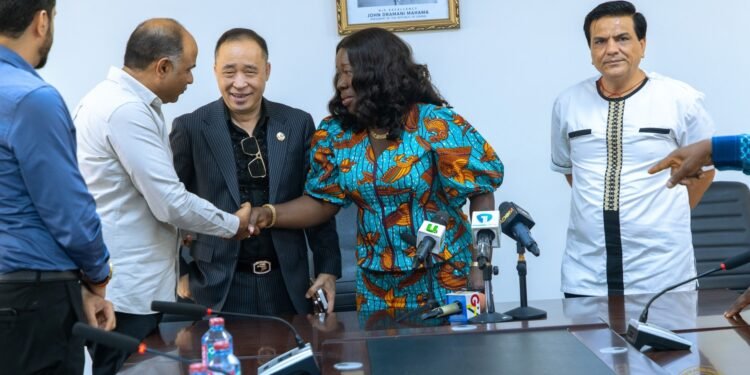
The sod-cutting ceremony was attended by ministers, industry leaders, development partners, and representatives from the private sector, who praised the government’s commitment to green industrialization.
President Mahama thanked the project’s developers and financing partners for their confidence in Ghana’s policy direction, urging more private investors to explore renewable energy opportunities across the country.
As Ghana deepens its renewable energy investments, the Solar for Industries Project is expected to serve as a blueprint for future public-private collaborations in clean energy development, a critical step toward realising the government’s ambition of becoming a regional energy hub for green industrial power.
READ ALSO: Banks to Adjust Lending Rates Upward as GRR Edges Up for November 2025