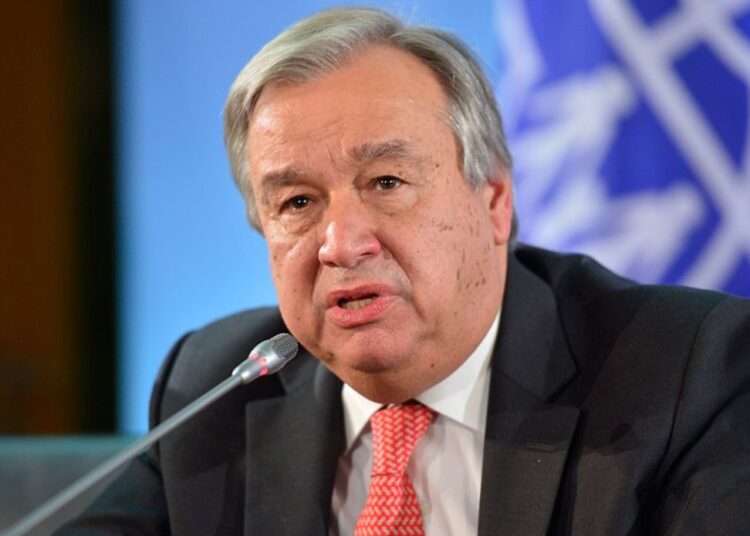
UN Secretary-General, Antonio Guterres has called the inability to limit the rise in global temperatures a “moral failure.”
Speaking at the opening of a leaders’ summit in Brazil before COP30, Guterres said that even a temporary overshoot would have “dramatic consequences.”
He added that it could push ecosystems past catastrophic tipping points, expose billions to unliveable conditions and amplify threats to peace and security.

Guterres said that the oil, gas and coal industries were holding back change. In his fiercest criticism yet, he asserted that these companies commanded vast subsidies and political support and used them to the detriment of everyone else.
“Too many corporations are making record profits from climate devastation, with billions spent on lobbying, deceiving the public and obstructing progress.”
Antonio Guterres
Speaking to Heads of state from more than 30 countries, Guterres called the target of limiting global heating to 1.5C above preindustrial levels a “red line” for a habitable planet and urged his audience to bring about a “paradigm shift” so that the effects of the overshoot could be minimised.
“Every fraction of a degree means more hunger, displacement and loss – especially for those least responsible. This is moral failure – and deadly negligence.”
Antonio Guterres
Guterres said there had been some progress but it was not fast enough. Many countries had put forward more ambitious plans to cut emissions. He asserted that if they were fully implemented, the world would be on a pathway to about 2.3C of global warming.
“Each year above 1.5 degrees will hammer economies, deepen inequalities and inflict irreversible damage. We must act now, at great speed and scale, to make the overshoot as small, as short, and as safe as possible – and bring temperatures back below 1.5C before the end of the century.”
Antonio Guterres
2025 To Be Among Three Hottest Years On Record
Meanwhile, the World Meteorological Organization (WMO) said in a report released today in advance of next week’s COP30 UN climate summit in Brazil, that this year is set to be among the hottest on record.
According to the report, years 2023, 2024 and 2025 are set to be the hottest years ever recorded, with this year on track to be the second or third hottest ever in 176 years of record keeping.
The UN report offered some stark observations, including warnings that concentrations of greenhouse gases have grown to new record highs, locking in more heat for the future, while the past 11 years, 2015 to 2025, will individually have been the 11 warmest years.
WMO Chief Celeste Saulo said in a statement that together, these developments make “it clear that it will be virtually impossible to limit global warming to 1.5C [2.7F] in the next few years,” referring to the 2015 Paris climate accords.
The legally binding pact limiting greenhouse gas emissions aimed to provide the world a roadmap for breaking away from fossil fuels that have powered the global economy since the Industrial Revolution and looked to limit global warming to well below 2C (3.6F) above pre-industrial levels, and to 1.5C if possible.
However, the world has fallen short of its Paris obligations, with the WMO now saying limiting global heating to the goals of the 2015 agreement is virtually impossible
“This unprecedented streak of high temperatures, combined with last year’s record increase in greenhouse gas levels, makes it clear that it will be virtually impossible to limit global warming to 1.5C in the next few years without temporarily overshooting this target.
“But the science is equally clear that it’s still entirely possible and essential to bring temperatures back down to 1.5C by the end of the century.”
Celeste Saulo
In the report, the WMO said that the mean near-surface temperature — about 2 metres (6 feet) above the ground — during the first eight months of this year stood at 1.42C (2.5F) above the pre-industrial average.
At the same time, concentrations of heat-trapping greenhouse gases in the atmosphere and ocean heat content continued to rise this year, up from 2024’s already record levels.
READ ALSO: Govt Accountability Series: IMANI Hails Move, Demands Balance Between Accountability and Due Process