Human Rights Watch has called for a strong global treaty to protect gig workers, warning that workers across the world continue to face systemic exploitation marked by low pay, unsafe working conditions and limited or no access to social security, as governments prepare for landmark International Labour Organisation (ILO) negotiations on platform work in June 2026, aimed at setting global labour standards
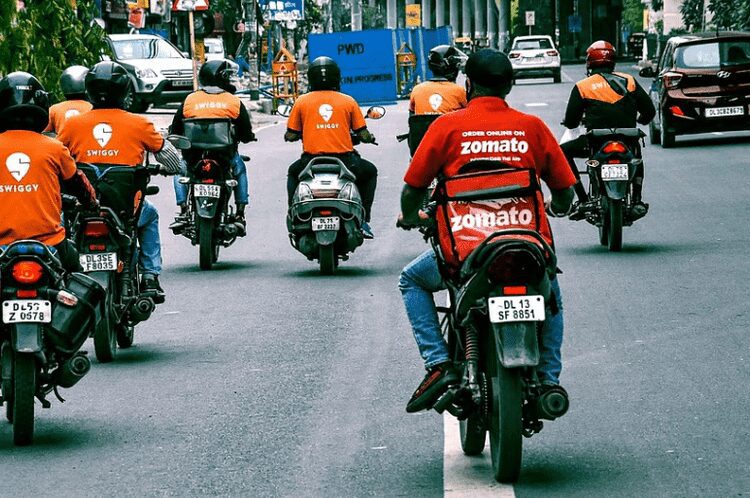
In a major report, Human Rights Watch highlighted that the rapid expansion of the gig economy has outpaced regulatory frameworks, leaving millions of workers exposed to unpredictable incomes, excessive working hours and serious safety risks, with little protection in cases of injury, illness, or job loss.
The multimedia report, titled “Algorithms of Exploitation: Rights Abuses in the Gig Economy and the Global Fight for Change,” examined conditions in nine countries, including India, Kenya, Pakistan, Mexico, the United Kingdom, Lebanon, Kuwait, Saudi Arabia, and the United Arab Emirates. It draws on interviews with drivers, delivery workers and migrant returnees who previously worked for platform companies in the Gulf region.
Human Rights Watch noted that its findings reveal a consistent pattern across regions: companies rely on digital platforms and algorithmic management systems that classify workers as independent contractors while maintaining significant control over their labour conditions, pay structures and access to work.
According to Lena Simet, Senior Economic Justice Advisor at Human Rights Watch, “The ILO negotiations are the first global effort to get governments to course correct and ensure that using this model does not come at the expense of workers’ rights,” adding that, “Platform companies have built a business model that sidesteps labour protections and shifts risks and costs onto the workers.”
Human Rights Watch estimates that platform work has expanded dramatically in recent years, with ILO figures indicating it nearly doubled between 2016 and 2021.
The World Bank further estimates that as many as 435 million people worldwide now earn income through digital labour platforms, making the sector one of the fastest-growing forms of employment globally.
Despite this expansion, the report adds that labour protections have not evolved at a similar pace, creating what it describes as a widening governance gap in the global labour market.
Workers interviewed across the nine countries described a shared set of challenges, including declining pay rates, lack of job security and exposure to violence and accidents without adequate institutional support.
According to Apraham Orfalian, a driver in Beirut, his income has steadily declined over several years, and he was left without assistance after a violent robbery in which his vehicle and phone were stolen while he was working. Similarly, Agnes Mwongera, a driver in Nairobi, indicated that she was assaulted by a passenger and received no effective response after reporting the incident to her platform company, leaving her feeling unprotected and vulnerable on the job.
Human Rights Watch argues that these experiences are not isolated incidents but reflect structural weaknesses in the platform economy model. By treating workers as self-employed contractors, companies are able to avoid liability for workplace protections while still exerting significant control through algorithmic systems that determine task allocation, earnings rates and account access.
Human Rights Watch Demands Safer Conditions for Gig Economy Workers
As governments gear up for landmark negotiations under the International Labour Organisation (ILO), Human Rights Watch is urging the adoption of a comprehensive treaty framework that would recognise a presumption of employment in situations where companies exert substantial control over workers, guaranteeing access to basic labour protections regardless of how workers are classified.
It is also urging mandatory guarantees for fair pay, including compensation for all working time and earnings aligned with at least minimum wage or living wage standards, alongside universal access to social security systems covering injury, unemployment, illness and old age.
Other recommendations include legally binding requirements for algorithmic transparency, stronger oversight of automated decision-making, and clear mechanisms allowing workers to challenge deactivation or unfair treatment by platforms.
Human Rights Watch further calls for strengthened occupational safety protections tailored to the realities of gig work, including safeguards against extreme weather conditions, road hazards and workplace violence, as well as explicit guarantees for workers’ rights to organise, unionise and bargain collectively without fear of retaliation.
Human Rights Watch added that, it has engaged in the ILO consultation process alongside other civil society groups, aiming to ensure that emerging global standards reflect the realities faced by platform workers in both developing and advanced economies.
READ ALSO: Genevieve Nnaji Makes Triumphant Return in BBC Thriller ‘Wahala’