President John Dramani Mahama has unveiled a comprehensive national strategy aimed at revitalising Ghana’s poultry industry and reducing the country’s heavy dependence on imported poultry products, which cost the nation over $350 million in 2023 alone.
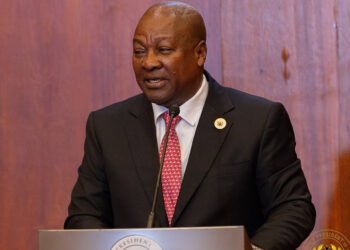
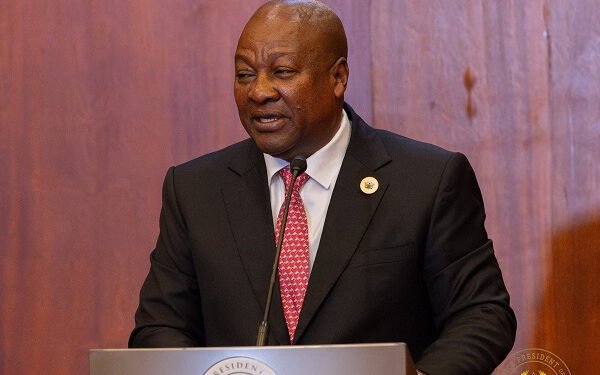
Speaking at the launch of the Nkoko Nkitinkiti Programme (Household and Backyard Poultry Production Initiative) in Kumasi, the President described the new initiative as a courageous step towards restoring food self-sufficiency, strengthening household resilience, and fostering sustainable livelihoods.
Addressing a large gathering of stakeholders, farmers, and youth groups, President Mahama said the initiative represents not just another government intervention but a “national movement” rooted in the shared vision of rebuilding Ghana’s agricultural independence.
“It is with great pride and a deep sense of national duty that I stand before you in this historic city of Kumasi, the birthplace of enterprise and innovation, to launch a programme that addresses the core of our national food security and inclusive growth agenda”.
President John Dramani Mahama
The Nkoko Nkitinkiti Initiative, according to the President, forms a flagship element of the broader Poultry Industry Revitalisation Programme, which itself is a key component of the government’s Feed Ghana Programme — a national plan designed to promote agricultural transformation, food sovereignty, and shared prosperity.
He explained that for too long, Ghana’s once vibrant poultry sector has been constrained by structural challenges, including high feed costs, limited access to improved breeds, and insufficient processing capacity.
“For too long, Ghana’s poultry industry, which was once a lively contributor to rural incomes and national nutrition, has faced structural bottlenecks… We must and we will reverse this trend”.
President John Dramani Mahama
A Three-Pronged Strategy
Outlining the details of the government’s strategic response, the President said the plan will be implemented through a three-pronged strategy covering production, processing, and marketing.


The first phase, known as the Poultry Farm to Table Anchor Farmers and Grower Support Scheme, will support 50 anchor poultry farmers who have been carefully selected across the country.
“Each of these farmers will receive 80,000 birds, housing, logistics, and technical support. Collectively, they are expected to produce about four million birds, boosting local feed demand and establishing direct market connections between producers and processors.”
President John Dramani Mahama

The second phase, under the Food Systems Resilience Programme, will target 500 small and medium-scale poultry farmers nationwide. These farmers, President Mahama said, will be supported to produce an additional three million birds, bridging the production gap between large-scale farmers and community-based producers.
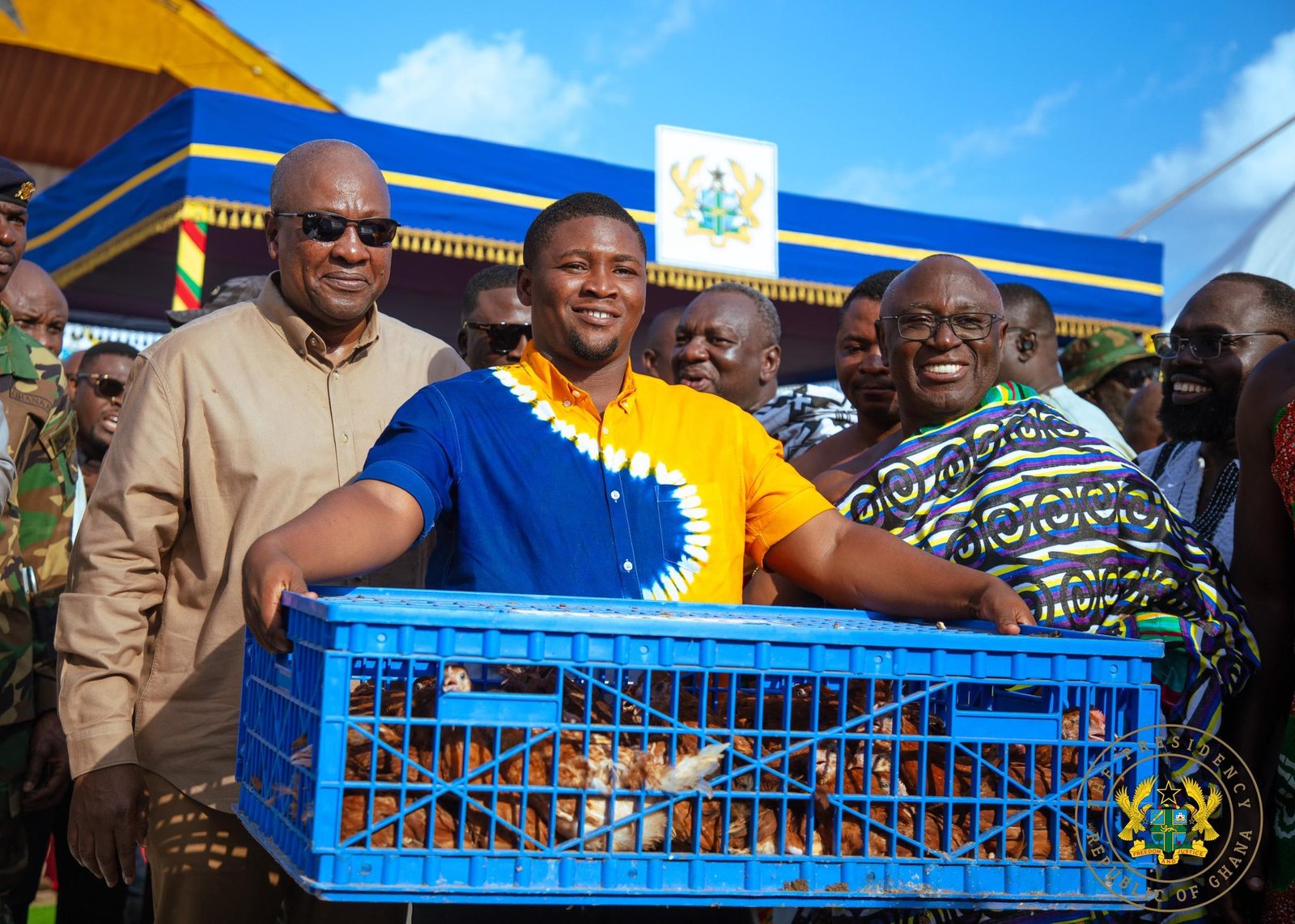
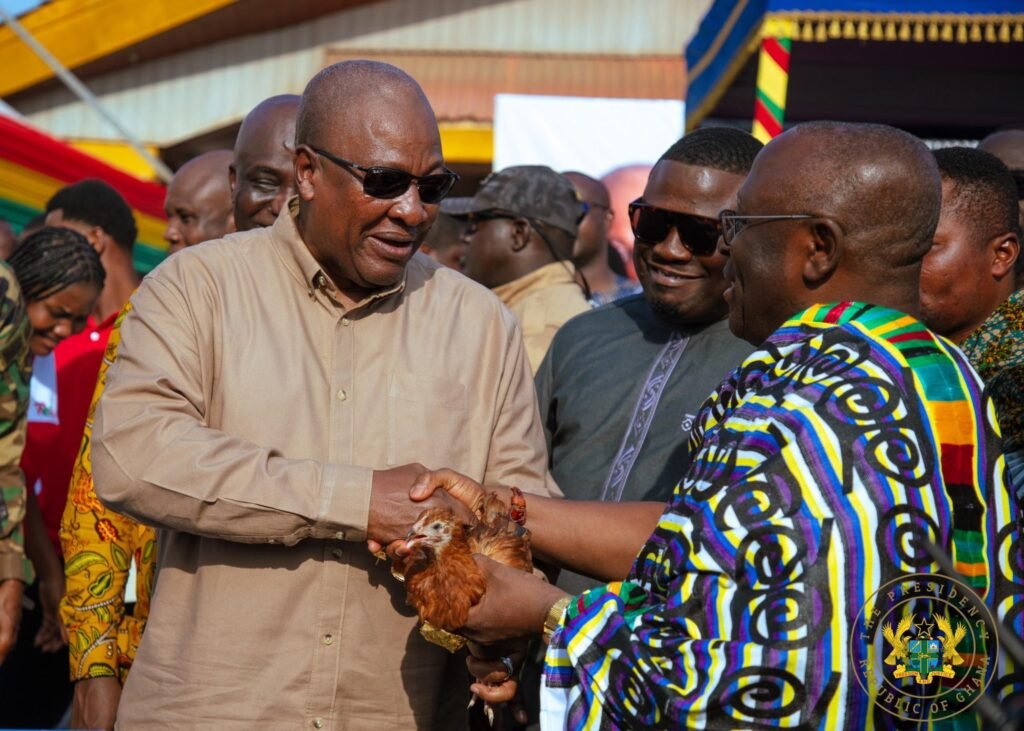
The third and perhaps most popular component, the Nkoko Nkitinkiti Initiative (Backyard Poultry for Nutrition and Livelihoods), focuses on bringing poultry production directly to homes, schools, and communities.
Under this phase, the government will distribute three million birds across all 276 constituencies, with each constituency receiving 10,000 birds, benefiting approximately 60,000 households nationwide.
“Each household participating in Nkoko Nkitinkiti will receive 50 birds, feed support, and technical guidance to ensure the sustainability of their projects”.
President John Dramani Mahama
He emphasised that the breeds to be distributed — pullets and cockerels — have been selected for their resilience, adaptability, and high productivity under local conditions.
“Before this national rollout, the programme was tested in 13 districts, and 13,000 farmers benefited. The test demonstrated that backyard poultry is not a marginal activity; it is a transformative route to better nutrition, food security, job creation, and local agribusiness”.
President John Dramani Mahama
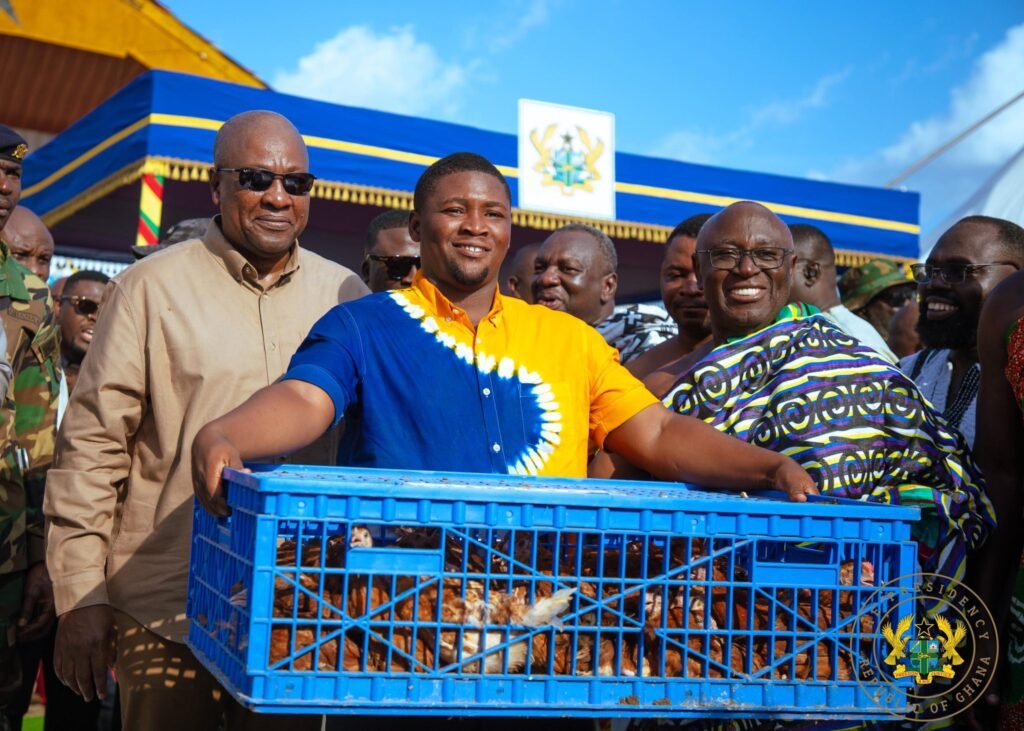
President Mahama expressed confidence that the initiative would empower households to build sustainable microenterprises capable of generating income and contributing significantly to Ghana’s food security goals.
“Our goal is clear — every household poultry enterprise must develop into a sustainable microenterprise capable of generating income, creating jobs, and contributing to the nation’s food security”.
President John Dramani Mahama
Establishing a Modern Poultry Processing Factory
Acknowledging that production alone cannot guarantee success, President Mahama announced the government’s plan to complement the initiative with improved processing and marketing infrastructure.
He disclosed that the Ministry of Food and Agriculture is establishing a modern poultry processing factory in Bechem, in the Bono Region, to serve as a market and processing hub for small and medium producers in Ashanti, Bono, and Ahafo regions.
“I will cut the sod for its commencement next month. Procurement processes are underway, and once operationalised, the facility will serve as a market for all small and medium producers”.
President John Dramani Mahama
The President reiterated his government’s long-term goal to increase Ghana’s poultry self-sufficiency from the current 12 percent to over 75 percent by 2028.

He stressed that this ambitious target reflects his administration’s determination to make agriculture a cornerstone of economic transformation, reduce import dependence, and strengthen rural livelihoods.
President Mahama also highlighted the broader economic benefits of the Nkoko Nkitinkiti Programme, including job creation, foreign exchange savings, and the promotion of local agribusiness innovation.
“The time has come for Ghana to reclaim the pride of producing, processing, and consuming what we ourselves grow,” he declared, adding that the initiative would also promote better nutrition outcomes and household resilience against economic shocks.
The launch of the Nkoko Nkitinkiti Programme drew enthusiastic applause from stakeholders who described it as a timely intervention in addressing the country’s growing food import bill.

With poultry consumption in Ghana on the rise, many have expressed optimism that this initiative could be the turning point for local production and agribusiness growth if effectively implemented.
As the programme rolls out across the nation, thousands of households, farmers, and entrepreneurs are expected to benefit from the renewed investment in poultry production, reaffirming President Mahama’s commitment to making food security and sustainable agriculture central to Ghana’s development agenda.
READ ALSO: GoldBod not Perturbed by Political Influence in Gold Smuggling Fight – Deputy CEO