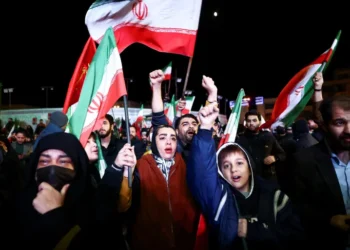
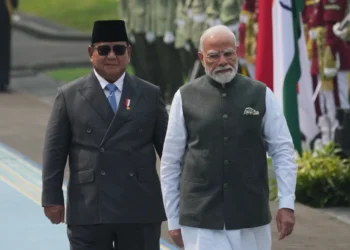
Sheikh Hasina, the ousted Prime Minister of Bangladesh, has been sentenced to death after being found guilty of crimes against humanity for the violent suppression of student protests last year that led to the collapse of her government.
A panel of three judges from the International Crimes Tribunal, Bangladesh’s domestic war crimes court, delivered their verdict, ruling that Hasina was responsible for inciting hundreds of extrajudicial killings carried out by law enforcement.
The special tribunal found that Hasina was responsible for ordering a violent crackdown on student-led protests last year, during which the UN estimates up to 1,400 people died, most by gunfire from security forces
More than a year later, neither Sheikh Hasina nor the Awami League have apologised or expressed remorse for what had happened, causing lot of seething anger. The families of hundreds of those killed and injured want justice.
One of the judges said as he delivered her verdict, “Sheikh Hasina committed crimes against humanity by her incitement, order and failure to take punitive measures.”
The judges pronounced that it was “crystal clear” that Hasina “expressed her incitement to the activists of her party… and furthermore, she expressed that she ordered to kill and eliminate the protesting students.”
Hasina faced five charges primarily related to inciting the murder of the protestors, ordering protestors be hanged, and ordering the use of lethal weapons, drones and helicopters to suppress the unrest. She denies the charges.
She was tried in her absence and the trial was criticized by her lawyers, who last week submitted an appeal to the United Nations Special Rapporteur on extrajudicial, summary or arbitrary executions over “serious concerns about the lack of fair trial rights and due process.”
Hasina has been living in self-imposed exile in India since August last year, after the student protesters forced her and her Awami League political party out of power.
The interim Bangladeshi government has formally requested her extradition but New Delhi has so far remained silent on the request.
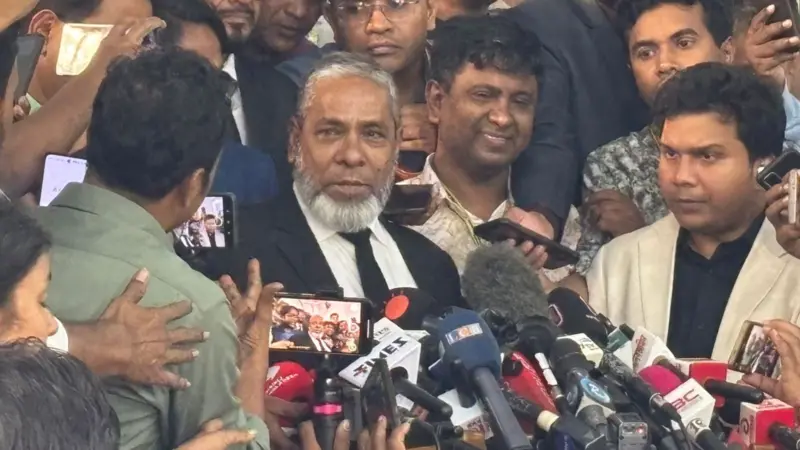
Bangladesh’s Attorney General said that Sheikh Hasina’s sentence will be “effective from the day of arrest.” Her state-appointed lawyer Mohammad Amir Hossain said that he is “sad [and wishes] the verdict had been different.” “I even cannot appeal because my clients are absent; that’s why I am sad,” he added.
According to the police, violence erupted in capital Dhaka ahead of the verdict, with several Molotov cocktails exploding after being thrown by people on bikes yesterday, Sunday, November 16, 2025.
Security was tightened, with armored vehicles and officers with riot shields placed around the courthouse, and police, border guard and rapid action teams deployed near key government buildings.
Hasina Condemns Court Verdict

Hasina condemned the Dhaka court verdict as “biased and politically motivated.”
In a five-page statement released after the verdict, Hasina asserted that the death penalty is the interim government’s way of “nullifying the Awami League as a political force.”
Hasina ‘s party, the Awami League party has been banned from political activities. Hasina, who is in exile in India, had earlier called the trial a “farce” and denied all the charges against her. “I am not afraid to face my accusers in a proper tribunal where the evidence can be weighed and tested fairly,” she said, adding that she had challenged the interim government to bring these charges before the International Criminal Court in the Hague.
She noted that she is “very proud of [her] government’s record on human rights and development.”
It is feared that the verdict could set off a wave of political chaos ahead of national elections expected in February next year. There’s also the question of how the verdict will be implemented if Hasina is found guilty, as she is currently in exile in India.
READ ALSO: BPS Demands Independent Verification of Presidential Jet Safety