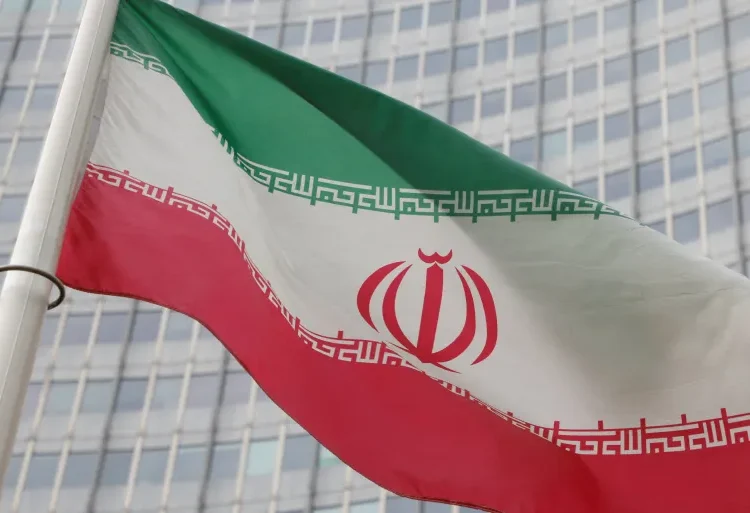
Iran’s Chief negotiator and Parliament Speaker Mohammad Bagher Ghalibaf has accused US of “major violations” of the memorandum of understanding between Washington and Tehran.
Ghalibaf said that the violations include what Tehran sees as US interference in Iran’s arrangements for the Strait of Hormuz, the continued threat of further US strikes, the reinstatement of sanctions on Iran’s oil sector and Israel’s continued violations of the memorandum in Lebanon.
He warned that “the era of bullying and extortion is over,” adding that such pressure “leads nowhere.”
His remarks come after the US launched new strikes on Iran despite a promise by President Donald Trump to pause attacks during the seven-day funeral of Iran’s slain Supreme Leader Ali Khamenei. The US Central Command (CENTCOM) said the strikes were conducted “in response to Iranian attacks on three commercial vessels that were transiting the Strait of Hormuz.”

CENTCOM said that the strikes had hit “over 80 targets with precision munitions” before concluding the strikes approximately four hours after they began.
At least three cities, and multiple locations within them, were hit by US forces overnight. Qeshm Island was one of the main targets, with at least seven locations hit. The city of Sirik, which overlooks the Strait of Hormuz, was also struck, with six locations targeted. In Bandar Abbas, Iranian officials say 10 locations were hit, including telecommunications towers.
It is said that the US strikes targeted Iranian air defence systems, coastal surveillance systems, surface-to-air missiles, antiship cruise missiles and drone launch sites.
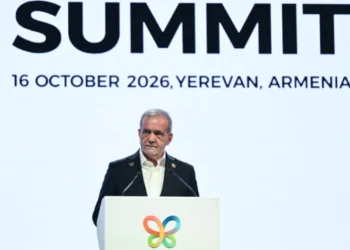
Iranian President Masoud Pezeshkian, who was in Iraq for the funeral procession of Iran’s slain Supreme Leader Ali Khamenei, headed back to Iran after the attacks.
The memorandum of understanding (MoU) agreed between the US and Iran in June was supposed to put an end to the war the US and Israel began against Iran in late February. The MoU mandated lifting the US naval blockade on Iran in exchange for Tehran reopening the vital Strait of Hormuz. The US also agreed at the end of June to waive sanctions on Iranian oil for 60 days.
However, on Tuesday, the US Department of the Treasury moved to revoke the temporary suspension of sanctions on Iranian oil, less than 20 days after the MoU was signed. The department cancelled a licence announced in June that had allowed Iran to produce, sell and deliver crude oil and related products through August 21.
The move by the Treasury Department comes after tankers in the Strait of Hormuz were attacked. According to the United Kingdom Maritime Trade Operations (UKMTO), a Qatari tanker caught fire off the coast of Oman on Monday after being struck by an “unknown projectile” in the Strait of Hormuz.
Iranian television reported claims that the liquefied natural gas (LNG) tanker came under attack after ignoring warnings, but Tehran did not directly claim the assault. Neither CENTCOM nor Iran’s Islamic Revolutionary Guard Corps (IRGC) commented on the incident.
A second ship, a Saudi-flagged crude oil tanker, was also damaged in the Strait of Hormuz when the IRGC fired missiles.
Iran’s Deputy Foreign Minister, Kazem Gharibabadi, in a post on X, denounced the US’s decision to revoke the waiver on Iranian oil exports and condemned the recent US attacks on the country.
He asserted that the actions constitute “blatant violations” of Article 1, 2 and 10 of the Islamabad MoU between Tehran and Washington.
The US has repeatedly violated the MoU, “due to the actions of the Zionist regime in Lebanon and threatening statements against Iran,” he said, referring to Israel’s attacks in Lebanon. “Iran, while issuing a serious warning regarding the consequences of America’s breach of the agreement, will take decisive actions to safeguard its national interests and security,” he added.
Iran Conducts Military Response
Meanwhile, the Islamic Revolutionary Guard Corps (IRGC) announced Iran’s military response, saying that it struck 85 key US military facilities across the region, including the US Fifth Fleet headquarters at Bahrain’s Salman Port and the Ali Al Salem Air Base in Kuwait. The IRGC also claimed it had shot down a US MQ-9 drone over southern Iran.
It followed after Iranian military leaders vowed a “crushing response” to the US attack, adding that they would not allow foreign interference in the management of the Strait of Hormuz.
Mohsen Rezaei, Adviser to Iran’s Supreme Leader Mojtaba Khamenei, said on social media that Iran is prepared to defend itself against further attacks from the US, adding, “These threats will increase the preparedness and cohesion of the Iranian nation. In the event of any new aggression, Iran is fully prepared to defend itself.”
READ ALSO: Four Dead Pensioners Received GH¢7.49 Million Over Seven Years, Auditor-General