The World Bank, in partnership with the government of Ghana, is continuing the support of vulnerable households across all the regions in Ghana through the Ghana Productive Safety Net Project (GPSNP) II.
The GPSNP, through a combination of cash transfers and productive inclusion programs, is helping households and families meet their basic needs, build sustainable livelihoods, and become more resilient to economic shocks.
A review of the project has been conducted between the government of Ghana and the World Bank, with an ongoing assessment of all the beneficiaries. The project is set for review every year to ensure the right groups receive the benefits.
“To ensure the program is reaching the right people, the government of Ghana is reassessing LEAP beneficiaries and has increased the cash transfer amount in 2025, with annual reviews to ensure the money has adequate value to support basic household needs.”
World Bank
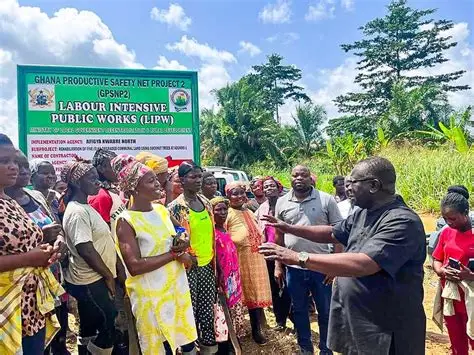
According to the World Bank, the project is “reaching communities—including women, persons with disabilities, and the elderly—by expanding the Livelihood Empowerment Against Poverty (LEAP) cash transfer program and providing training, grants, and coaching to help families start or grow small businesses through Productive Inclusion (PI) and Labor-Intensive Public Works (LIPW).”
The GPSNP Support
The GPSNP is a World Bank initiative that targets the poor, less privileged, and most vulnerable households in Ghana, including those in rural areas, women, children, and persons with disabilities. The World Bank has vulnerability criteria and social protection systems, like the Ghana National Household Register, for selecting beneficiaries.
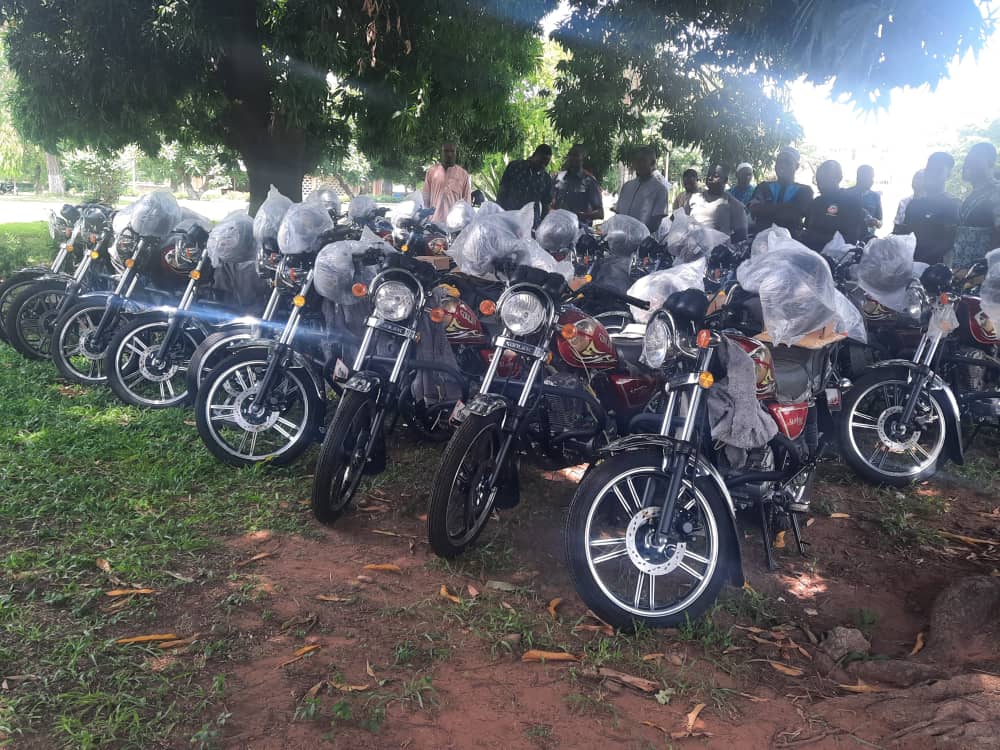
The development objective of the GPSNP for Ghana is to aid the government in strengthening safety net systems that improve the productivity of the poor.
The project has several components under which it operates. First, is the productive inclusion components that support productive inclusion activities for extremely poor households in targeted communities.
There is also the Labor-Intensive Public Works (LIPW) program component, which is to extend income-earning opportunities to poor households through LIPW. The LIPW maintains or rehabilitates assets that improve the productivity of communities and respond to the anticipated effects of climate change. Under this are the Livelihood Empowerment Against Poverty (LEAP) and Cash Transfers sub-components, which are meant to smoothen consumption among extremely poor households.
The fourth component is the social protection systems strengthening. This is to strengthen social protection delivery systems to improve the efficiency, effectiveness and transparency of safety net interventions through (i) assisting Ghana National Household Registry (GNHR) in its collection of quality household data in targeted regions; (ii) designing and rolling out a single window citizen engagement service (SWCES); and (iii) providing technical assistance for strengthening the monitoring and evaluation (M&E) framework and system, including an impact evaluation for the project and development of an management information system (MIS).
There is also the Project Management, Coordination, and Institutional strengthening component, and finally the Contingent Emergency Response Component.
Phases of the Project
The project began in 2019 (the project appraisal document was prepared in October 2018), with the World Bank and supported by the government of Ghana. The project was initially programmed to last for four years. An extension of the GPSNP 1 was made in October 2024. It was implemented by the Ministry of Local Government Decentralization and Rural Development (MLGDRD) and the Ministry of Gender, Children, and Social Protection (MoGCSP) with funding from the World Bank.
The extension (GPSNP 2) was expected to end in 2025, as it builds on the GPSNP 1 to further expand and enhance social safety nets and provide access to productive income-generating opportunities for the poor living in urban areas in Ghana. It was launched in Bolgatanga, Upper East Region. The GPSNP 2 was set to benefit 10,000 vulnerable urban and peri-urban people living in both rural and urban areas.
The government of Ghana and the World Bank, in October 2025, commenced a joint Implementation Support Mission (ISM) to review progress under the Ghana Productive Safety Net Project II (GPSNP 2), endorsing their shared commitment to improving livelihoods and strengthening social protection for poor and vulnerable households across the country.
The progress made so far under the GPSNP 2 includes the completion of feeder roads, dams, and the Wa Tendamba Urban Park, as well as the successful implementation of activities in several Productive Inclusion (PI) communities.
The government has assured its steadfastness and commitment to sustaining social intervention programs that directly improve living conditions, expand livelihood opportunities, and promote inclusive local development. These tangible outcomes reflect the government’s proactive approach to improving infrastructure and livelihoods in rural and peri-urban areas.
The poor and vulnerable in both rural and urban communities in Ghana continue to enjoy income and productivity support to alleviate poverty and improve living standards.
READ ALSO: SML Scandal: Court Sets Nov. 24 Arraignment for Ofori-Atta and 7 Others