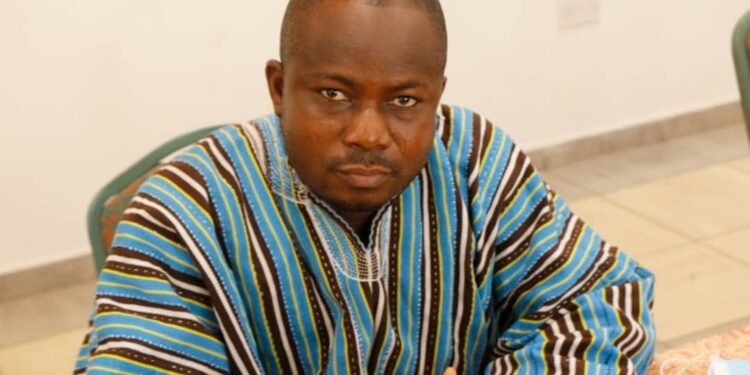
Ghana’s debate over the future of its upstream petroleum sector has intensified, following a strong public intervention from Kwadwo Poku, Executive Director of the Institute for Energy Policies and Research (INSTEPR).
With the government signalling interest in a possible state-led acquisition of Springfield Exploration and Production’s stake in the West Cape Three Points Block 2 (WCTP2), Poku is calling for a national rethink about how the country treats its own industry innovators in moments of crisis.
“Do Ghanaians want to see their compatriots succeed? Nobody is suggesting government should take money from the treasury and hand it to Springfield.
“The question is whether we even want to see a Ghanaian entrepreneur rise in a sector dominated by foreigners.”
Kwadwo Poku, Executive Director of INSTEPR
The controversy surrounding Springfield founder Kevin Okyere has grown increasingly complex, shaped by overlapping legal, regulatory and commercial battles that have raised questions about the company’s future.
As these issues converge, they threaten to reshape not just Springfield’s trajectory but the wider governance of Ghana’s upstream oil industry.
The government has already signalled that it is evaluating a strategic intervention. The Ministry of Energy has confirmed that the Ghana National Petroleum Corporation (GNPC) and the Petroleum Commission are collaborating on a full, independent valuation of Springfield’s interest in WCTP2.


Officials frame the move as a necessary step to safeguard key national petroleum assets that risk being stranded due to operational and commercial delays.
Yet this process unfolds at a precarious moment for Ghana’s upstream industry. Production from the country’s major fields is declining, while global investor enthusiasm for frontier exploration appears to be weakening.
For some analysts, a state takeover could help stabilise the asset; for others, it could deepen existing uncertainties.
Support Local Risk-Takers

Poku insists that criticism of Okyere is misplaced and potentially damaging to the national interest.
He argued, “There are structured ways the government, through GNPC-Explorco, can intervene,” emphasizing that supporting a local entrepreneur does not mean diverting state funds irresponsibly.
“Nobody is suggesting government should take money from the treasury and hand it to Springfield.
“The question is whether we even want to see a Ghanaian entrepreneur rise in a sector dominated by foreigners.”
Kwadwo Poku, Executive Director of INSTEPR
For him, the key issue is national attitude. Okyere, he noted, has invested heavily in a high-risk venture spending more than US$200 million on deepwater development yet instead of rallying behind such ambition, parts of the Ghanaian public appear to be celebrating his challenges.
“When Nigerians supported Dangote with billions to finish his refinery, we applauded them.
“A Ghanaian has invested over US$200 million in deepwater oil development, and instead of national support, some people are cheering for his downfall.”
Kwadwo Poku, Executive Director of INSTEPR
The controversy comes at a difficult time for Ghana’s petroleum sector. Declining output from Jubilee, TEN and Sankofa, combined with slow-paced exploration activity, has raised concerns about future revenue streams and energy security. Investors, once enthusiastic about Ghana’s prospects, have become increasingly cautious.
Poku believes that this moment requires a deliberate national decision about the role of local champions in shaping the next phase of the industry.
He argues that dismissing or undermining Ghanaian investors sends a troubling message internationally and may further erode confidence in the sector. “We should ask ourselves: what exactly is wrong with us?” he said, emphasising the need to rethink how Ghanaians respond to local ambition.
A Defining National Question

As government weighs whether and how to intervene in WCTP2, Poku warns that the broader implications go far beyond a single company.
The choices made now, he said, will reveal whether the country is prepared to nurture domestic capacity in a capital-intensive, technically demanding industry.
“My question is simple.
“Do Ghanaians want to see their compatriots succeed, or are we content watching entire sectors mining, manufacturing, hospitality being dominated by foreigners while ridiculing our own?”
Kwadwo Poku, Executive Director of INSTEPR
In his view, the answer to that question will signal to global investors whether Ghana is committed to building a resilient, locally empowered petroleum sector or remains divided over the value of supporting its own.
“Do we back our own,” he asked, “or do we tear them down while applauding foreign dominance?”
As the government’s evaluation of Springfield continues, the debate Poku has ignited is poised to shape the national conversation on local participation, industry governance and the future of Ghana’s energy economy.
READ ALSO: Publish All Contracts, Abolish Sole-Sourcing to End Procurement Rots – CDD-Ghana Fellow