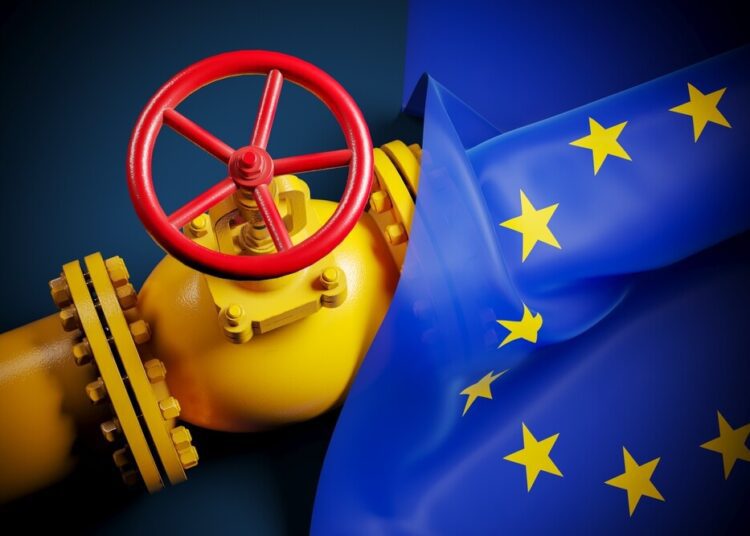
The European Union has reached a landmark agreement to accelerate the phase-out of Russian natural gas, sealing what leaders describe as the final chapter in the bloc’s decades-long reliance on Moscow for its energy security.
The deal, concluded after tense negotiations with member states, positions the EU to permanently end Russian gas imports in the coming years, far earlier than previously projected.
European Commission President Ursula von der Leyen heralded the agreement as a transformative moment for Europe’s energy future. She described it as the beginning of “the era of Europe’s full energy independence from Russia.”
“We are stopping these imports permanently.
“By depleting Putin’s war chest, we stand in solidarity with Ukraine and set our sights on new energy partnerships and opportunities for the sector.”
European Commission President Ursula von der Leyen

The new agreement renews the bloc’s commitment to ending all forms of Russian energy dependence, a stance the EU has pursued vigorously since Russia’s invasion of Ukraine in February 2022. Energy Commissioner Dan Jørgensen reinforced that message, insisting that the decision is irreversible.
“We will never go back to our dangerous dependence on Russia.
“We will never go back to volatile supplies and market manipulation. We will never go back to energy blackmail and economic exposure.”
Energy Commissioner Dan Jørgensen
Officials stressed that breaking ties with Russian gas is not merely a political objective but a strategic necessity to prevent future disruptions that could destabilize Europe’s power markets and economy.
Russia’s Energy Leverage and the 2021–2022 Price Shock
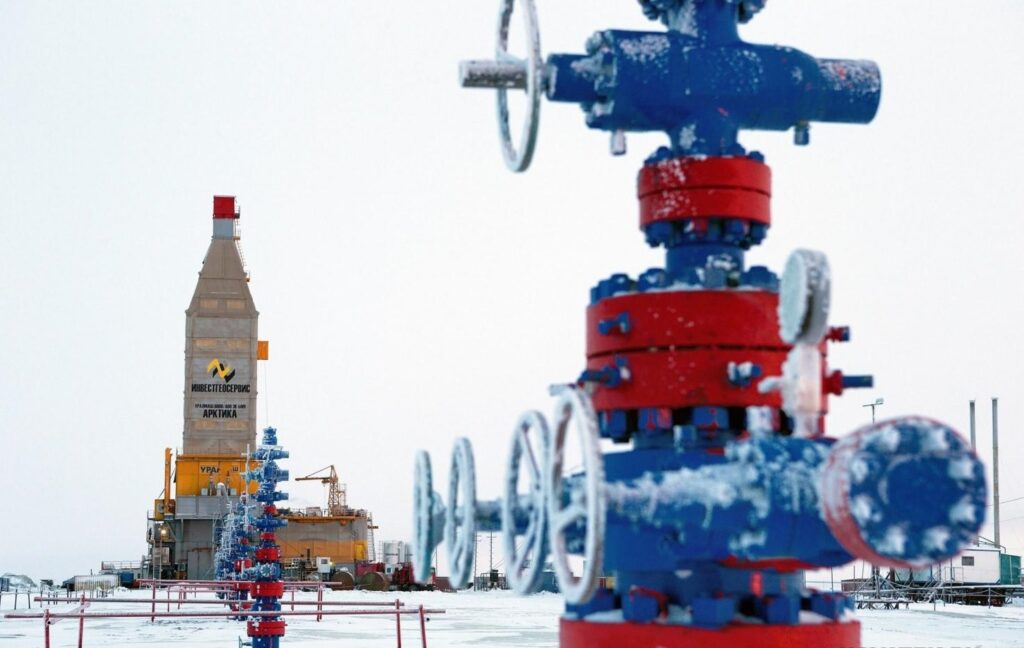
The EU’s move comes after what many leaders describe as a painful lesson in energy overdependence. Thomas Pellerin-Carlin, the European Parliament’s lead negotiator on the legislation, reminded lawmakers of the severe energy price spikes suffered across Europe prior to and during the early phases of the war.
“Europeans remember the increase in gas and electricity prices that we all experienced in 2021 and 2022.
“What has often been called an ‘energy crisis’ is actually a Russian gas shock.”
Thomas Pellerin-Carlin, European Parliament’s lead negotiator on the legislation
He argued that the legislation is essential to prevent Moscow from using energy supplies as leverage to inflict economic harm or manipulate markets.
Having secured political agreement, the text now moves to EU energy ministers for a formal vote on 15 December. The European Parliament is expected to vote the same week, clearing the final procedural hurdle before the law enters force.
Lars Aagaard, Denmark’s minister for climate and energy, praised negotiators for resolving disagreements swiftly.
“I am very pleased and proud that we have been able to reach an agreement with the European Parliament so quickly.
“It shows that we are committed to strengthening our security and safeguarding our energy supply.”
Lars Aagaard, Denmark’s minister for climate and energy
Deadlock Broken, But Resistance Remains

Although many EU member states supported a rapid Russian gas phase-out, landlocked nations, especially those lacking access to LNG terminals argued that an abrupt ban could compromise their energy security and inflate costs.
These states sought exemptions, prompting a standoff between the Parliament, which opposed carve-outs, and the EU Council.
In the end, the Parliament conceded limited exemptions to reach a compromise. However, opposition persists.
Hungary and Slovakia have already signaled their intention to challenge the law once adopted. Hungarian Foreign Affairs Minister Péter Szijjártó condemned the agreement as a “diktat” from Brussels, calling it a “fraud” that violates EU treaties.
He added, “Hungary is not alone, Slovakia is also being consulted to take action.”
Leaders in both countries, Prime Ministers Viktor Orbán and Robert Fico have maintained warmer ties with Moscow, often clashing with the EU’s tougher stance on Russia.
Energy Independence Efforts Accelerate
For EU policymakers, the new law marks the culmination of nearly three years of urgent efforts to reduce reliance on Russian gas. Before the 2022 invasion, Moscow supplied 45% of Europe’s gas. By the first half of 2025, that figure had fallen to just 13%.
Yet the bloc still imported €10 billion worth of Russian gas over that period, mainly in the form of liquefied natural gas (LNG) delivered to Belgium, France, and Spain. The new legislation seeks to end these remaining flows, including LNG transshipments routed through European ports.
Von der Leyen said the shift is intended not only to block Russian revenues but also to accelerate Europe’s transition toward more resilient energy partnerships and cleaner energy sources.
The EU’s Russian gas ban is both geopolitical and economic. Leaders argue it will permanently eliminate Moscow’s ability to destabilize European markets while encouraging investment in renewable power, LNG infrastructure, and cross-border energy connectivity.
The broader strategy has helped the bloc diversify supply, with significant LNG imports from the United States, Qatar, and Norway now underpinning Europe’s energy system.
At the same time, investments in grid expansion, hydrogen corridors, offshore wind, and energy storage are reshaping Europe’s long-term energy roadmap.
As the final votes approach, policymakers in Brussels are framing the plan as a turning point for energy sovereignty.
“We are strengthening not only our resilience,” said Jørgensen, “but also the foundations of a new, stable, and competitive European energy system.”
The coming weeks will determine how decisively Europe seals its historic break with Russian gas, and how soon the continent can transition to a fully independent energy future.
READ ALSO: Suhuyini Demands UG Flexibility on WASSCE Failure, Slams Zipline Termination Calls