Ghana’s external sector performance in 2025 has emerged as one of the most compelling turnaround stories in the country’s recent macroeconomic history.
The latest Summary of Economic and Financial Data released by the Bank of Ghana reveals a striking improvement in foreign exchange reserves, external balances, and currency stability.
As of October 2025, Ghana’s Gross International Reserves stood at USD 11.410 billion, marking one of the strongest reserve positions recorded in recent years. This milestone is not an isolated achievement but rather the result of a combination of robust export performance, improved market confidence, and deliberate monetary and exchange rate policies aimed at restoring stability.
The progression of Ghana’s reserves throughout 2025 illustrates a consistent and strategic accumulation. At the end of December 2024, the country’s Gross International Reserves were recorded at USD 9.112 billion. By January 2025 they had increased, and through the first quarter the position improved further to USD 10.299 billion in March.
The upward trend continued into the middle of the year, with reserves rising to USD 11.336 billion in June and USD 11.604 billion in September before settling at USD 11.410 billion in October. This steady build-up adds more than USD 2 billion in reserve buffers within ten months, a significant improvement compared with previous years of external vulnerability.

A similar trajectory is reflected in Ghana’s Net International Reserves, which provide a clearer indication of foreign-exchange liquidity available to the central bank. Net reserves rose from USD 5.196 billion in December 2024 to USD 6.449 billion by January 2025 and continued to strengthen through the year.


By March they had increased to USD 7.517 billion, rising again to USD 9.200 billion in June and reaching USD 9.403 billion in September before slightly moderating to USD 9.321 billion in October 2025. The improvement in these metrics highlights both the deliberate efforts by the Bank of Ghana to rebuild buffers and the positive flow of foreign exchange into the economy.
With stronger reserve accumulation came an improvement in the level of import cover, an important indicator of external resilience. Ghana’s Gross International Reserves provided 4.5 months of import cover in March 2025, which rose to 4.9 months in June and again in September. Although this slightly adjusted to 4.8 months in October, the position remains comfortably above the generally accepted threshold of three months for economies of Ghana’s type. Such a buffer offers a crucial cushion against external shocks, including commodity price volatility, exchange rate pressures, and rising global interest rates.
Trade Surplus Expands Sharply on Strong Exports
Behind the strengthening reserve position is a powerful improvement in Ghana’s trade performance. New Bank of Ghana data shows that between January and October 2025 the country recorded a cumulative trade surplus of USD 8.535 billion. This represents a significant expansion of the USD 3.773 billion trade surplus recorded at the end of December 2024. Export receipts were strong across all major commodity categories, with total exports reaching USD 23.330 billion by October.
Gold exports were particularly dominant, rising to USD 15.251 billion by October 2025 compared with USD 10.314 billion at the end of December 2024. Cocoa exports also contributed substantially, totaling USD 2.818 billion by October, while oil exports reached USD 2.203 billion. Other export categories collectively added USD 3.058 billion to the country’s foreign exchange earnings.

Gold Windfall Drives External Strength
The sharp rise in gold export earnings is closely tied to the surge in global gold prices during 2025. International gold prices increased from USD 2,708.40 per fine ounce in January to USD 4,054.50 per fine ounce in October, a remarkable year-to-date gain of 53.5 percent. The strength of gold markets provided Ghana with a much-needed windfall at a time when other commodities showed weaker performance.
Cocoa prices, for instance, experienced significant volatility throughout the year. While Ghana’s export receipts increased in value terms, the international cocoa price fell sharply from USD 11,141.10 per tonne in January 2025 to USD 6,110.70 per tonne in October, representing a steep decline of 43.8 percent. Meanwhile oil prices softened, with Brent crude declining from USD 78.30 per barrel in January to USD 64.00 in October, which further demonstrates how gold became the primary stabilizing anchor for export earnings.
Import Growth Moderate but Rising
Imports also saw upward movements in 2025 but not at a pace that would offset the strong export performance. Total imports amounted to USD 14.795 billion by October 2025, driven by oil imports of USD 4.397 billion and non-oil imports totaling USD 10.399 billion.
Despite the rise in imports relative to the middle of 2024, the gap between export earnings and import expenditure remained wide enough to maintain a healthy and rising trade surplus. As a percentage of GDP, Ghana’s trade surplus reached 9.7 percent in October 2025, more than double the 4.5 percent recorded in December 2024. This kind of improvement in the external balance has been rare in recent years, signaling a structural strengthening in the country’s foreign exchange generation capacity.
Private Transfers and Capital Flows Cushion the External Account
Private transfers, particularly remittances, remained an important contributor to external stability. By September 2025, inward private transfers amounted to USD 5.984 billion. Although this figure was slightly lower compared with the USD 7.102 billion recorded cumulatively at the end of 2024, remittances continued to provide an important cushion to the current account.
On the capital account side, direct investment liabilities amounted to USD 1.461 billion by September 2025, indicating solid investor participation in direct equity and long-term investments. Portfolio investment remained negative at USD –137.3 million, showing that foreign investors have not yet fully re-engaged Ghana’s debt markets following the Domestic Debt Exchange Programme.
However, the financial account still recorded inflows of USD 1.922 billion by September 2025, illustrating ongoing investor participation in longer-term instruments and real sector investment.
Strategic Reserve Accumulation Supports Stability
Reserve accumulation during the period underscores the Bank of Ghana’s active interventions in the foreign exchange market and its broader strategy to rebuild external buffers. In 2024, the central bank accumulated USD 1.484 billion in reserves. Over the course of 2025, the pace of accumulation increased meaningfully.
By March 2025 the reserves had risen by USD 1.126 billion, by June the figure had reached USD 2.216 billion, and by September accumulation stood at USD 1.838 billion. This pattern reflects consistent foreign exchange purchases, improved mining sector inflows, and deliberate interventions to smooth currency volatility.
Importantly, the central bank’s tighter monetary stance earlier in the year—marked by an increase in the policy rate to 28 percent in March—helped stabilize the market and anchor expectations. As inflation declined and the exchange rate stabilized, the Bank of Ghana was later able to ease the policy rate to 21.5 percent by September and maintain the same level in October 2025.
Cedi Appreciation Confirms Renewed Confidence
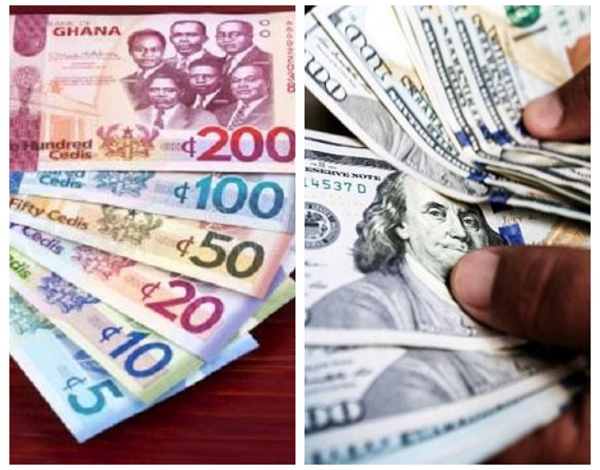
One of the clearest indications of improved external confidence has been the remarkable performance of the Ghanaian cedi in 2025. The currency saw a strong appreciation during the year, reversing the sharp depreciation experienced in 2024. By October 2025, the cedi had appreciated by 34.9 percent against the US dollar on a year-to-date basis.
This appreciation moderated only slightly to 32.2 percent by November. The exchange rate improved from GHC 15.30 per USD in January to GHC 10.90 per USD in October and GHC 11.12 in November. The Real Effective Exchange Rate also reflected these dynamics, dropping from 156.3 in October 2024 to 92.8 in June 2025 before adjusting to 110.9 in October.
Such strengthening greatly contributed to the rapid disinflation Ghana experienced throughout the year, with headline inflation falling from 23.5 percent in January 2025 to 8.0 percent by October.
Meanwhile, financial markets responded positively to the strengthening macroeconomic environment. Equity markets recorded some of their best performances in recent years.
While the strengthening of Ghana’s external buffers represents an impressive achievement, questions remain about the sustainability of these gains. A significant portion of the improvement has been driven by unusually high global gold prices. Should prices soften, the foundation of the current account surplus could become less stable.
At the same time, the steep decline in global cocoa prices poses risks to export revenues for the 2026 fiscal period, especially given Ghana’s heavy dependence on commodity markets.
READ ALSO:BoG Cracks Down on Loan Misuse, Warns Against Rising Default Rates