Ghana is taking another major step toward modernising its transport system, announcing ongoing engagements with private sector players to review the tax incentives and duty regime for electric vehicles (EVs).
The initiative, according to government officials, is central to making EVs more affordable and accelerating the country’s transition to a cleaner, more efficient transport future.
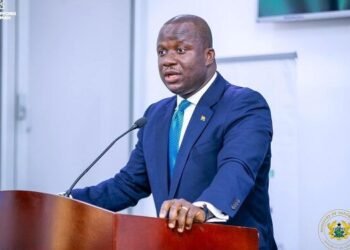
The move was revealed at the ERA Conference, Exhibition and EV Experience in Accra, where Deputy Energy Minister Dr. Richard Gyan-Mensah highlighted the need for stronger policy alignment in support of Ghana’s evolving mobility landscape.

He noted, “We are in continuous dialogue with the private sector to identify gaps in the current duty and tax regime,” emphasising the central role collaboration will play in crafting a more responsive policy environment.
He explained that the broader objective is to ensure that the taxation framework supports affordability, attracts investment, and stimulates mass adoption of electric mobility across the country.


“The objective is to create a policy environment that supports affordability, investment and the wider adoption of electric mobility.”
Deputy Energy Minister Dr. Richard Gyan-Mensah
Dr. Gyan-Mensah added that government sees EV policy reform as directly linked to its national energy transition strategy, which seeks to address climate commitments while also modernising the transport sector.
Transport Ministry Reaffirms Commitment to a Cleaner Mobility Shift
Deputy Transport Minister Dorcas Toffey reiterated the importance of Ghana’s shift toward electric mobility, describing it as a responsible and essential evolution for the future of transportation.
“The EV transition is not just a trend, it is a necessary shift for a safer, greener and more sustainable transport sector.”
Deputy Transport Minister Dorcas Toffey
She stressed that government is committed to working collaboratively with industry and development partners to ensure that the transition is well-coordinated, inclusive, and delivers tangible benefits to the public. “Government is determined to work with all partners to make this transition smooth and impactful,” she added.
Her comments reflect growing momentum within the transport sector, which has increasingly recognised the potential of EVs to reduce emissions, lower long-term transport costs, and improve urban air quality.
Private Sector Calls for Stronger Support Measures

While the government signalled its renewed attention to EV incentives, representatives from the private sector emphasised the need for more proactive backing to unlock investment and accelerate expansion.
Cubica Energy CEO, Lesley Arthur, welcomed the government’s consultative approach but urged officials to introduce concrete support mechanisms to enable private firms to scale operations and infrastructure deployments.
“The private sector is ready and willing to invest, but we need deliberate government backing.”
Lesley Arthur, Cubica Energy CEO
She highlighted the importance of tax incentives, infrastructure partnerships and clear regulatory frameworks in ensuring that EV adoption progresses more rapidly.
According to Arthur, several private companies have already begun investing in charging networks, EV imports, energy innovation and mobility solutions.
However, she argued that the pace of progress hinges on the presence of predictable policies that reduce financial risks and boost investor confidence.
“From incentives to infrastructure, the right support will significantly speed up EV adoption in Ghana.”
Lesley Arthur, Cubica Energy CEO
The ERA EV Conference serves as one of the country’s key platforms for discussions on the future of electric mobility. This year’s event gathered policymakers, energy companies, transport operators, and technology innovators to examine Ghana’s opportunities in the global EV transformation, as well as its unique challenges.
Stakeholders explored the intersection of electric mobility with renewable energy, urban planning, charging infrastructure, and local manufacturing potential.
The conversations highlighted both the opportunities available to Ghana, such as reduced fuel imports and new green jobs, and the barriers that must be resolved, including cost, lack of infrastructure, and the need for public awareness.
The discussions reinforced that Ghana’s EV transition is not only about replacing vehicles but also about transforming systems to be cleaner, smarter, and more future-ready.
READ ALSO: Suhuyini Demands UG Flexibility on WASSCE Failure, Slams Zipline Termination Calls