Ghana’s agricultural sector is once again in the national spotlight as the Minister for Food and Agriculture, Hon. Eric Opoku, has raised concerns about the country’s rising dependence on imported food.
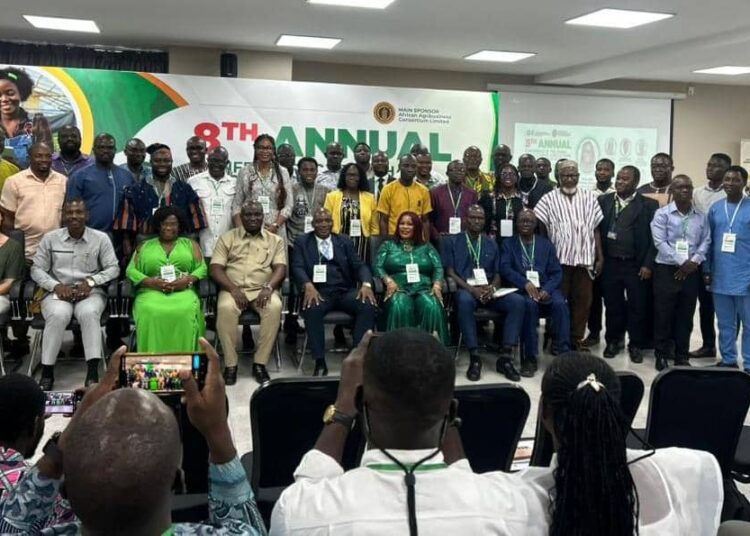
Speaking at the 2025 Annual Conference of the Ghana Association of Agricultural Economists (GAAE), the Minister warned that Ghana’s food import bill, which now exceeds US$3 billion annually, poses a major threat to food security, job creation and long-term economic resilience. His call for urgent reform signals the beginning of what could become a defining chapter in Ghana’s agribusiness transformation.
Agriculture remains one of the strongest pillars of Ghana’s economy, contributing about 20 percent to national GDP and employing nearly one-third of the workforce. For rural communities, the sector is even more vital, with over 70 percent of households depending on farming for their livelihoods. Despite this, productivity challenges and structural inefficiencies continue to undermine the country’s ability to meet local demand.
Hon. Opoku highlighted that post-harvest losses alone account for nearly 30 percent of total output. This wastage, coupled with inadequate processing capacity and limited mechanisation, has forced Ghana to rely heavily on imported rice, poultry and processed foods. The Minister noted that these imports consume billions of dollars of foreign exchange annually, draining resources that could instead be invested in strengthening domestic value chains.
A Call to Transform the Entire Agri-Food System
In his address, the Minister stated that the challenge before Ghana is much broader than simply increasing production. He stressed that “the challenge before us is not simply to produce more food, but to transform our entire agri-food system to ensure that the processes remain profitable, inclusive and environmentally responsible.”
This transformation requires a shift from subsistence-based farming toward a modern, technology-driven and globally competitive agribusiness model. According to Hon. Opoku, the theme of this year’s GAAE Conference, “Transforming Agri-Food Systems in Developing Economies through Sustainable Agribusiness Development,” reflects one of the biggest economic opportunities facing Ghana today.
He added that Africa’s food and agribusiness market is projected to exceed US$1 trillion by 2030, and Ghana must strategically position itself to tap into this emerging growth frontier. This will require strong value chains, targeted investments, innovation and policies that promote sustainability.
Government’s New Policy Direction
Hon. Opoku outlined two major government policies designed to push the transformation agenda: the Feed Ghana Policy and the 24-Hour Economy Policy.
The Feed Ghana Policy seeks to boost domestic food production by improving seed access, expanding irrigation infrastructure, enhancing mechanisation, strengthening post-harvest systems and scaling up agro-processing. It aims to reduce import dependency by building a resilient and competitive local food system.
The 24-Hour Economy initiative, on the other hand, focuses on improving productivity and efficiency across the food supply chain. According to the Minister, the initiative will support round-the-clock operations in processing, logistics and storage, which will help reduce delays, stabilise supply and create additional employment.
These policies, he said, will not only modernise the agricultural space but also support Ghana’s broader economic development.
The Minister called on agricultural economists, researchers and universities to play an active role in shaping Ghana’s agribusiness future. He urged them to produce evidence-based frameworks that can guide investment decisions and policy reforms. More importantly, he emphasised the need to bridge the gap between research and industry, noting that innovations must translate into real-world solutions.
Hon. Opoku also highlighted the strategic importance of the youth in transforming the sector. With Ghana’s youthful population, the Minister believes that digital technologies, innovation hubs and agribusiness entrepreneurship can serve as powerful drivers of change. This, he said, will position Ghana as a competitive player in the global food market.
Climate Change and Sustainability as a Priority
The worsening impacts of climate change continue to threaten Ghana’s agricultural productivity. Hon. Opoku expressed concern about increasing crop losses and unpredictable weather patterns that have affected farmers nationwide. He reaffirmed government’s commitment to climate-smart agriculture, efficient water management and soil health improvement as essential components of a resilient food system.
He said these interventions are crucial to ensuring long-term sustainability and food security, especially as climate risks intensify.
Hon. Opoku underscored the importance of collaboration in achieving the nation’s agricultural transformation goals. He called for stronger partnerships among government agencies, private sector players, investors, development partners and academic institutions.
He stressed that “this conference is more than an academic event it is a call to action. The decisions we make today will shape the food systems of tomorrow.”
The Minister expressed optimism that the discussions, research findings and policy recommendations emerging from the GAAE Annual Conference will significantly contribute to Ghana’s agricultural growth.
READ ALSO:TUC Demands Immediate Suspension of Tariff Hikes as Wage Gains are ‘Completely Eroded’