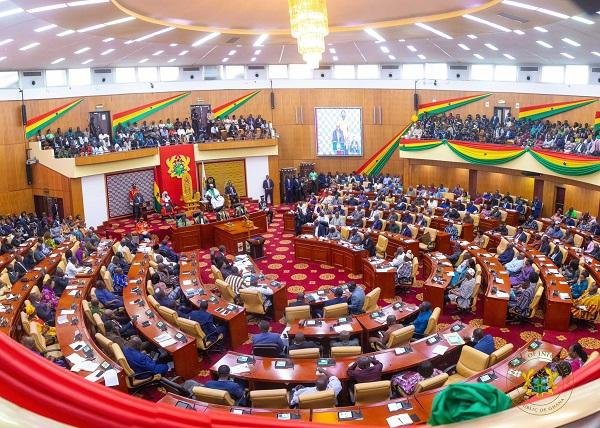
The government has initiated the withdrawal of the controversial Atlantic Lithium mining agreement bill from Parliament.
A move that comes amidst intense public scrutiny and opposition over the fiscal terms, particularly the proposed royalty rate.
The official request for withdrawal was communicated to the House by the Majority Leader and the Leader of Government Business, Hon. Mahama Ayariga.
“I have indications from the Minister that he wants to withdraw the agreement. He has travelled outside the jurisdiction in his capacity as the acting Minister for Environment. There’s a major environmental conference in Nairobi, Kenya, to which the President was invited, and the President has asked him to represent him. He came and sought leave to absent himself in order to attend to that, but he’s asked that his Deputy Minister, Honourable Yusuf, who is here with us, should be allowed, on his behalf, to withdraw the lithium-proposed agreement.”
Hon. Mahama Ayariga.
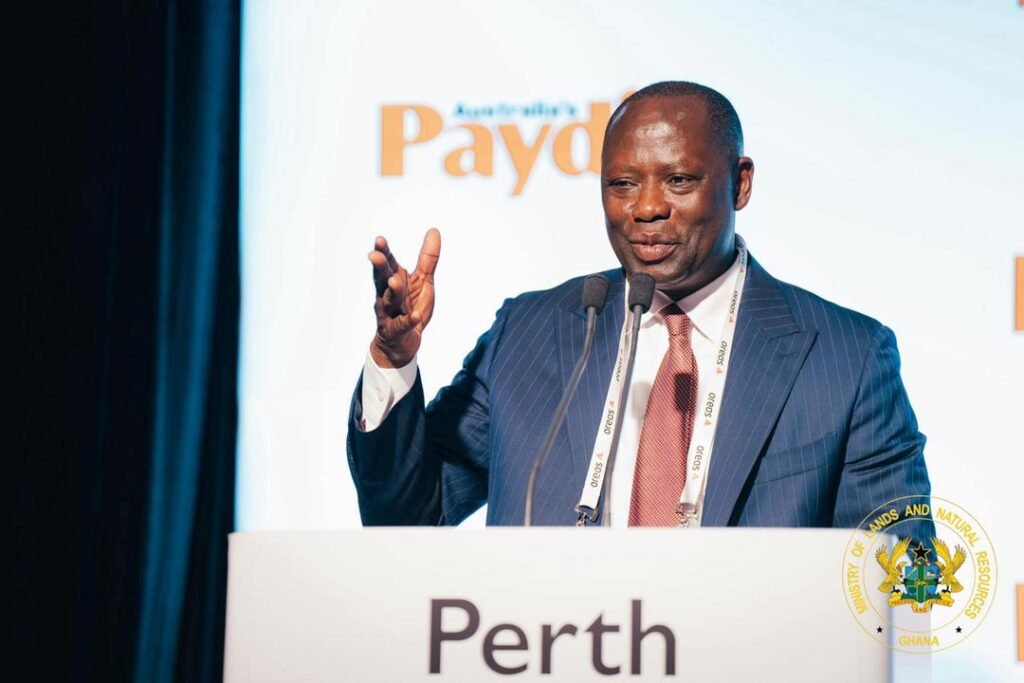
This legislative maneuver signals a significant, albeit reactive, shift in the government’s stance on the concession awarded to Atlantic Lithium’s subsidiary, Barari DV Ghana Limited, for the Ewoyaa Lithium Project in the Central Region.
The Minister for Lands and Natural Resources had previously laid a revised mining lease agreement before the House, stating the company sought “certain key provisions” to be re-examined due to a sharp drop in global lithium prices, which purportedly threatened the project’s viability.
The core of the public and parliamentary uproar centered on the revised terms, which included a reduction in the royalty rate from the originally negotiated 10 percent to 5 percent, a figure that critics vehemently argued undermines national interests and fails to secure Ghana’s fair share of value from its nascent green mineral sector.
Controversy Over “Worst-in-the-World” Terms and Royalty Reduction
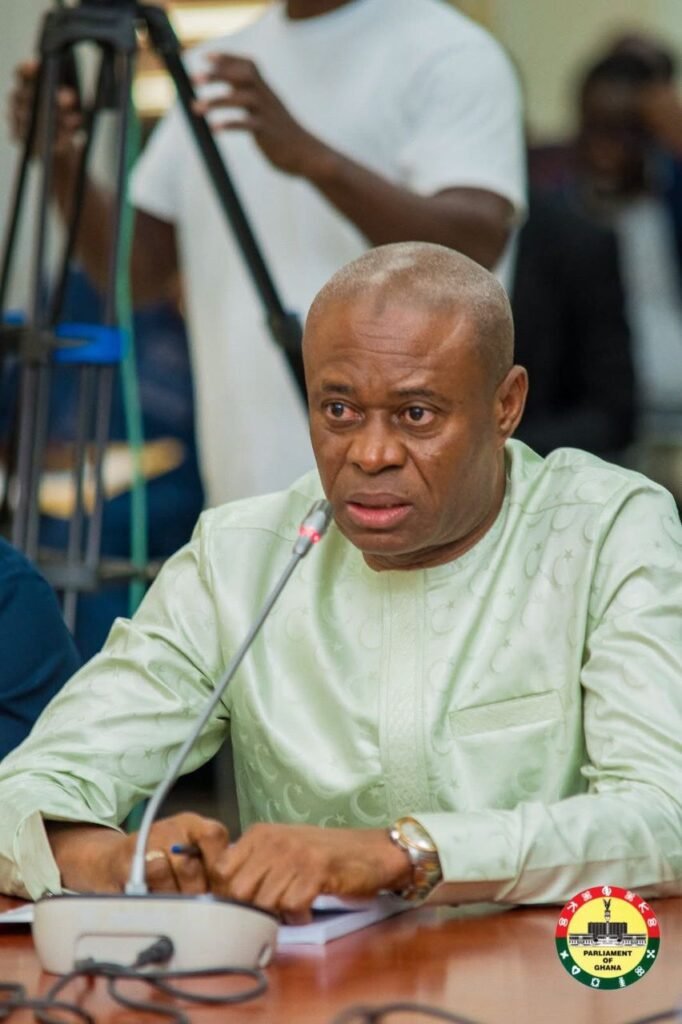
The decision to withdraw the agreement follows months of blistering criticism from civil society organizations (CSOs), think tanks like IMANI Africa, mining experts, and the political opposition. The Ranking Member of the Subsidiary Legislation Committee, Hon. Yao Patrick Boamah, speaking on the floor, underscored the gravity of the matter, stating, “This is such an important agreement that has attracted a lot of interest from the public, especially with the reduction of the royalties from 10 to 5 percent.”
He stressed the widely held belief that Ghana “ought to have negotiated this agreement and obtained far better terms” and noted the consensus among experts, including Sir Sam Jonah, that the agreement was not in the country’s best interest.
The withdrawal comes amid a charged atmosphere in which the opposition Minority Caucus and CSOs have consistently demanded a better deal.
The debate intensified when the proposed royalty rate was effectively halved to 5%, a move the government initially defended by citing existing legislation and the need to maintain the project’s commercial viability due to falling global prices.
However, opponents questioned the justification, highlighting that Atlantic Lithium’s own feasibility study in 2023 projected prices significantly higher than the crisis-level figures the company used to lobby for concessions.
Atlantic Lithium: A Background of Controversy and Green Mineral Hype
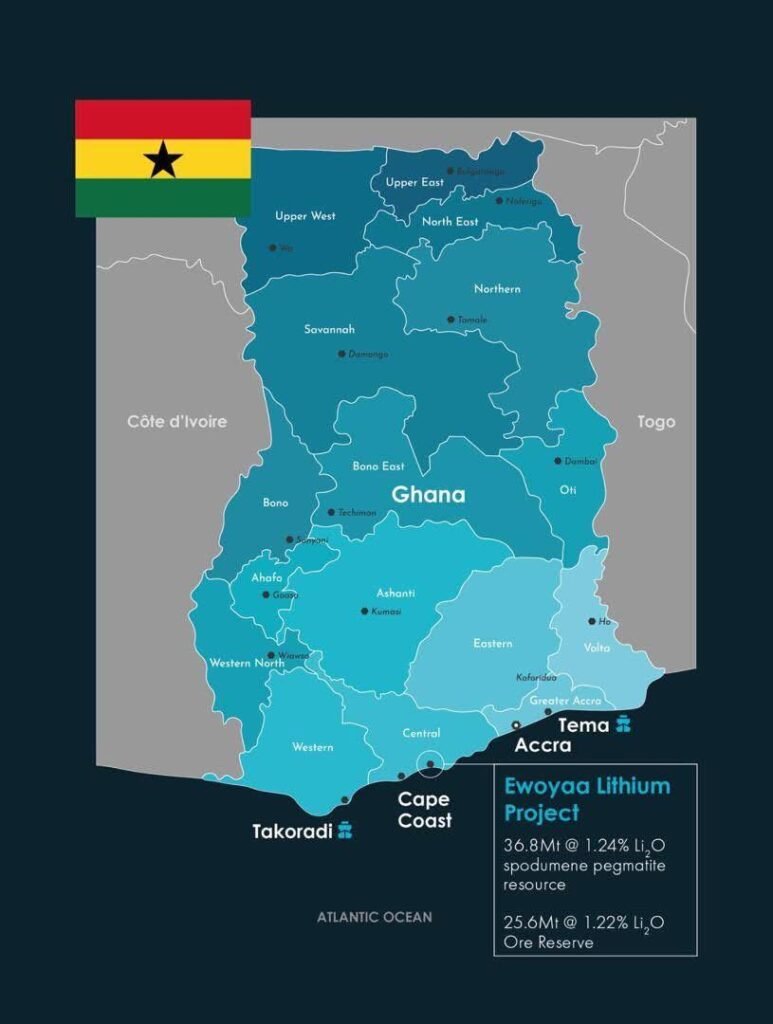
Atlantic Lithium Limited, an Australia-based exploration and development company, through its Ghanaian subsidiary Barari DV Ghana Limited, has been the focal point of Ghana’s lithium ambition since its discovery of commercial quantities of the critical battery mineral at the Ewoyaa Project in the Central Region.
The company received a 15-year mining lease from the government in October 2023, following years of exploration since 2016.
The Ewoyaa project is poised to be Ghana’s first lithium mine, positioning the country as a significant player in the global electric vehicle (EV) supply chain.
The controversies surrounding the project are manifold. Firstly, the initial agreement signed in 2023, while offering a 10% royalty rate and 13% free-carried government interest (a slight increase over old mineral agreements), was instantly criticized for the lack of a transparent competitive bidding process and its allegedly soft fiscal terms, which included an implicit 32.5% corporate tax rate and a one percent contribution to a Community Development Fund.
Secondly, the subsequent revision of the terms—especially the reduction of the royalty to 5%—sparked fury, with IMANI Africa estimating that the reduction alone would transfer approximately $17.5 million annually from the state to the company. Critics also raised concerns over the operator’s financial fragility, its reliance on a Definitive Feasibility Study (DFS) that
assumed higher long-term prices, and the lack of concrete, enforceable commitments to downstream processing and value addition within Ghana.
The recurring accusation is that the deal, in its various forms, risks Ghana falling prey to the resource curse associated with its gold mining sector by exporting raw concentrate and forfeiting greater revenue.
Way Forward: A Call for Comprehensive Fiscal Review
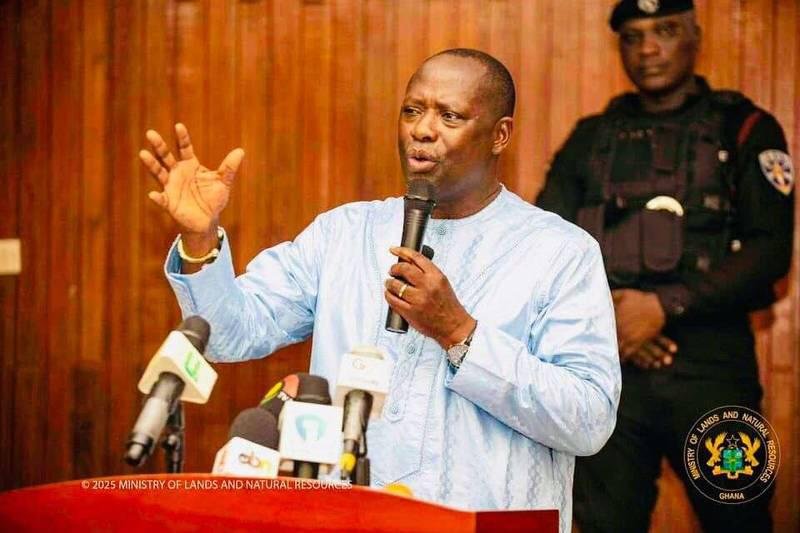
The withdrawal of the bill, though a temporary victory for advocates of resource nationalism, now places the responsibility back on the government to develop a revised, more equitable framework.
It is evident that the immediate pressure stems from the public’s concern over the reduced royalty rate, but the broader demands include clauses for indexed pricing safeguards, performance covenants for the junior miner, and more robust mechanisms for local value addition beyond just the 13% state equity and the Minerals Income Investment Fund’s (MIIF) participation.
The current withdrawal affords a necessary pause for the government to take stock of the widespread technical and social opposition and to consult more widely with policy think tanks and CSOs before resubmitting a potentially more robust agreement.
Failure to do so would reinforce the public’s perception of a non-transparent process, ultimately delaying Ghana’s entry into the profitable green mineral market while allowing global market volatility to be leveraged against the nation’s interests.
The question remains whether the government will use this opportunity to enact a full overhaul of its ‘Green Minerals Policy’ or merely apply superficial changes to silence dissent.
READ ALSO: Transport Ministry Deploys Emergency Buses on Four Major Routes to Ease Accra Peak-Hour Chaos