Ghana has taken a major step toward strengthening local governance with the introduction of a new National Decentralization Policy and Strategy (NDPS), spanning 2026 to 2050.
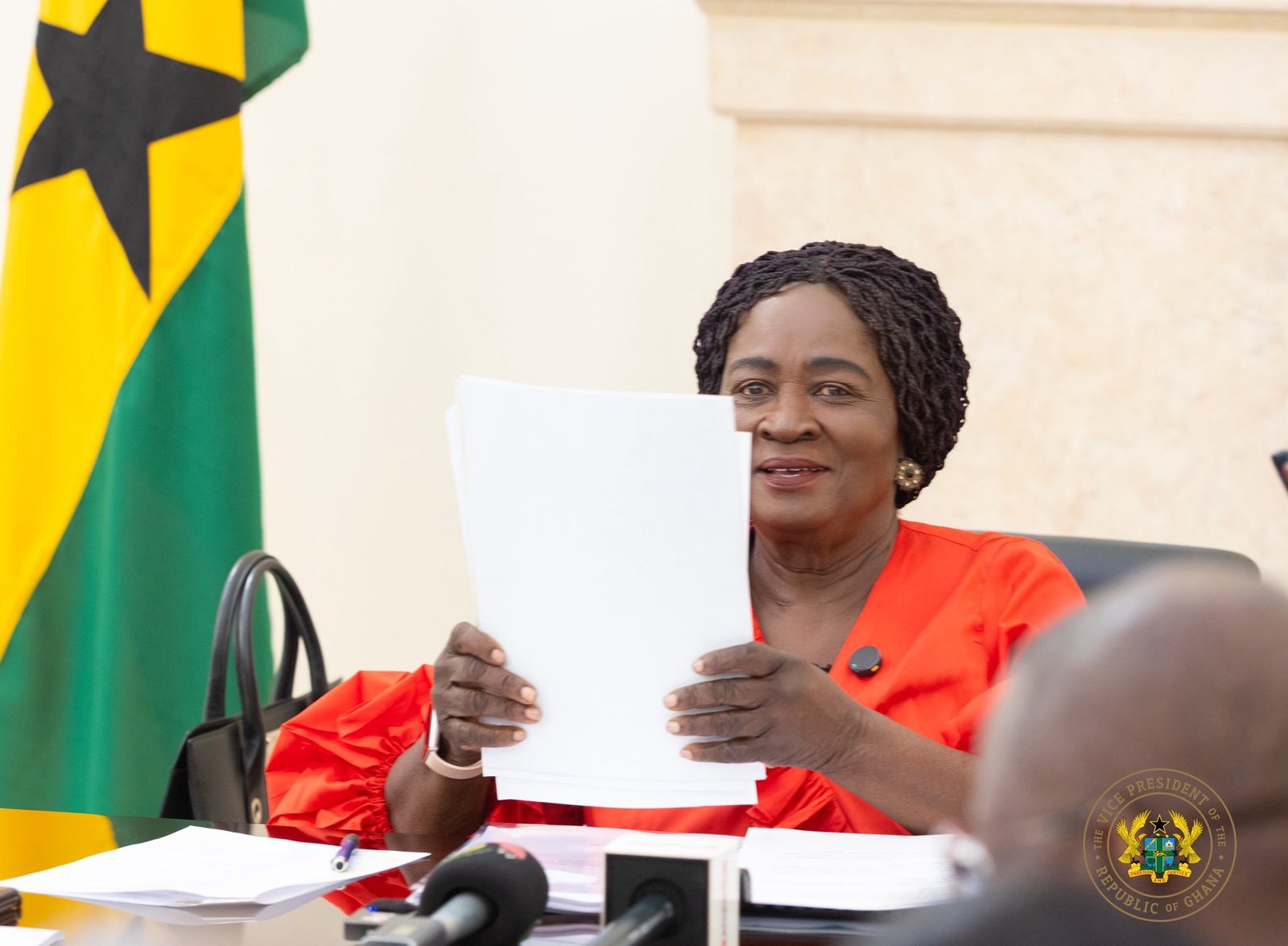
The policy was formally announced during the first meeting of the Inter-Ministerial Coordinating Committee on Decentralization (IMCC) under the current administration, where Vice President Naana Jane Opoku-Agyemang delivered a call to action for bold reforms, institutional alignment, and renewed commitment to accountable governance.
Opening the meeting at the Jubilee House, the Vice President described the gathering as both symbolic and pivotal. “Today offers a moment of renewal and a call to action,” she said. “It is the first meeting of the IMCC since this government took office, so it’s very important for us.”
She emphasized that the meeting was not only to reaffirm government’s commitment to decentralization but also to deepen understanding among ministers through an orientation session on the national policy framework, the workings of the IMCC, and the strategic approaches required to implement Ghana’s next generation of reforms.

Reflecting on the country’s decades-long commitment to decentralization, the Vice President noted that significant milestones had been achieved since the establishment of the IMCC in 2010, which was designed to ensure that decentralization was treated as a whole-of-government priority.
“A single ministry cannot achieve decentralization. This requires a wider approach, anchored on coordinated and sustained leadership from all sectors whose mandates interface with local development and service delivery.”
Vice President Naana Jane Opoku-Agyemang
Notable Progress
According to her, the regular convening of the IMCC in the past contributed to notable progress, particularly between 2010 and 2016, when longstanding reform bottlenecks dating back to the late 1980s were finally resolved. But some key areas remain untouched, and these, she noted, continue to undermine service delivery and weaken public confidence in local governance systems.


Vice President Opoku-Agyemang was particularly firm on the need to conclude functional devolution in three major development sectors—health, education, and roads. She warned that the current parallel authority structures and fragmented accountability arrangements within these sectors are obstructing local-level responsiveness.

“These bottlenecks affect supervision, planning, coordination, and responsiveness. We must therefore treat the completion of administrative and functional devolution in health and education, and of course, the road sectors, too, as a national priority.
“The credibility of the decentralization program depends on delivering results in these key sectors.”
Vice President Naana Jane Opoku-Agyemang
She reiterated that deepening local democracy will remain impossible if these large social sectors continue to be centrally structured. Completing their decentralization, she stressed, will not only strengthen citizen engagement but also align decision-making with the needs of communities.
The National Decentralization Policy and Strategy (2026–2050)
The Vice President announced that the formulation of the National Decentralization Policy and Strategy (2026–2050) has been completed and will be presented to the IMCC for consideration.
The comprehensive 24-year roadmap, she explained, provides a coherent and long-term framework that covers political decentralization, administrative decentralization, decentralized planning, fiscal decentralization, local economic development, and enhanced popular participation and accountability.
But she cautioned that the policy and strategy “will not implement themselves.” Effective rollout, she said, will require collective ownership, strong political will, full sectoral alignment, and the sustained coordination of all ministries represented at the IMCC.
She outlined the respective responsibilities of various ministries, stressing that the Ministry of Finance holds a central role. According to her, the ministry must “ensure predictable fiscal transfers, central alignment and strengthened local revenue systems as well as sufficient resources for operations and the implementation of the policy and strategy.”

For the Ministry of Health, Ministry of Education, and Ministry of Roads, the expectation is clear: they must complete functional devolution and deepen collaboration with district assemblies.
She added that cross-cutting ministries such as Agriculture, Gender, Youth, and Local Government must integrate national priorities into local service delivery frameworks.
Agencies including the NDPC, the Civil Service, and the Local Government Service must also harmonize planning systems, standards, staffing structures, and accountability mechanisms to create consistent implementation across districts. She further underscored the Attorney General’s role in drafting legislation required to operationalize the reforms.
Renewed Commitment
Calling for renewed commitment, the Vice President urged ministries, departments, and agencies to “champion the implementation of the decentralization reforms by prioritizing activities within the amounts outlined in the NDPS.”
She reminded the gathering that the future of responsive and effective service delivery rests heavily on decisions taken today and on the discipline with which the committee follows through.
She noted that a coordinated stance from government will help attract investment and technical support for the decentralization agenda, stressing that confidence in the reforms is strengthened when governance is clear, aligned, and purpose-driven.

In her closing remarks, Vice President Opoku-Agyemang encouraged the committee to use the meeting to “build consensus, energize the reform process, and set the tone for the successful implementation of the National Decentralization Policy and Strategy.”
She expressed optimism about the deliberations, thanking participants for their commitment and emphasizing her expectation that the country will reap the benefits of a revitalized decentralization system.
READ ALSO: Standard Chartered Secures Landmark $200m Clean Cooking Bond to Transform 415,000 Ghanaian Homes