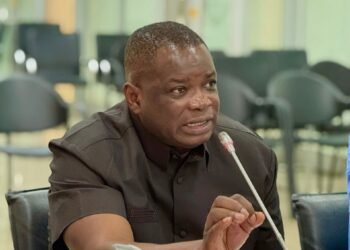
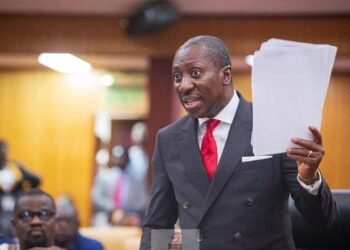
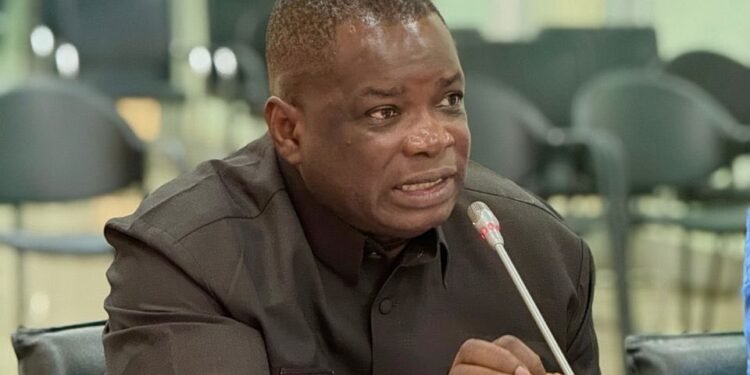
The intense political debate over the effectiveness and future of the Office of the Special Prosecutor (OSP) has taken a dramatic turn, with the Member of Parliament (MP) for Manhyia South, Hon. Nana Agyei Baffour Awuah, publicly rejecting calls to abolish the office.
Hon. Awuah argued that the sudden, intense demand to scrap the OSP, which surfaced immediately after the arrest of private legal practitioner Martin Kpebu, exposes the true motivation behind the movement as partisan expediency rather than genuine national interest.
“Cecilia Dapaah was arrested, was being investigated by the OSP. We never heard anybody say, let’s introduce a private member’s bill to abolish the OSP. Charles Bissue was being investigated. We never heard anybody say, let’s introduce a private member’s bail”
Hon. Nana Agyei Baffour Awuah, MP for Manhyia South
Speaking on the ongoing controversy, the MP detailed a stunning flip-flop in parliamentary support for the OSP, asserting that the Majority’s quick change in tune fundamentally undermines their critique.
While acknowledging his own past criticisms of the office, Hon. Awuah firmly declared that he cannot subscribe to the call for abolition, viewing it as a move designed purely to serve specific political interests of the current government.
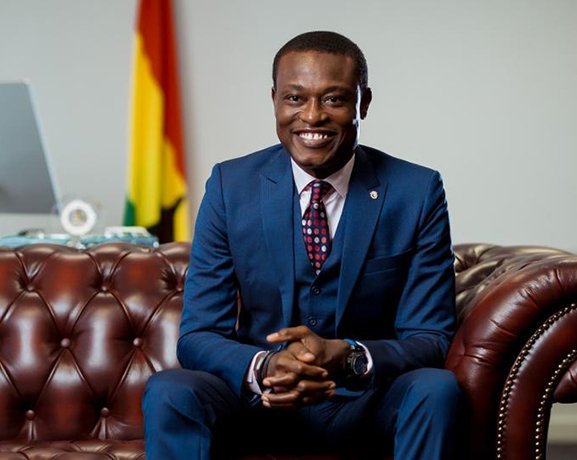
Hon. Awuah’s argument centered on the timing of the protests by members of the majority now supporting the move. He pointed out that the idea of abolishing the OSP was completely absent when the anti-corruption agency was actively investigating high-profile cases involving figures perceived to be linked to the former NPP government.
He cited several investigations against members and associates of the Minority’s side of the political divide – including the cases of La Bianca Company and Colonel Kwadwo Damuah – and noted that through all these inquiries there was never an attempt by the government of the day to terminate the office of the OSP.


The system, he implied, was accepted when it targeted their perceived opponents. The true shift with the NDC Majority, Hon. Baffour Awuah stressed, occurred with the arrest of Lawyer Martin Kpebu.
“The moment Lawyer Martin Pebu was arrested, things changed,” the MP observed, suggesting this single event – which crossed a partisan line – was the sole trigger for the Majority’s support for the movement to dismantle the institution.
Exposing Partisan Hypocrisy
The most damning evidence presented by Manhyia South MP relates to the OSP’s budget debate in Parliament just a day before Lawyer Kpebu’s arrest.

He recounted that during the debate, members of the Constitutional Legal Affairs Committee from the opposition, including Hon. Xavier Sosu and Hon. Shaibu Mahama, were “showering the OSP with accolades.”
He noted that the atmosphere was so welcoming that not much interrogation went into the budget proposal, with some lawmakers even advocating that the OSP “should be given more money.”
“In fact, I’ve been in meetings of the Constitutional and Legal Affairs Committee where the majority dominate, and the OSP was very welcome. The accolades that were showered on the OSP by some members of the majority – is one that could have sent the OSP to heaven”
Hon. Nana Agyei Baffour Awuah, MP for Manhyia South
The abruptness of the change – from high praise and calls for increased funding one day to demands for abolition the next – led the MP to his firm conclusion. Hon. Baffour Awuah stated clearly that the sudden transformation of the narrative proved the abolition campaign to abolish the anti-corruption office lacked principle.
He reasoned that to call for the OSP’s scrapping only after the arrest of a specific individual, following a period of strong support and financial endorsement, demonstrates that the position taken by some members of the NDC government is not a nationalistic position but partisan and biased.
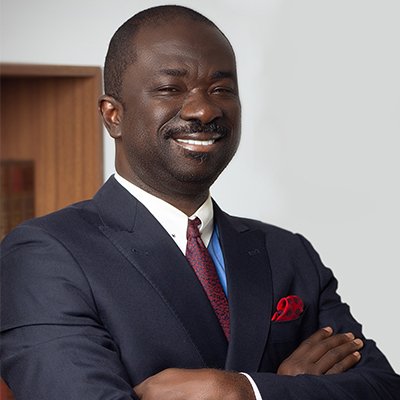
The Manhyia South MP concluded his critique by asserting that he will not align himself with any political position driven solely by partisan self-interest, urging his fellow lawmakers to reject this interest-driven maneuvering and uphold the integrity of Ghana’s anti-corruption efforts.
“I’m not able to subscribe to anything which is for the partisan interest of somebody – that is my problem,” he stated, cementing his stance against what he perceives to be political opportunism aimed at weakening a state institution.
READ ALSO: Ghana’s Priority Sub-Sectors to Boost Growth in 2026