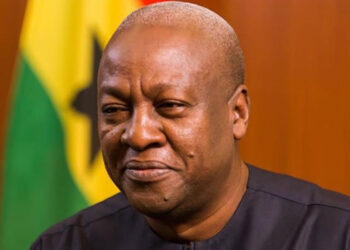
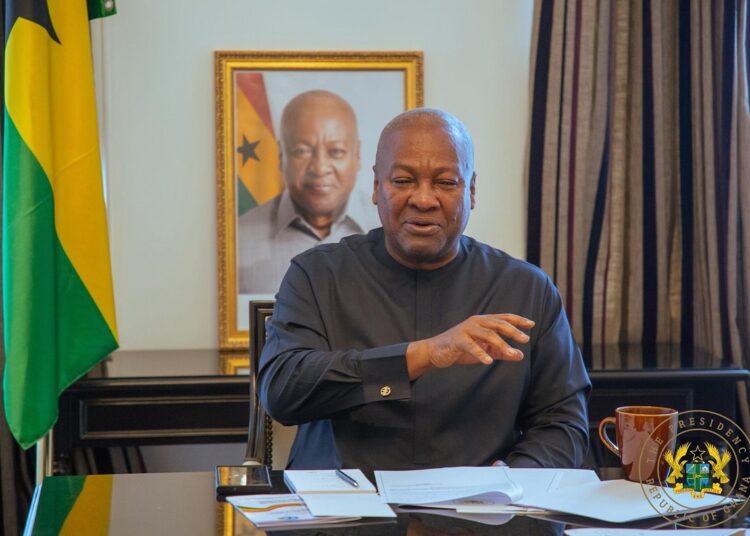
President John Dramani Mahama has formally asked the leadership of the Majority Caucus in Parliament to withdraw a Private Member’s Bill seeking to repeal the Act that established the Office of the Special Prosecutor (OSP).
The decision, communicated through a statement issued by the Presidency, reinforces the President’s publicly stated commitment to strengthening the OSP rather than dismantling it.
The request follows the President’s recent engagement with the National Peace Council, during which he made clear his position that the fight against corruption requires strong and independent institutions with the credibility and tools to act decisively.
According to the statement signed by Felix Kwakye Ofosu, Spokesperson to the President and Minister for Government Communications, the President’s directive to Parliament aligns with this broader governance philosophy.
“President John Dramani Mahama has requested the Majority Leader and Majority Chief Whip in Parliament to withdraw the Private Member’s Bill tabled for the repeal of the Act establishing The Office of Special Prosecutor”.
Felix Kwakye Ofosu, Spokesperson to the President and Minister for Government Communications
The move marks a significant shift in the conversation around the future of the OSP, especially after months of public debate about its operational challenges and the need for reforms.

This request also signals the President’s intent to avoid any action that may undermine Ghana’s anti-corruption framework. Although the Private Member’s Bill originated from within the legislative branch, the President’s intervention makes clear his stance that the institution must be preserved and strengthened.
OSP Vital Cog in Ghana’s Fight against Corruption
It also suggests that the Executive is keenly aware of public sentiment, which has often expressed concern about the pace and effectiveness of anti-corruption investigations. The President’s position, as reiterated in the statement, is that the Office of the Special Prosecutor remains a “vital cog in the fight against corruption.”
His call for the strengthening of the institution is consistent with his remarks to the National Peace Council, where he emphasized the importance of maintaining the independence and focus of bodies charged with tackling corruption at the highest levels.
He noted during that meeting that the country’s anti-corruption mechanisms must inspire strong public confidence and deliver on their mandate with clarity and purpose.
By urging the withdrawal of the repeal bill, President Mahama is prioritizing institutional stability over legislative experimentation. The move also sends a clear message to the public sector that structural reforms must aim at enhancement rather than elimination.

The President believes that abolishing the Office at this stage would not only be a setback but would also erode public trust in the national commitment to combatting corruption.
However, the President’s directive does not shield the OSP from scrutiny. On the contrary, he has insisted that the Office must demonstrate a renewed level of diligence and boldness in its work.
As captured in the statement, he “reiterates his call on the Office of the Special Prosecutor to do more to boost public confidence in its work and frontally tackle corruption in line with the objectives informing the establishment of the office.”
This places a dual responsibility on the OSP: to strengthen internal operational capacity and to deliver outcomes that reflect the aspirations embedded in its founding legislation.
Reforms not Repeal
The administration’s position reflects a nuanced understanding of public expectations. While there is widespread recognition that the OSP has faced challenges — from resource limitations to procedural delays — the President’s directive underscores the belief that these issues should be addressed through reforms rather than repeal. In effect, the government is endorsing continuity with improvement, not dismantling.
The President’s intervention as an assertion of leadership in the governance and accountability space. It positions the Executive as a defender of anti-corruption institutions at a time when public trust in these bodies is often strained.
By aligning himself with reforms that bolster institutional credibility, President Mahama is sending a message to both political actors and state institutions that accountability remains high on the national agenda.
The withdrawal of the bill, once effected, will also allow the government to pursue alternative paths aimed at enhancing the OSP’s effectiveness. These may include constitutional amendments as part of the ongoing review process to clarify procedural authority, administrative support to improve operational efficiency, and resource allocation necessary for the Office to undertake complex investigations.

For now, the President’s message is unambiguous: the Office of the Special Prosecutor is here to stay, and its mandate must not be diluted. Instead, it must be revitalized and empowered.
The policy direction being defined by the Presidency indicates a broader commitment to building strong institutions as the cornerstone of Ghana’s democratic and governance architecture.
The statement from the Presidency concludes simply, with Kwakye Ofosu affirming the President’s directive and reiterating the Executive’s commitment to transparent governance. But the implications are broader and signal a renewed push for accountability rooted in institutional endurance rather than institutional abandonment.
READ ALSO: IEA Upgrades 2026 Oil Demand Forecast as Global Supply Falls and Prices Slide