Britain’s economy has recorded its first three month contraction since late 2023, raising fresh concerns about the strength of the recovery and intensifying expectations of an interest rate cut by the Bank of England.
Official figures from the Office for National Statistics show that real gross domestic product fell by 0.1 percent in the August to October period, ending a fragile run of growth that had lasted since December last year.
Meanwhile, the 0.1 percent contraction marked a significant turning point for the UK economy. It was the first time in nearly a year that output declined over a three month period. Economists had expected the economy to remain flat, making the outcome an unwelcome surprise for businesses and policymakers alike.
The data also revealed that the economy contracted by 0.1 percent in October alone, against forecasts of a modest expansion. Taken together, the figures mean the UK economy has failed to grow since June, highlighting a prolonged period of stagnation rather than a short term setback.
Key Sectors Under Pressure
Two of the three main sectors of the economy recorded contractions during the August to October period. Production output fell by 0.5 percent, while construction output dropped by 0.3 percent. These declines weighed heavily on overall performance and underlined the ongoing challenges facing industrial activity and building projects.
The services sector, traditionally the backbone of the UK economy, stalled over the three month period. More concerning for analysts was the fact that services output fell by 0.3 percent in October alone. Retailers were singled out by the ONS as having a particularly poor month, contributing to the unexpected weakness in services.


Stuart Morrison, research manager at the British Chambers of Commerce, described the figures as deeply troubling. He said there was little festive cheer for businesses in the latest GDP data, adding that firms appeared to be waiting for an unlikely Christmas miracle on growth.
Manufacturing output also disappointed. Activity failed to recover as strongly as expected after a cyberattack disrupted production at Jaguar Land Rover in September. Economists had hoped for a rebound in October, but the data showed that momentum remained weak.
Retail activity struggled as well, reflecting ongoing pressure on household spending. Higher interest rates, elevated living costs, and cautious consumer sentiment continue to restrain demand, even as inflation has eased from previous highs.
Market Reaction and Sterling Weakness
Financial markets reacted swiftly to the data. Sterling slipped slightly against the US dollar as investors reassessed the outlook for growth and monetary policy. The unexpected contraction reinforced the view that the Bank of England may soon shift towards easing.
Investors have now assigned a roughly 90 percent chance of an interest rate cut at the central bank’s December 18 meeting. The latest GDP figures also cast doubt on the Bank of England’s earlier expectation that the economy would grow by around 0.3 percent in the fourth quarter as a whole.
Pressure on Fiscal Policy
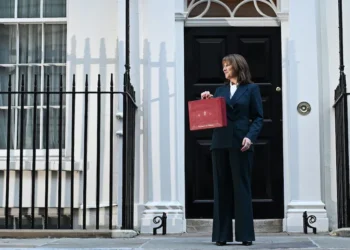
The weak economic backdrop has added to the challenges facing finance minister Rachel Reeves. The contraction came just weeks after she announced a major tax raising budget on November 26, aimed at stabilising public finances while supporting long term growth.
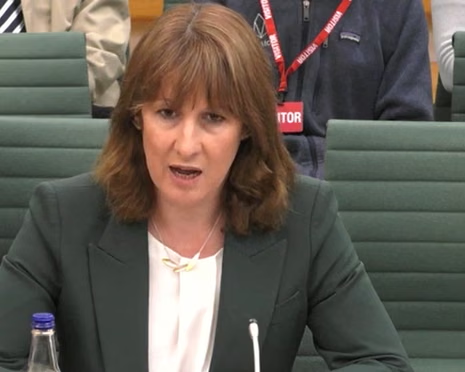
The latest data highlighted the difficulty of balancing fiscal discipline with the need to stimulate an economy that appears stuck in low gear. While the finance ministry said it remained determined to defy gloomy forecasts and create good jobs, the latest figures suggest that achieving this goal will not be easy in the near term.
Despite the recent contraction, the ONS said economic output in October was still 1.1 percent higher than a year earlier. However, this was weaker than the 1.4 percent expansion forecast by economists, signalling a clear loss of momentum.
The combination of slowing annual growth and a three month contraction reinforces concerns that the UK economy is struggling to generate sustained expansion. With services, construction, and production all under strain, the path to recovery looks increasingly uncertain.
In the coming weeks, much will depend on policy decisions and global conditions. A potential interest rate cut could provide some relief to households and businesses by lowering borrowing costs. However, structural challenges such as weak productivity, cautious investment, and fragile consumer confidence remain unresolved.
READ ALSO:Despite Q3 Soft Patch, Fitch Flags Strong 2026 Outlook for Ghana’s Economy