
President John Dramani Mahama has urged the Economic Community of West African States (ECOWAS) to remain engaged with countries that have withdrawn from the bloc under the Alliance of Sahel States (AES), warning that isolation will only deepen regional instability and insecurity.
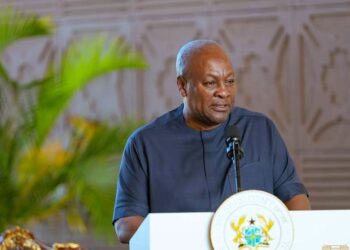
Speaking in Ile-Ife, Nigeria, President Mahama said the decision by Burkina Faso, Mali and Niger to break away from ECOWAS should not discourage efforts at dialogue and reconciliation.
Instead, he argued, the sub-region must actively work to rebuild trust and cooperation with the Sahelian states, whose futures, he said, remain inseparably linked to the rest of West Africa.
“Our sub-region is facing challenges. We all know what is happening in the Sahel. Three of our members have decided to break away and form the AES. I believe that it shouldn’t deter us, because God put us in this sub-region together for a purpose.”
President John Dramani Mahama
President Mahama stressed that the creation of the AES should not lead to permanent divisions within West Africa. He said ECOWAS must resist the temptation to ostracise the breakaway states and instead adopt a patient and pragmatic approach aimed at restoring unity.
“And so, I believe that instead of ostracising them, we must work to continue to build a bridge between ECOWAS and our brothers in the Sahel. Because our destinies are tied together.”
President John Dramani Mahama
The President illustrated his point with a Ghanaian proverb, warning that insecurity and instability in one part of the region will inevitably spill over into others if left unchecked.
“In Ghana, they say, if there’s fire burning in your neighbour’s house, take water and go and help him to quench the fire. Because when he finishes burning his house, it will spread into your house”.
President John Dramani Mahama
For President Mahama, the ongoing security crisis in the Sahel, marked by jihadist insurgencies, military takeovers and strained relations with regional and international partners, demands cooperation rather than disengagement.
He maintained that sustained dialogue with the AES countries is essential, not only to address security threats but also to preserve the long-term vision of regional integration. “And so, we must continue to build bridges with our brothers in the AES countries, and continue to encourage them to come back into the fold,” he said.
The President made the remarks at a royal and cultural ceremony where the Ooni of Ife, His Imperial Majesty Adeyeye Enitan Babatunde Ogunwusi, conferred on him the traditional title “Aare Atayeto Oodua of the Source,” translated as a President who recognises the global space for humanity.

The colourful installation ceremony took place at the Ooni’s palace in Ile-Ife on Monday afternoon, December 15, 2025, and drew traditional rulers, political leaders and dignitaries from across the sub-region.
Championing Regional Cohesion
While the event celebrated shared cultural heritage and historical bonds, President Mahama used the platform to address pressing regional political realities, reflecting his broader diplomatic push since returning to power in January 2025.
The Alliance of Sahel States is a confederation made up of Burkina Faso, Mali and Niger, all currently under military rule following a series of coups between 2020 and 2023. The alliance was initially formed on September 16, 2023, as a mutual defence pact, before being formalised into a confederation through a treaty signed in July 2024.
The AES has positioned itself as a new framework for security cooperation, economic coordination and political alignment among its members, particularly as they move away from traditional Western partners such as France and from regional institutions like ECOWAS. Its leaders have cited sovereignty, security failures and external interference as reasons for charting a new path.
On January 29, 2025, the three countries formally withdrew from ECOWAS after completing the required one-year notice period, marking an unprecedented rupture in the bloc’s nearly five-decade history.
Since then, the AES has announced plans for joint initiatives, including the establishment of a 5,000-strong combined military force, the introduction of a common passport and biometric identity systems, the creation of an investment bank and stabilisation fund, and exploratory studies into the possibility of a single currency.
President Mahama has emerged as one of the strongest advocates within ECOWAS for re-engaging the AES countries rather than treating their withdrawal as final. Since his return to office, he has consistently argued that the long-term stability of West Africa depends on reintegration rather than fragmentation.
As part of that effort, President Mahama invited leaders of the AES to his presidential inauguration earlier this year, with the Burkinabé leader attending the ceremony. He has also undertaken state visits to Burkina Faso, Niger and Mali, signalling Ghana’s willingness to act as a bridge between the breakaway states and the ECOWAS leadership.
Diplomatic sources say Mahama’s approach reflects concerns that prolonged estrangement could weaken collective security mechanisms, disrupt trade and movement, and complicate efforts to combat terrorism and organised crime across porous borders.
At the Ile-Ife ceremony, President Mahama’s call for bridge-building was framed not only as a political necessity but as a moral and historical obligation rooted in shared heritage. His remarks reinforced the idea that despite current political divisions, West African states remain bound by geography, culture and interdependence.
As ECOWAS continues to grapple with the fallout from the Sahelian exit, President Mahama’s message adds to ongoing debates within the bloc about how to balance democratic principles, regional stability and pragmatic engagement in an increasingly complex geopolitical environment.
READ ALSO: ACEP Flags Policy Risks After Withdrawal of Ghana–Barari Lithium Deal