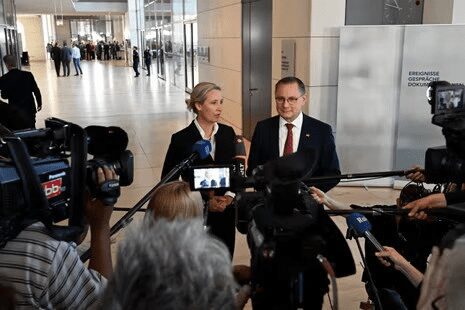
Lawmakers from the Alternative für Deutschland (AfD) have been invited to join the Munich Security Conference’s annual gathering of top international defence officials in February.
This comes after the shutting out of the far-right party for the last two years
The Munich Security Conference (MSC) brings together heads of state and government, Foreign and Defence Ministers and top military brass from around the world for a weekend of public addresses and private consultations.
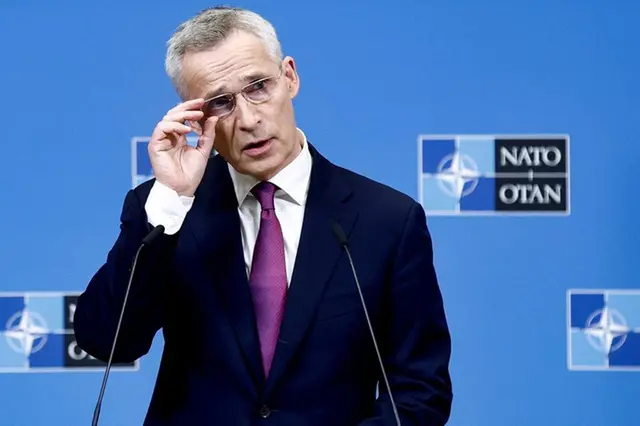
The previous no-AfD policy was adopted by then MSC Chair Christoph Heusgen, a longtime Adviser of the former Chancellor Angela Merkel. The event has since chosen a new leader, the ex-NATO Chief, Jens Stoltenberg.
However, while Stoltenberg finishes his term as Norwegian Finance Minister, Wolfgang Ischinger, a former German Ambassador to the US and to Britain and longtime MSC leader, has taken the reins.
The reversal, which was confirmed by organisers, came after the US Vice-President, JD Vance, lambasted the AfD’s exclusion in a blistering speech at this year’s event in which he accused Germany of stifling free speech by sidelining the anti-migrant, pro-Kremlin party.
A spokesperson for MSC declined to explain the new policy, saying only that the event, which has been held in the Bavarian capital since 1963, was run by a “private, independent foundation” and “under no obligation to anyone to issue invitations to its events.”
The Spokesperson said that it was decided to invite members of parliament from all parties represented in the Bundestag in particular members of the foreign affairs and defence committees, adding, “The same principle applied before 2024.”
About 10 AfD MPs serve on the Foreign Affairs committee and another nine on the defence committee. Asked whether Vance’s criticism had played a role in the decision, the spokesperson said, “The MSC decides independently on invitations to its events.”

The MSC’s about-face also comes amid a heated debate in Germany about how to contain the AfD as it grows in strength. The party took more than one in five votes at the last national election to become the leading opposition party in parliament.
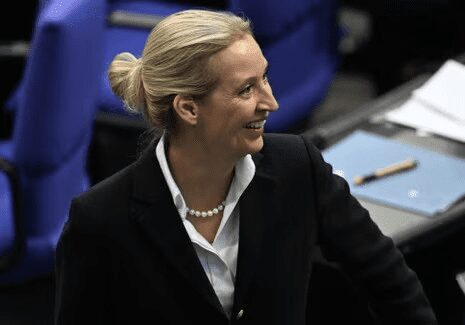
Meanwhile, AfD’s Co-leader Alice Weidel said that she had not received an invitation to the 2026 MSC, although organisers noted the guest list was “not yet complete.” Her AfD has for years worked to build closer ties to Donald Trump’s MAGA movement.
Before the MSC’s announcement, Alexander Hoffmann, Head of the parliamentary group of the Christian Social Union, the Bavarian sister party of the chancellor Friedrich Merz’s CDU, warned against inviting the AfD, noting that several of its officials had close contacts with Russia and China. “Information also flows there and that’s why it would be a security risk,” he told a news agency.
MSC’s New Stance On AfD Criticised
Political Consultant Johannes Hillje said without an “official explanation” of the MSC’s new stance, “it looks like a capitulation to JD Vance and his criticism of the exclusion of the AfD.”
Hillje said that the AfD “is more extreme than other western rightwing populist parties, which is why the German state cannot treat it like any other party.”
He said if AfD lawmakers were at the main conference, they should be excluded from “sensitive events” on the sidelines which could give them access to “confidential information” they could pass on to “contacts in Russia.”
Kai Arzheimer, a Political Scientist at the University of Mainz, said Ischinger’s reasoning was unclear. Wolfgang Ischinger, a former German ambassador to the US and to Britain and longtime MSC leader, has taken the reins.
“Perhaps he genuinely believes that this will enable him to avoid further intervention by the US government.
“A more pessimistic interpretation would be that this is another step towards normalising the party and that at least some institutions are anticipating the AfD’s participation in government.”
Kai Arzheimer
READ ALSO: Ablakwa Opens Oti Regional Passport Centre