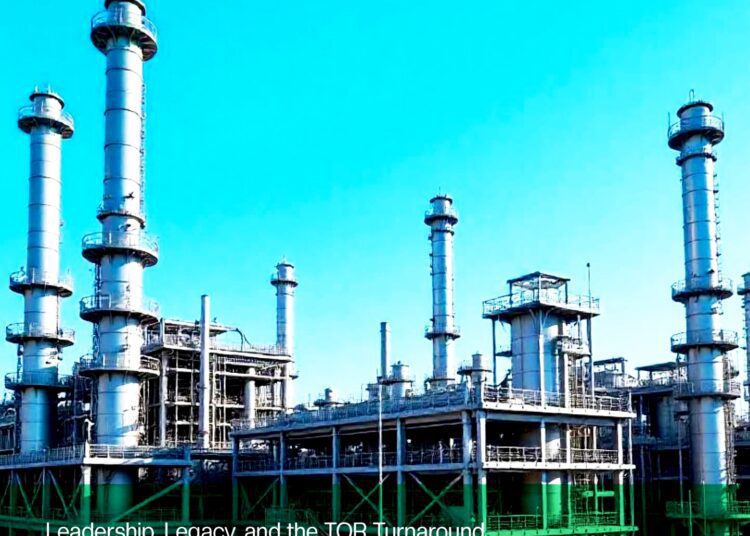
The Institute for Energy Security (IES) has congratulated the management of the Tema Oil Refinery (TOR) following the successful resumption of crude oil refining operations after several years of inactivity.
The development marks a significant moment for Ghana’s energy landscape, restoring operations at the country’s only state-owned refinery and reviving a facility long considered central to national energy security.
In a statement issued after the restart, the energy policy think tank commended the leadership of TOR, led by Managing Director Edmond Kombat (Esq), for steering what it described as a complex and demanding revival process.
According to IES, “the resumption of refining goes beyond the operational restart of a plant and signals the reactivation of a strategic national asset.”
IES described the restart of crude refining at TOR as “a historic milestone” and a major turning point for Ghana’s downstream petroleum sector.

The institute noted that for years, the absence of domestic refining capacity had exposed the country to supply risks and external shocks, particularly in the importation of refined petroleum products.
By returning to active refining, TOR is expected to play a stabilising role in the downstream market, improve supply security and support broader industrial activity.
The development reinforces Ghana’s long-term energy security objectives and aligns with national efforts to strengthen local value addition within the petroleum sector.
Leadership and Technical Execution Underlined

Central to the institute’s commendation was the leadership demonstrated during the refinery’s revival. IES pointed to several key achievements, including the successful completion of the Turnaround Maintenance on the Crude Distillation Unit and the attainment of full regulatory clearance to resume operations.
The think tank also highlighted the structured roadmap put in place to restore and expand TOR’s nameplate capacity, describing these steps as “clear indicators of strong leadership, technical competence and disciplined execution.”
According to the statement, these outcomes reflect a deliberate and methodical approach to restarting operations in a facility that has faced operational and financial challenges in the past.
IES singled out Managing Director Edmond Kombat for praise, noting that his stewardship throughout the revival process demonstrated “exceptional resolve, professionalism and commitment to national service.”
The institute emphasised that the complexity of restarting a refinery after years of dormancy required not only technical expertise but also strategic coordination, regulatory engagement and workforce mobilisation.
The return of TOR to operations, IES said, significantly reduces Ghana’s exposure to downstream supply risks by enhancing domestic refining capacity. This, in turn, is expected to improve supply reliability and contribute to price stability in the petroleum products market.
Focus on Safety, Compliance and Sustainability
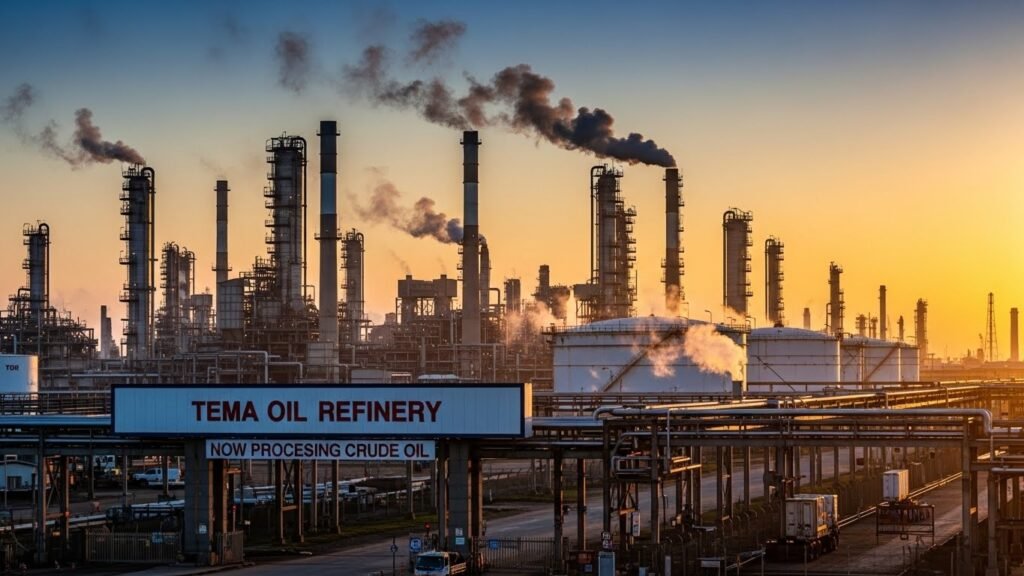
Beyond the technical restart, IES also commended TOR’s management and staff for their emphasis on safety, regulatory compliance and operational sustainability.
The institute acknowledged the importance of meeting stringent safety and environmental standards, particularly in the context of restarting heavy industrial operations.
IES noted that the refinery’s management has articulated a clear medium-term vision aimed at stabilising operations and gradually scaling up capacity.
This vision, the institute said, provides a credible pathway for TOR to regain its role as a cornerstone of Ghana’s energy infrastructure.
“These achievements underscore what is possible when policy direction, technical rigour and institutional leadership converge,” the statement said, underscoring the broader lessons for state-owned enterprises and critical infrastructure management.
Confidence in Long-Term National Benefits

Looking ahead, IES expressed confidence that TOR’s renewed operations would deliver lasting benefits to Ghana’s energy security, industrial growth and overall economic resilience.
The institute believes that a functional and efficiently managed refinery can support local industries, create jobs and reduce foreign exchange pressures associated with fuel imports.
IES further pledged its continued support for TOR as the refinery progresses through its recovery and expansion phases. The think tank indicated its readiness to engage constructively with management and policymakers to ensure that the gains made through the restart are consolidated and sustained.
As Ghana navigates a rapidly evolving global energy environment, the successful resumption of crude oil refining at TOR stands as a notable achievement, signalling renewed optimism for the country’s downstream petroleum sector and its capacity to support national development goals.
READ ALSO: GDP Can’t Measure Empty Pockets: Bokpin Demands Jobs-Focused Economic Policy