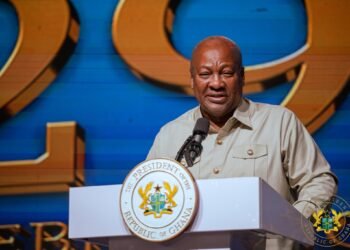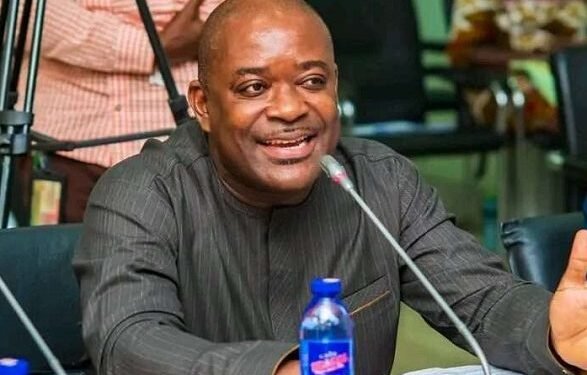

The Founding President of the IMANI Centre for Policy Education, Franklin Cudjoe, has commended President John Dramani Mahama for what he described as a strong start to his return to office, while urging the administration to pursue tougher institutional and governance reforms as it enters a critical second year.
In a New Year message reflecting on the President’s first year in power, Mr. Cudjoe praised the direction of the reset agenda but warned that 2026 would test the government’s capacity to deliver large-scale projects efficiently and transparently.
Addressing President Mahama directly, Mr Cudjoe acknowledged that the administration had begun well, but cautioned that some unresolved issues and attitudes within government could undermine the broader reform agenda if not addressed.
He noted that while the early momentum had been encouraging, the period of goodwill that often accompanies a new administration had effectively ended, making results and execution more important than rhetoric.
Mr Cudjoe described 2026 as a decisive year for the rollout of the government’s Big Push infrastructure and development projects, many of which are expected to carry significant budgetary allocations.

According to him, the scale and complexity of these initiatives demand sharper focus and stronger safeguards to prevent inefficiencies and corruption. He stressed that the success or failure of these projects would shape public judgment of the administration’s reset drive.


Relieving the Finance Minister from an Additional Role
One of his key recommendations was a call for President Mahama to relieve the Minister for Finance, Dr. Cassiel Ato Forson, of his additional responsibilities as Defence Minister.
Mr Cudjoe argued that the Finance Minister’s continued fiscal discipline has been central to recent economic stabilization and that dividing his attention could weaken oversight at a time when public finances require careful management.
In his view, allowing the Finance Minister to concentrate fully on economic stewardship would better serve the administration’s stated goals.
Beyond ministerial focus, Mr Cudjoe proposed structural reforms to how major government projects are managed. He suggested the recruitment of an Administrator or Assessor General from within the civil service to oversee all major government projects.
Such an office, he explained, could be tasked with conducting risk analysis to ensure that projects are delivered on time, within budget and with reduced exposure to procurement related abuses.
Mr Cudjoe emphasized that many of the government’s most strategic projects cut across several ministries, departments and agencies, often dispersing responsibility and expertise.
Without a central coordinating authority, he warned, projects can become vulnerable to delays, cost overruns and weak accountability. He argued that a dedicated assessor with the authority to draw on expertise across government would strengthen delivery and reduce waste.
An Empowered Cabinet Office
In the same vein, Mr Cudjoe called for a stronger and more empowered Cabinet Office. He suggested that the office should be given clearer authority to coordinate technical, financial, and political accountability functions across the executive.
According to him, improved coordination at the center of government would help align policy intent with implementation and close gaps that are often exploited for personal gain.

While offering these recommendations, Mr Cudjoe reaffirmed IMANI’s willingness to support the administration through independent analysis and oversight. He referenced policy input already requested from IMANI Vice President Bright Simons, noting that the think tank remains prepared to provide additional scrutiny where necessary.
At the same time, he made it clear that IMANI would continue its long-standing practice of publicly assessing government performance, as it has done consistently over the past two decades.
Anti-Corruption Recovery
Mr Cudjoe’s comments also reflected broader concerns about corruption and state capture. He cautioned against allowing conditions that could require another major anti-corruption recovery exercise after the current administration leaves office.
Drawing on recent history, he warned that Ghana could ill afford another period marked by large scale losses through mismanagement and organized theft. In his assessment, prevention through stronger systems is preferable to recovery after damage has already been done.
Despite these concerns, Mr Cudjoe acknowledged that most of the President’s current appointees appear responsible and capable. He suggested that with the right systems in place, the risk of theft and abuse could be significantly reduced before it occurs, rather than addressed after public resources have already been lost.
In a notable personal endorsement, Mr Cudjoe singled out the President’s Executive Secretary, Dr. Callistus Mahama, for praise. He described the Presidency’s administrative setup as efficient and effective, urging that its standards be replicated across other parts of government.

According to him, the operational discipline observed at the Presidency demonstrates that high performance within the public sector is achievable. Mr Cudjoe concluded his message with optimism, expressing hope that 2026 could become President Mahama’s most successful year yet.
While emphasizing that the task ahead would not be easy, he maintained that the administration’s goals remain achievable if it commits to deeper reforms, sharper oversight and disciplined execution. His remarks capture both cautious praise and pointed challenge, reflecting the expectations facing the government as it moves from recovery to delivery.
READ ALSO: Reforms Will Not Slow Down in 2026; They Will Deepen – Ato Forson Obligates