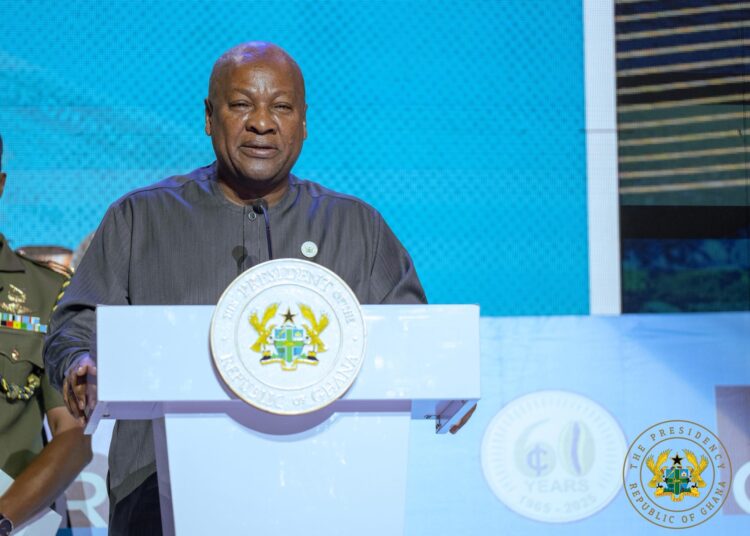
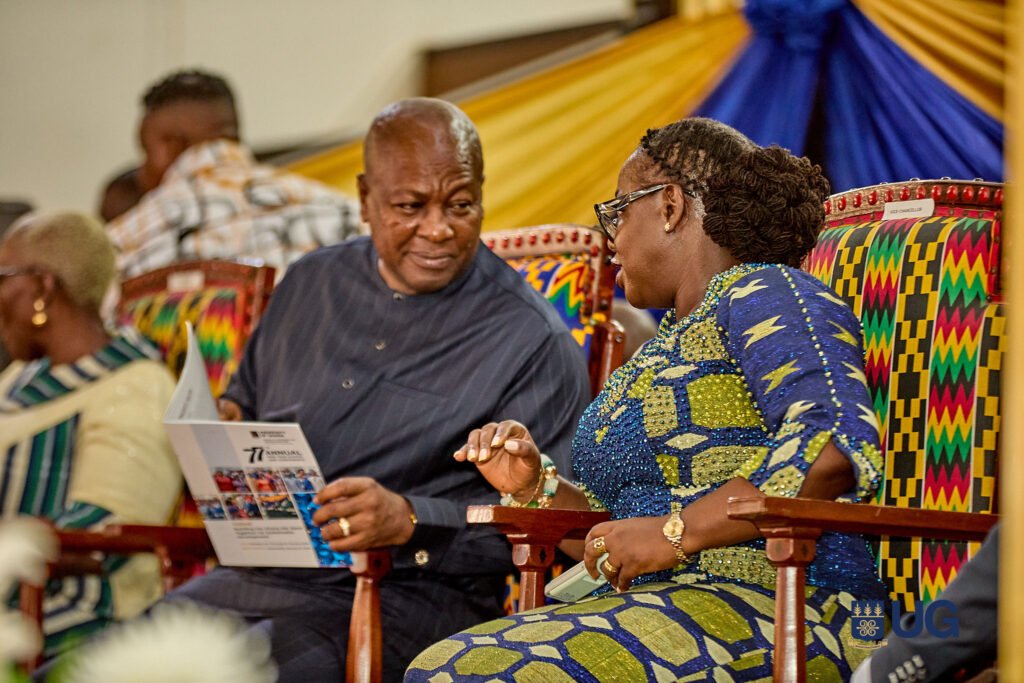
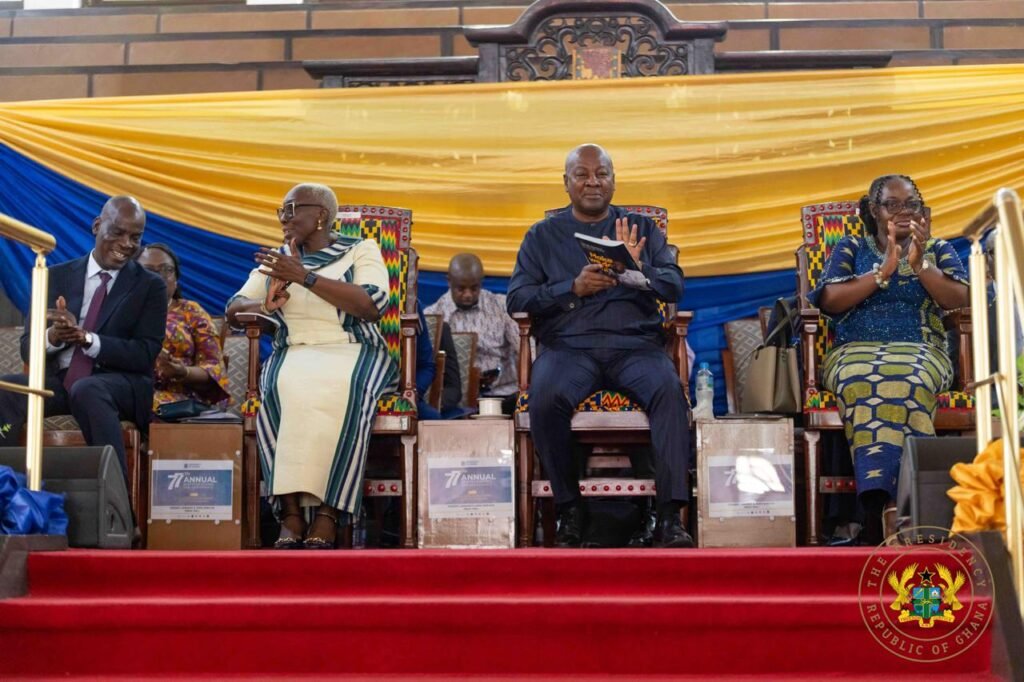
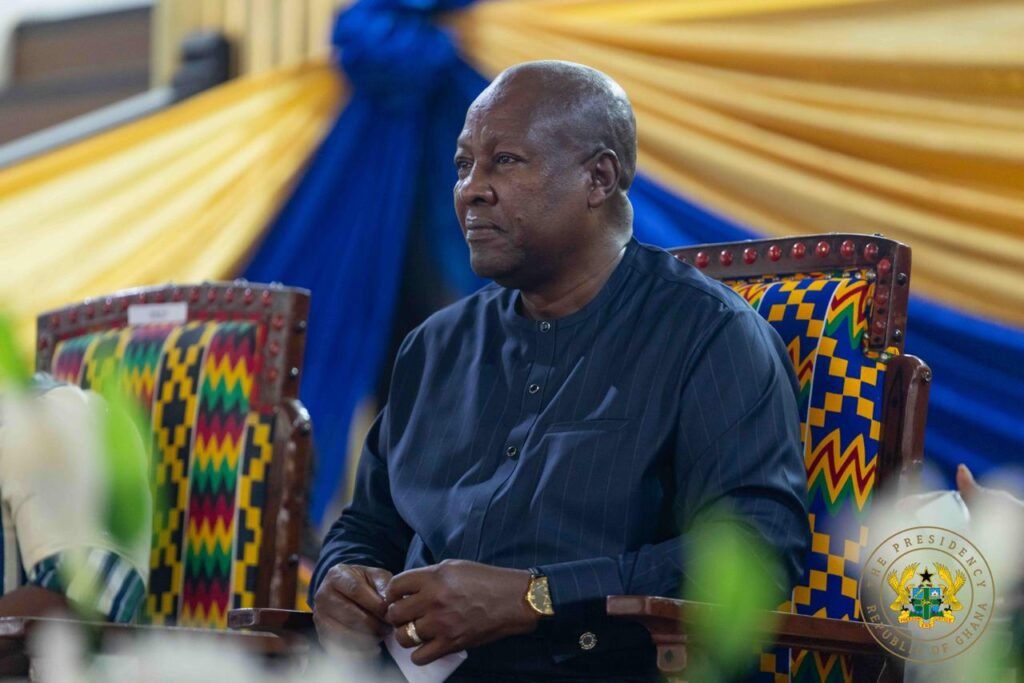
President John Dramani Mahama has reaffirmed his administration’s commitment to inclusion, cohesion and shared national purpose, describing them as essential pillars for sustainable development, as he opened the University of Ghana’s 77th Annual New Year School and Conference.
Addressing academics, policymakers and students, the President said Ghana’s long term progress depends not only on economic growth but on building a fair society in which every citizen feels represented and empowered.
President Mahama warned that a divided nation cannot sustain development, stressing that exclusion along regional, gender or generational lines ultimately weakens national cohesion and undermines shared progress.
He said the vision of the Ghana his government seeks to build must be inclusive and cohesive, ensuring that no part of the country is left behind and no group marginalised.
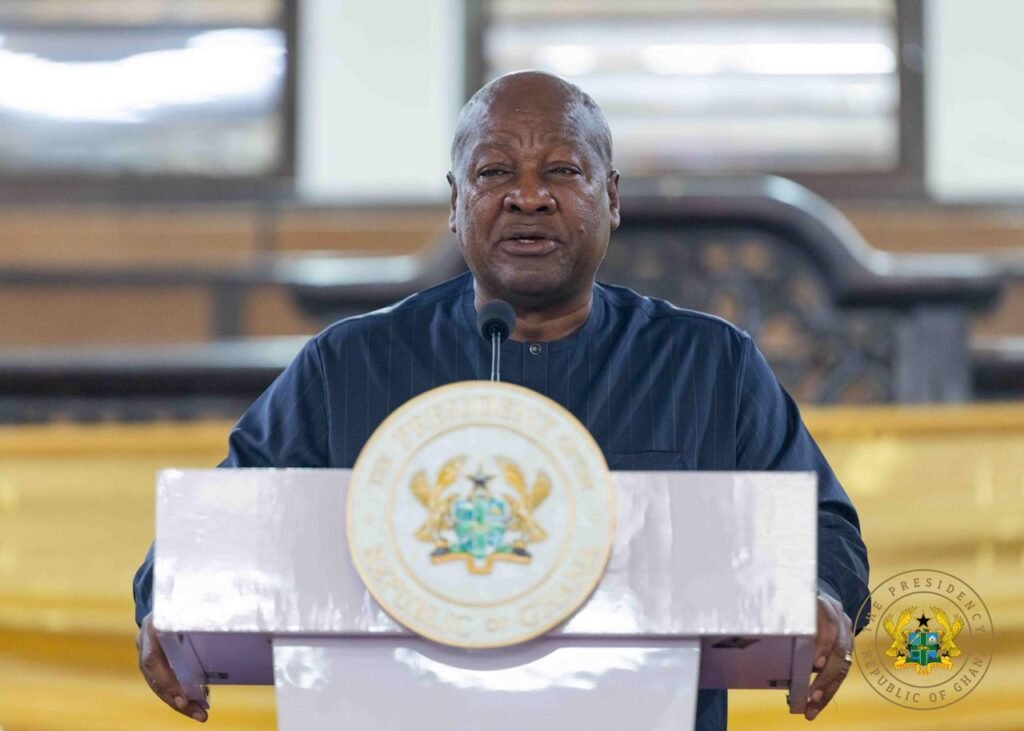
According to him, development that benefits only a section of society is fragile and unsustainable, and must be replaced with policies that promote equity and collective ownership of national progress.
“We passed the Affirmative Action Law, and I must admit ashamedly that we are behind. We are falling behind the targets of the Affirmative Action Law.”
President John Dramani Mahama
He emphasised that women are equally qualified and capable of holding public office as men, arguing that gender imbalance in leadership is not a reflection of competence but of structural barriers that must be dismantled.
No Toleration for Women’s Exclusion
President Mahama said his administration would no longer tolerate practices that sideline women in decision making, especially at the level of governing boards of state institutions.
Explaining the challenge, he noted that while presidents appoint a mix of men and women to governing boards, institutional representatives nominated by organisations often end up being overwhelmingly male.
This, he said, has resulted in boards that do not reflect the diversity of Ghanaian society. To address this, the President announced plans to change the framework for constituting governing boards so that institutions are compelled to meet minimum gender representation thresholds.
He said future guidelines will include clear requirements ensuring that a defined percentage of board members are women. This, he explained, would prevent institutions from bypassing the spirit of the Affirmative Action Law and would help accelerate progress toward gender balance in public leadership.
President Mahama stressed that inclusion must be intentional, adding that fairness does not happen by accident but through conscious policy choices and enforcement.
Fair and Equitable Distribution of National Resources
Beyond gender, the President framed inclusion as a broader national commitment that must be reflected in how resources are allocated and opportunities distributed.
He said inclusivity should guide infrastructure development, social protection programmes and access to leadership roles across all sectors.
According to him, development must reach rural and urban communities alike, and policy decisions must be sensitive to the needs of vulnerable and marginalised groups.
President Mahama also challenged conventional measures of progress, urging policymakers and analysts to look beyond headline economic indicators.
While acknowledging the importance of economic growth, he argued that progress should not be judged solely by increases in gross domestic product. Instead, he said success must also be measured by reduced inequality, improved social mobility and better quality of life for ordinary citizens.
He explained that growth that leaves many behind erodes trust in public institutions and fuels social tension. For him, a truly successful economy is one that expands opportunities, lifts living standards and strengthens social cohesion.
In this context, inclusion becomes both a moral imperative and a practical strategy for sustaining long term development. The President also reflected on the meaning of national unity, cautioning against confusing unity with uniformity.
He said unity does not require everyone to think or act the same way, but rather to share a common purpose while respecting diversity. Ghana’s strength, he noted, lies in its diversity of cultures, regions and perspectives, and national development must harness this diversity rather than suppress it.
President Mahama said shared national purpose is built when citizens feel seen, heard and valued in the national project. He argued that when people believe the system is fair, they are more willing to contribute, cooperate and sacrifice for the collective good.
This, he said, is essential for navigating the economic and social challenges facing the country. As Ghana looks to the future, President Mahama positioned inclusion, cohesion and gender equity as central to his administration’s broader development agenda.
He said the decisions taken today will shape the kind of society future generations inherit, making it imperative to build institutions and policies that promote fairness and shared prosperity.
The address set a reflective tone for the New Year School, which traditionally serves as a platform for national dialogue on policy direction.
President Mahama’s remarks signalled that beyond economic recovery and governance reforms, social inclusion and gender balance will remain key benchmarks by which his government expects to be judged.
READ ALSO: Structured Mechanism Tempers Ghana’s Exposure To Oil Shocks – Batsa Narh