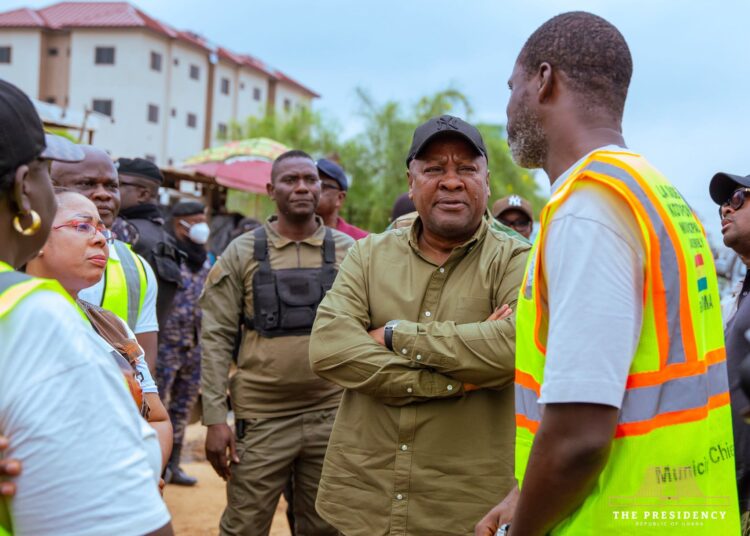
President John Dramani Mahama has pledged that the nationwide cleanup campaign launched in response to the recent devastating floods will continue beyond the initial two day exercise, stressing that sustained action is essential to prevent future disasters.
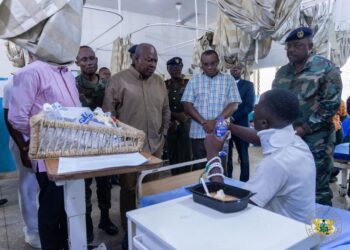
Speaking during an inspection of the Alajo drains as part of the National Cleanup Exercise, the President said government would maintain the momentum by deploying the military to continue clearing drains and removing waste long after the nationwide exercise ends.
According to him, the cleanup campaign is only the beginning of a broader effort to restore the country’s drainage systems and reduce the risk of flooding in vulnerable communities. “The military will continue that exercise even after we have finished this two-day cleanup,” President Mahama said.
He explained that clearing drains requires more than manual labour because the large quantities of silt and waste removed must also be transported to approved disposal sites. Without that second stage of the operation, he warned, much of the work already completed could be undone when heavy rains return.
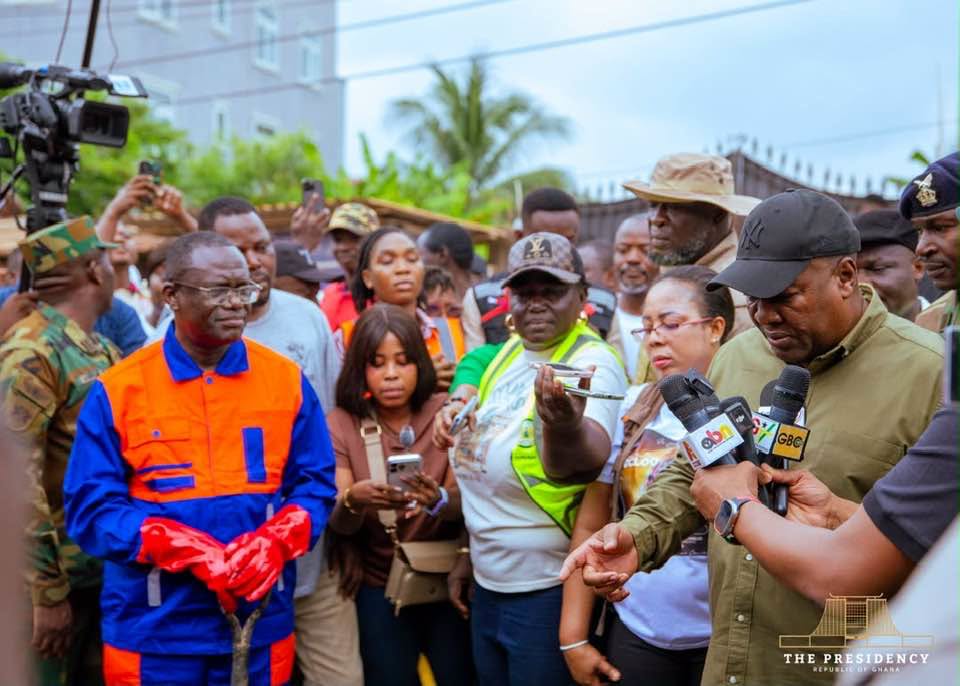
Government to Equip Military With Heavy Machinery
To strengthen the cleanup exercise, President Mahama announced plans to procure additional heavy equipment for the military to support drain desilting operations. He said government intends to acquire more backhoes to lift silt and debris from drains into tipper trucks for disposal.
“We also have to get specialized machines like backhoes to take the silt that we have taken out of the drains and put it in a dump truck or a tipper truck to take them away.
“We’re going to get some more backhoes for the military so that all the garbage and the silt that we have taken out of the drains, they’ll be able to gather it and go and dump it somewhere”.
President John Dramani Mahama
President Mahama warned that leaving waste along the edges of drains would defeat the purpose of the cleanup exercise because rainfall would simply wash the debris back into the waterways.
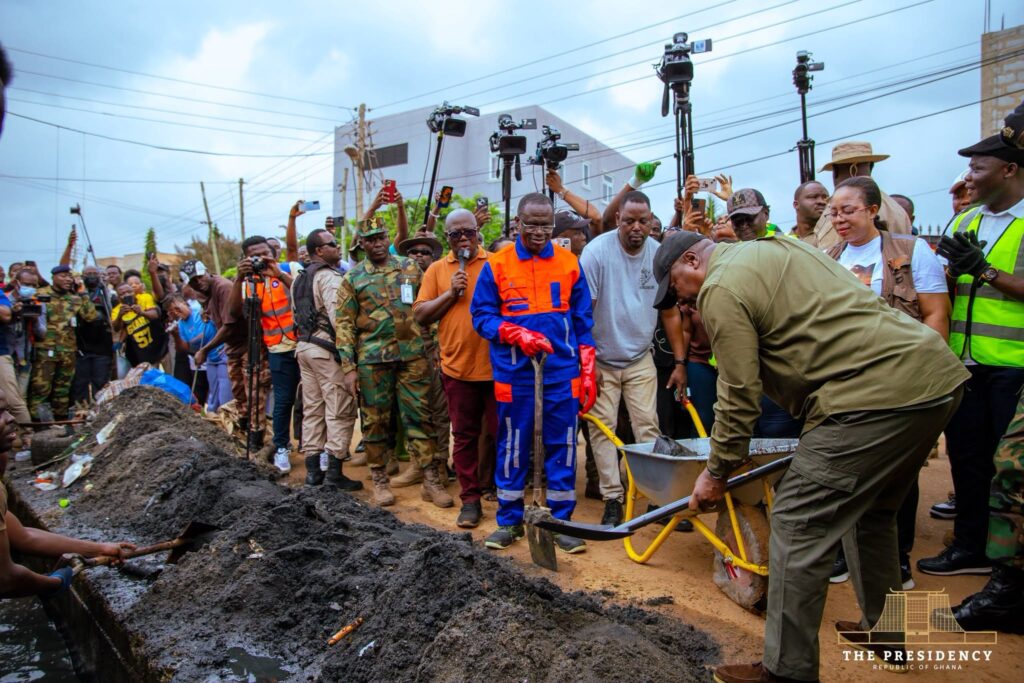
Alajo Drain Reveals Scale of Waste Problem
During his inspection of the Alajo drain, which forms part of the Odaw River system, the President described the extent of pollution as alarming. He said the drains are heavily clogged by a combination of silt, plastic waste and household refuse, all of which restrict the free flow of water during heavy rainfall.
The President noted that cleanup crews encountered a surprising range of discarded items inside the drains, reflecting widespread disregard for proper waste disposal. He stressed that drainage systems are designed to carry storm water and should never be used as dumping grounds for refuse.
“You find in a drain like this, there are paving blocks. People discard a paving block and throw it in the drain. Old furniture, dining tables, everything you can find in that drain. The drains are not garbage instruments”.
President John Dramani Mahama
President Calls for Change in Public Attitude
President Mahama urged Ghanaians to adopt responsible waste disposal practices, arguing that preventing floods requires behavioural change as much as government intervention. He reminded residents that waste collection facilities are available across the city and should be used instead of drains.
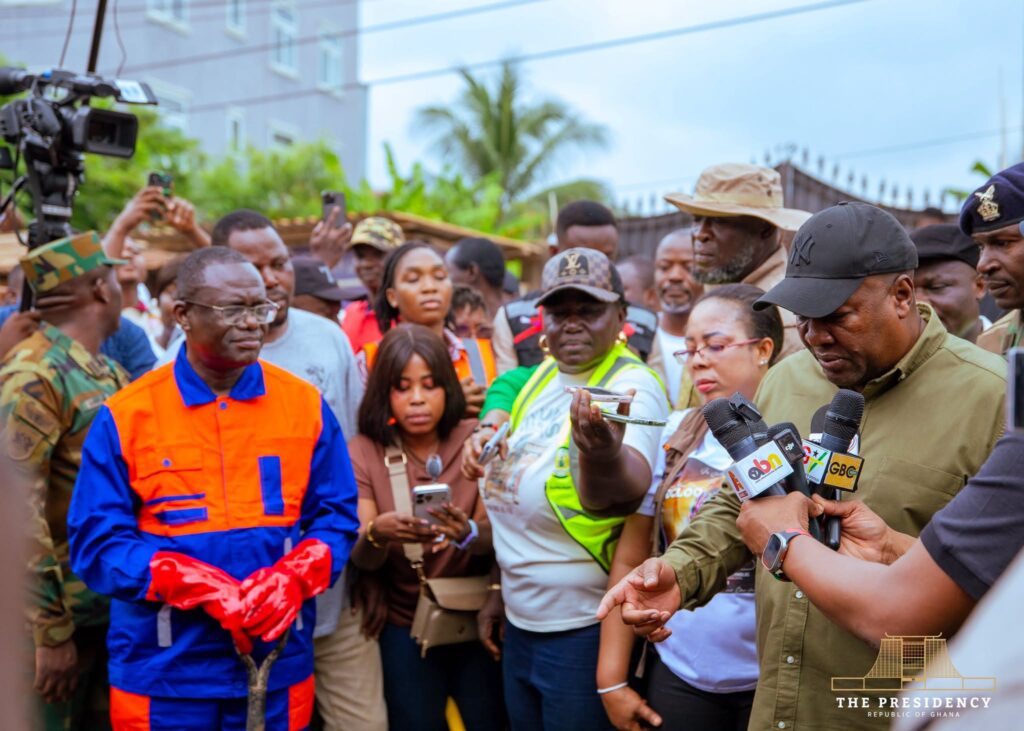
“If you want to dispose of something, you know how to dispose of it. We have skip trucks that leave containers all over the city. Just go and throw your garbage into the skip, and the truck will come and pick it and take it where it has to take it.”
President John Dramani Mahama
The President expressed concern that many people abandon the values of cleanliness they learn while growing up once they move into urban areas. He said that mindset has contributed significantly to the sanitation challenges confronting many urban communities.
Floods Demand National Resolve
President Mahama thanked the military, traditional leaders, sanitation workers and volunteers who participated in the National Clean Up Exercise, praising their commitment to restoring clean and safe communities.
He gave special recognition to traditional leaders who supported the campaign and encouraged citizens to continue taking ownership of their surroundings. “I want to thank all the traditional leaders and all the people of Ghana who have come out today to clean their environments.”
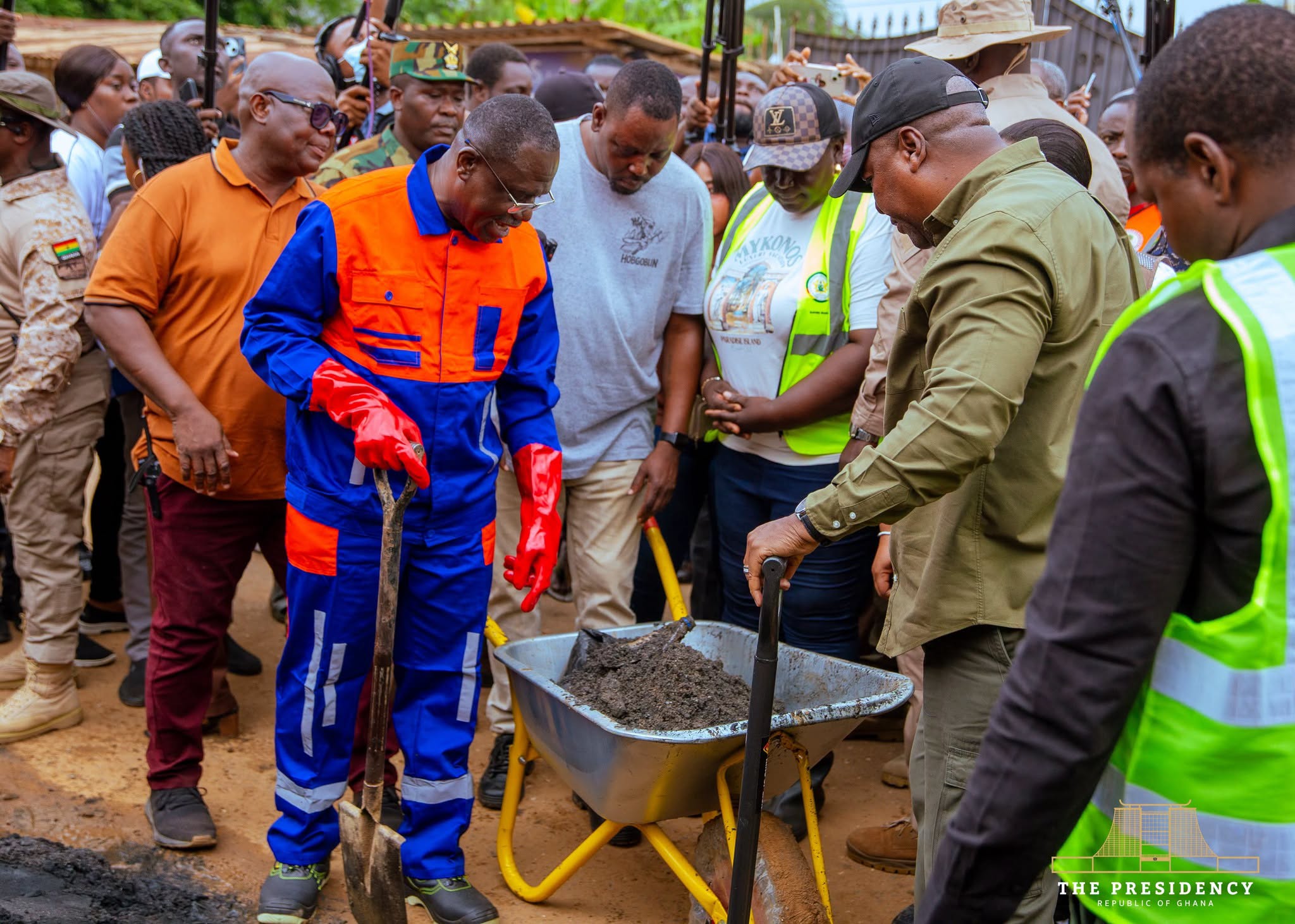
The President acknowledged the widespread destruction caused by the recent floods but expressed confidence that the country could recover through sustained collective action. “The floods have been devastating, but we must show that we are a resilient nation and we can bounce back even better,” he said.
He stressed that maintaining clean drains, improving waste management and sustaining public participation will remain critical to reducing flood risks and protecting lives and property in the future.
READ ALSO: Ghana, ENI Discuss New Investments as Government Pushes to Sustain Upstream Production Growth