
Global oil market shocks triggered by geopolitical events do not translate instantly into fuel price changes in Ghana, but their effects can still be felt weeks later through a structured pricing transmission process, according to Mr. Joshua Batsa Narh, Executive Chairman of the Energy Chamber Ghana and a Director at Wingfield Group.
Speaking to Vaultz News, Mr. Narh explained that when major developments such as U.S. political or military intervention in Venezuela occur, global markets tend to “price risk before volumes,” creating short-term volatility that may or may not evolve into sustained price increases.
Mr. Narh noted that Venezuela’s significance in oil markets goes beyond its current production levels.
“Venezuela holds the world’s largest proven oil reserves (300+ billion barrels) but due to decades of underinvestment and sanctions, its actual production is very low roughly 0.9–1.0 million barrels per day which is only a small fraction of global supply today.”
Mr. Joshua Batsa Narh, Executive Chairman of the Energy Chamber Ghana and a Director at Wingfield Group
Despite this, markets often react strongly to geopolitical tension surrounding Venezuela. “Markets often react more to perceived supply disruption risk than actual immediate supply changes,” he said.
Mr. Narh added that traders typically bid up benchmarks like Brent and West Texas Intermediate (WTI) on fears of disrupted flows, higher insurance costs and constrained refining feedstocks.
He cited a recent U.S. interception of a Venezuelan oil tanker as an example, noting that Brent prices rose even though global fundamentals remained oversupplied. “In other words, the risk premium—not barrels—tends to drive prices first,” Mr. Narh explained.


Oversupply Limits Sustained Price Surges
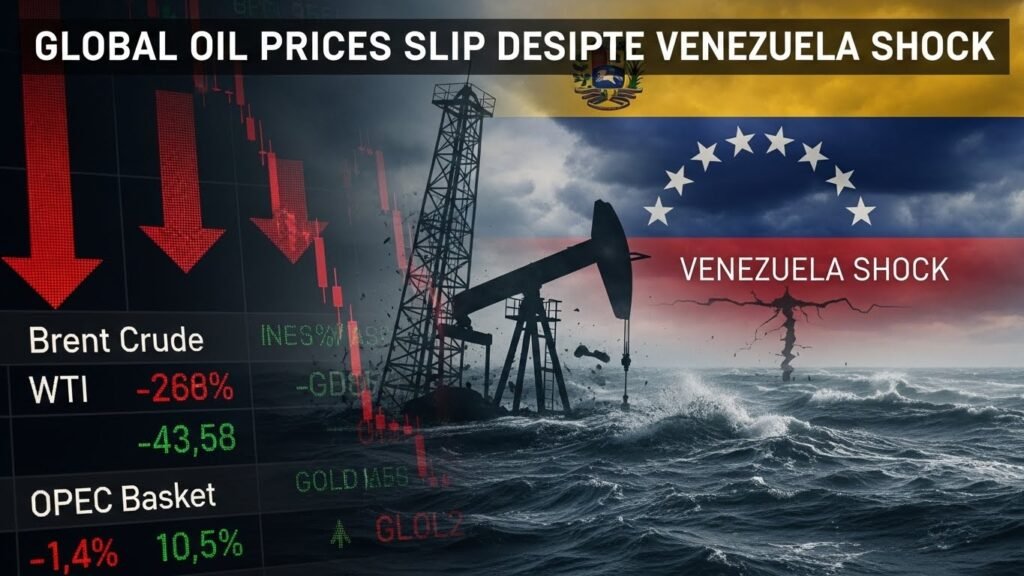
According to the energy analyst, the current structure of the global crude market helps contain the long-term impact of such geopolitical shocks.
Elevated inventories and spare capacity among major producers such as the United States, Saudi Arabia and Canada mean that supply shortfalls can often be offset.
“Several analysts argue that even aggressive U.S. measures against Venezuelan exports won’t cause a sustained global crunch because spare capacity elsewhere buffers the shock.”
Mr. Joshua Batsa Narh, Executive Chairman of the Energy Chamber Ghana and a Director at Wingfield Group
This explains why many oil price movements linked to geopolitical headlines tend to be short-lived and sentiment-driven rather than structural.
Mr. Narh pointed to the Middle East tensions in 2025 as a historical parallel, where crude prices spiked sharply but only temporarily before fundamentals reasserted themselves.
How Global Prices Filter Into Ghana’s Market
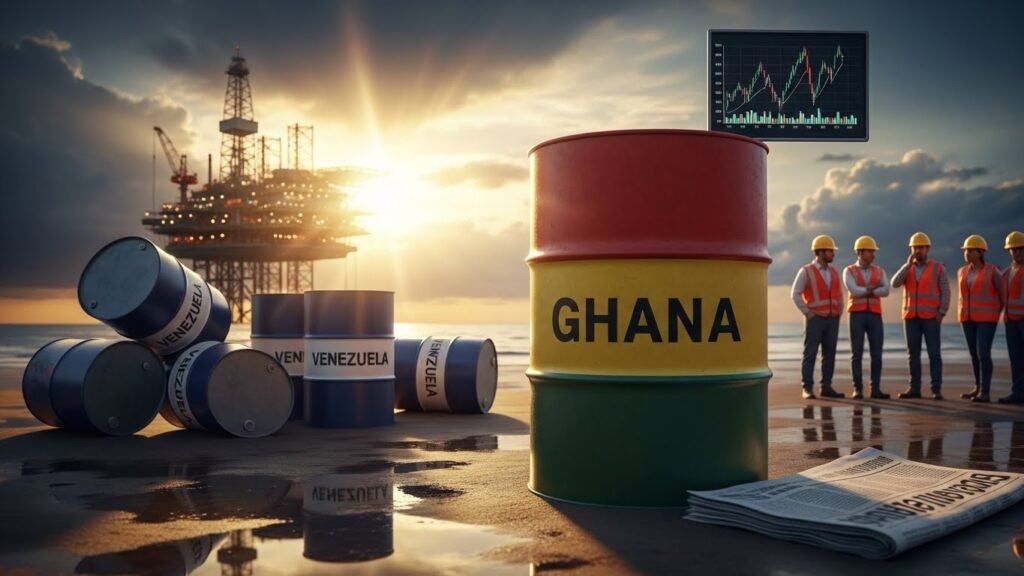
While global price spikes may fade, Mr. Narh stressed that Ghana is still structurally exposed to international oil movements because it is a net importer of refined petroleum products, including petrol, diesel and liquefied petroleum gas.
He explained that once crude benchmarks such as Brent and WTI shift, a clear pricing transmission mechanism begins. Changes in benchmark prices affect free-on-board (FOB) crude prices, which then influence the cost, insurance and freight (CIF) prices of products imported into Ghana.
“COMAC pricing windows in Ghana show how global crude moves translate into local pump price revisions, typically with a lag of weeks to months.”
Mr. Joshua Batsa Narh, Executive Chairman of the Energy Chamber Ghana and a Director at Wingfield Group
Another critical factor is the exchange rate. Because petroleum imports are priced in U.S. dollars, movements in the Ghanaian cedi can significantly alter the impact of global price changes.
Mr. Narh explained, “A stronger cedi can soften a crude price rise, while a weaker cedi can exacerbate it.” This interaction means that even modest global price increases can feel larger domestically if currency conditions are unfavourable.
Regulatory Cycle Creates Natural Lag
Mr. Narh also highlighted the role of Ghana’s pricing regime in delaying the pass-through of global oil price movements. The National Petroleum Authority (NPA) reviews and adjusts fuel prices on a biweekly basis, rather than daily.
“This institutional rhythm means that global price changes enter local pump prices with a natural lag,” he said, noting that contracts must be settled, products shipped and dealers allowed time to adjust retail prices.
As a result, the full effect of a major geopolitical shock can take between four and eight weeks to show up at the pump, depending on how persistent the shock is and whether global supply conditions remain ample.
Drawing on historical experience, Mr. Narh said credible geopolitical risks have previously caused single-digit to double-digit percentage swings in Brent crude within days. However, in oversupplied markets, such reactions are often muted and short-lived.
Mr. Narh concluded that while geopolitics still matters, supply fundamentals ultimately anchor prices. Even low-volume producers like Venezuela can influence markets through sentiment, but oversupply limits lasting damage.
“For Ghana, these pressures filter through international benchmarks into import costs with a measurable lag and are modulated by exchange rates and regulatory pricing cycles.”
Mr. Joshua Batsa Narh, Executive Chairman of the Energy Chamber Ghana and a Director at Wingfield Group
In today’s oil market, he stressed, headline shocks are more likely to create volatility than enduring price increases.
As Ghana continues to manage fuel pricing through regulatory oversight and exchange rate stability, analysts say vigilance remains key, even as global markets navigate the uncertainties surrounding Venezuela.
READ ALSO: BoG To Roll Out Targeted Interventions to Unlock Diaspora Participation in Ghana’s Growth