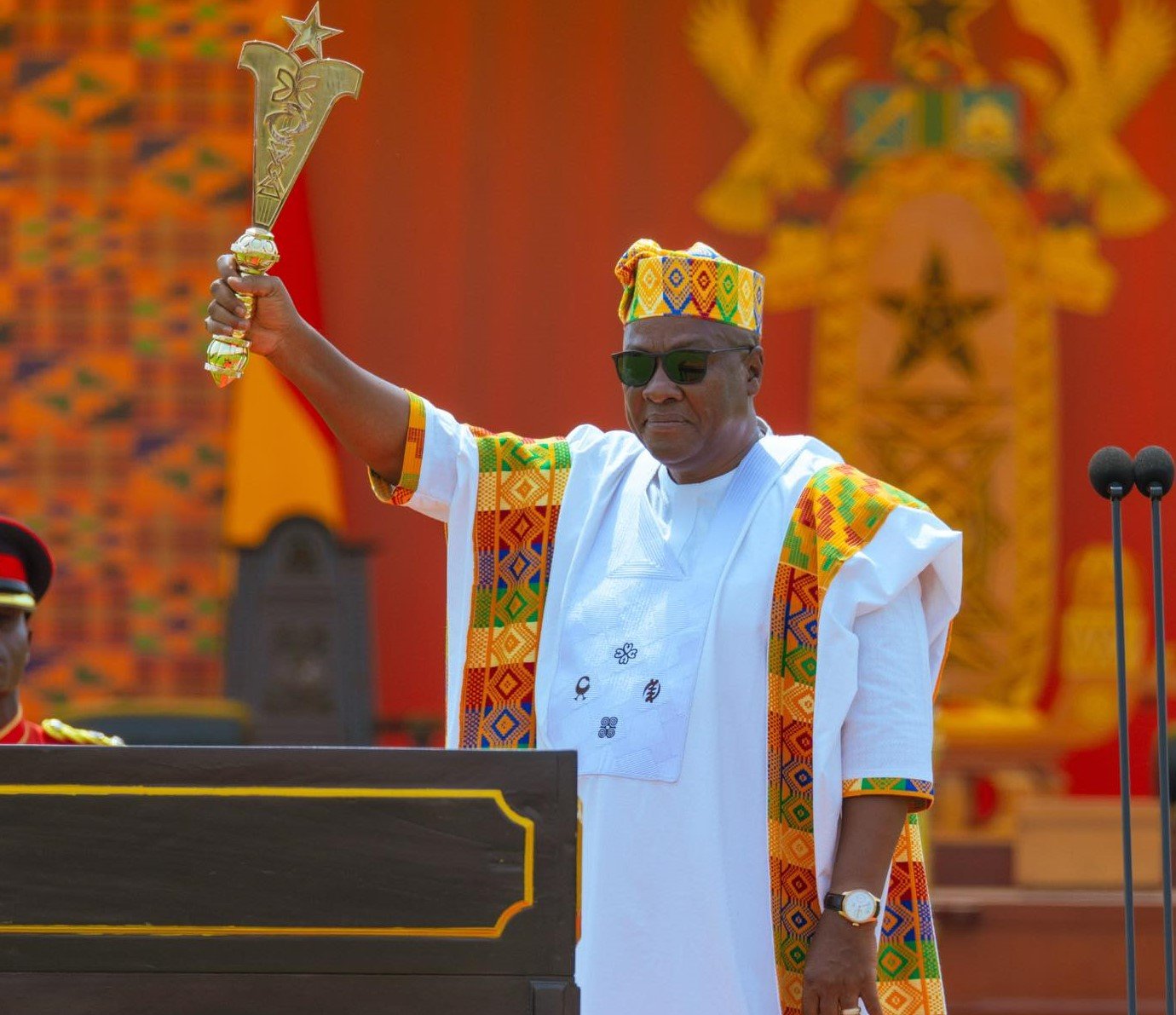
One year into President John Dramani Mahama’s return to office, public discourse across Ghana reflects a notable shift in tone. Where skepticism once dominated, a growing number of citizens now speak of reassurance, restraint, and renewed confidence in national leadership.
The first anniversary of the administration has triggered widespread reflection, particularly on social media, where Ghanaians have assessed the President’s style, policy direction, and early outcomes against the backdrop of recent economic and governance challenges.
Many supporters described President Mahama’s leadership over the past twelve months as a departure from tension-driven politics toward a calmer and more measured approach.
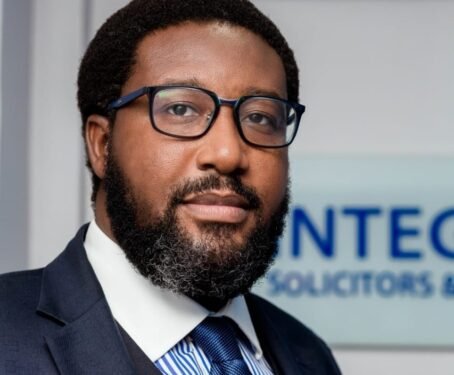
Seasoned Business Executive and Chartered Accountant, Louisa Laryea, captured this sentiment by describing the President as “a breath of fresh air” whose calmness, simplicity, and modesty have made a welcome difference in governance.
She acknowledged that the year had not been without challenges, including agitation in some quarters, the persistent galamsey menace, and national tragedies, but urged the President to continue refining reforms, particularly through the decisive execution of the Operation Recover All Loot initiative.

Mahama’s Return, a Study of Restraint and Refinement
Beyond personal leadership style, reflections on President Mahama’s political journey itself have resurfaced. Barnabas Nii Laryea framed the President’s return as a study in restraint and refinement rather than a mere quest for power.


He recalled the intense public pressure that marked President Mahama’s exit from office in 2016 and argued that time has altered the national perspective.
According to him, the current presidency reflects lessons drawn from past scrutiny, evidenced in the President’s willingness to empower younger professionals, supervise without suffocating, and pursue an economy that may not be perfect but is increasingly predictable.
He linked this posture to President Mahama’s earlier declaration during the 2015 State of the Nation Address that he intended not to manage problems but to fix them, suggesting that fixing may now mean restoring calm and institutional discipline rather than dramatic spectacle.
Ghana’s Economic Rebound
Economic indicators from the administration’s first year appear to support this emerging narrative of stability. Ghana recorded a gross domestic product growth rate of 6.1 percent in the first quarter of 2025, compared to 5.7 percent during the same period in 2024.
The Ghanaian cedi, which had faced sustained depreciation pressures in late 2024, recovered strongly to close the year at approximately 10.65 to the United States dollar on the interbank market, a sharp improvement from levels near 14.70.
Inflation continued its downward trend, easing to 5.4 percent by December 2025 from 6.3 percent in November and a high of 23.8 percent in December 2024. These developments have reinforced public perceptions that the economy is regaining balance.
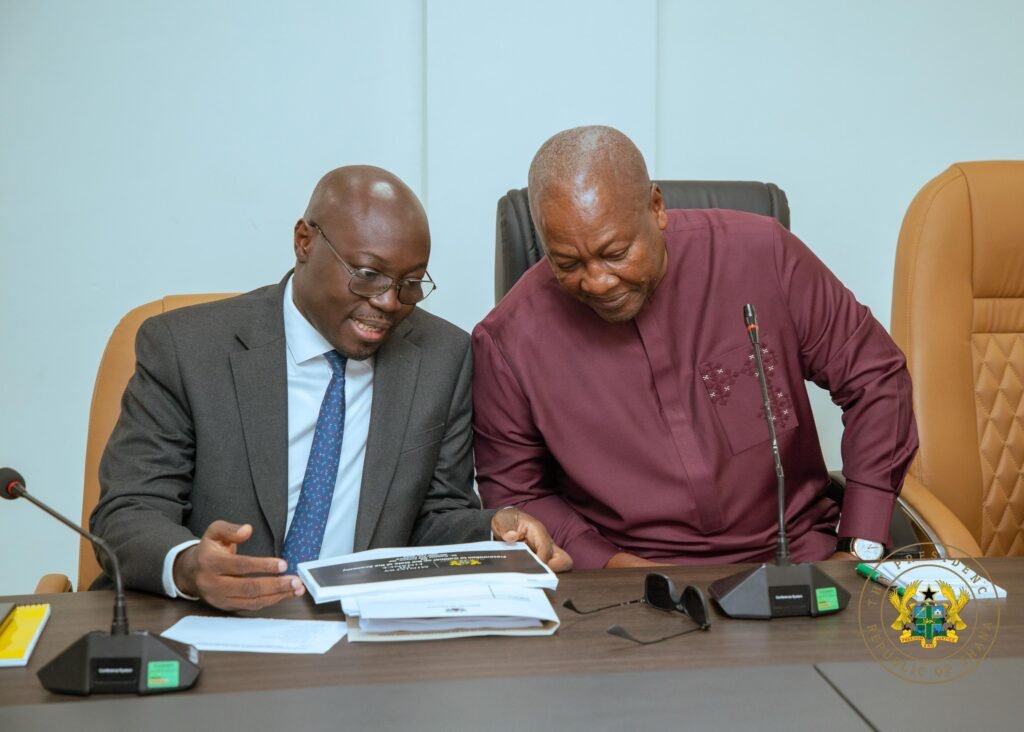
The government’s fiscal approach has also drawn attention. Within the first year, several tax measures introduced by previous administrations were abolished, including the Electronic Levy, the Betting Tax, the Covid-19 Levy, and the Emissions Levy. These actions were widely interpreted as efforts to ease pressure on households and businesses while restoring confidence in the tax system.
Big Push Infrastructure Drive
A major pillar reinforcing public confidence has been the scale of infrastructure activity underway across the country. Under the government’s flagship Big Push Infrastructure Program, valued at about GH¢410 billion, road construction has expanded significantly across all regions.
President Mahama has repeatedly described Ghana as a construction zone, noting that the renewed focus on roads, bridges, and transport corridors is intended to unlock productivity, reduce travel time, and support long term economic integration.
Several trunk roads, urban interchanges, and regional link roads are currently under construction, with government confirming that additional projects are scheduled to commence in 2026.
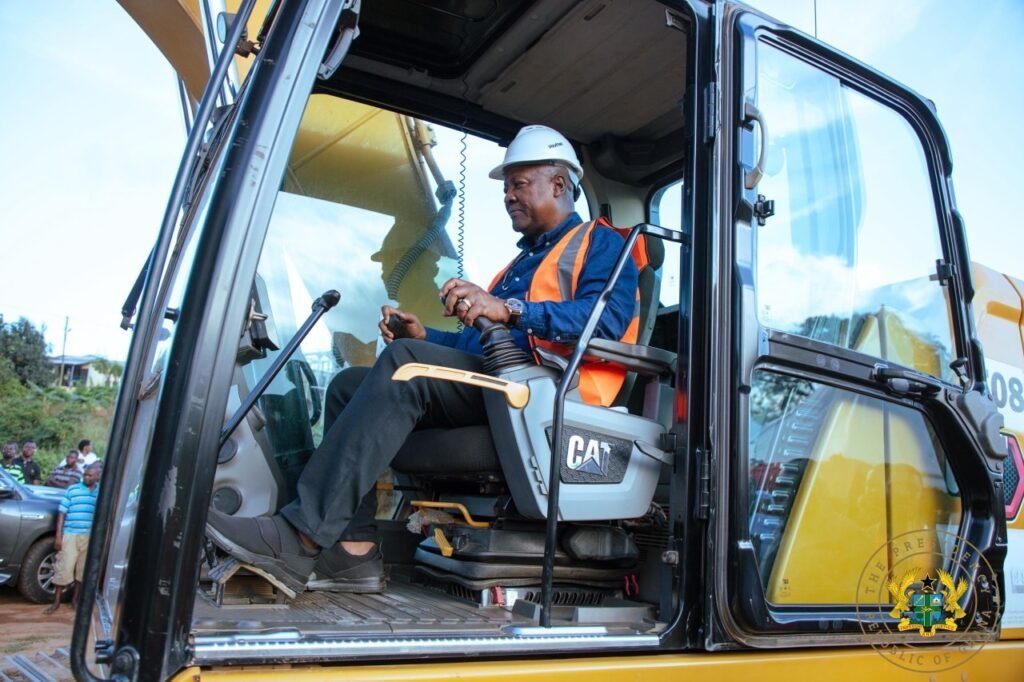
The visibility of road works nationwide has become one of the most tangible expressions of the administration’s development agenda, reinforcing the message that economic recovery must be matched with physical transformation.
Cutting Public Expenditure and Stable Power
At the same time, the administration moved to reduce public expenditure by cutting the size of government from more than 120 ministers to 60, a figure that now stands at 58 following the tragic loss of two ministers in a helicopter crash in August. This decision was presented as both a cost-saving measure and a symbolic commitment to restraint at the highest levels of the executive.
In the energy sector, the absence of widespread power outages over the year has been one of the administration’s quieter but significant achievements. Improved grid stability has been linked to policy reforms, renegotiated debts with independent power producers, and stricter adherence to the Cash Waterfall Mechanism.
For businesses and households accustomed to disruptions, steady power supply has contributed to improved confidence and productivity. Social interventions have featured prominently as well. Education and social protection initiatives have been central to the administration’s narrative of inclusion.
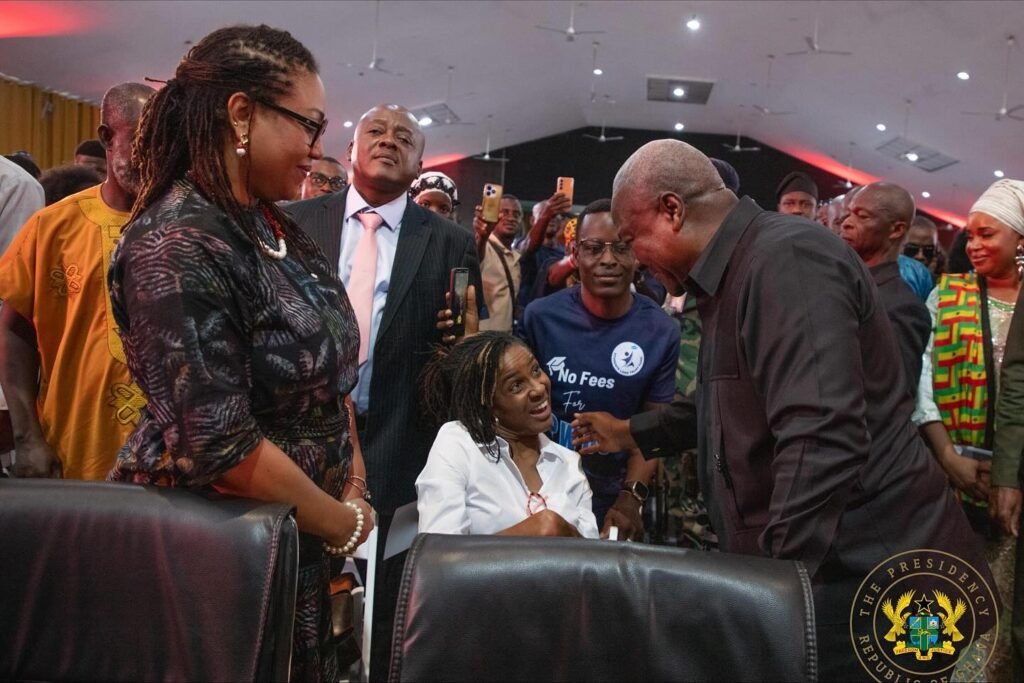
The introduction of a No Fee Stress Policy in tertiary education benefited approximately 156,000 first-year students, easing the burden on families at a time of economic adjustment. The rollout of free education for persons with disability further reinforced the government’s emphasis on equity and access.
Accountability Drive and Galamsey Fight
Governance and accountability have remained at the core of President Mahama’s agenda. Following the work of the preparatory team for Operation Recover All Loot, the Attorney General initiated prosecutions in several high-profile cases, including matters related to the National Signals Bureau and the Skytrain project.
The administration has indicated that additional cases may follow in 2026. Asset declaration rules for public officials have also been enforced more strictly, with defaulting appointees required to forfeit four months of their salaries to the Ghana Medical Trust Fund, a sanction intended to reinforce ethical conduct in public service.
In the natural resources sector, the fight against illegal mining has seen renewed emphasis. The government banned illegal and new mining activities in forest reserves and abolished Legislative Instrument 2462, signaling a tougher stance on environmental protection. While challenges remain, these actions have been framed as part of a broader effort to protect water bodies and restore public trust.
Independent assessments have offered a cautiously positive evaluation of the administration’s performance. BudgIT Ghana scored the President at 72 percent on the 120 Day Social Contract, noting that a majority of the commitments had been fulfilled while some structural reforms were still in progress.
Public opinion surveys suggest improving sentiment, with Global InfoAnalytics reporting a 67 percent approval rating by late December 2025 and more than half of respondents indicating that their standard of living had improved.

High Public Approval
Public reaction to President Mahama’s first year in office has been especially pronounced on social media, where expressions of approval, faith and expectation have dominated commentary.
Many users have praised what they described as a calmer and more deliberate style of leadership. Phyllis Puttick wrote that the President’s humility and gratitude to God would preserve his leadership, urging him to remain focused and steadfast.
Mercy Gati described the one year anniversary thanksgiving service as a reflection of unity and humility, praying for continued wisdom and strength as the country moves forward. Others framed the moment in more emotional terms.
Senior King Promise declared that Ghana had “gained independence again,” while Citizen Kojo Wilfred described the President as “the stone the builders rejected,” a reference to his political return after earlier defeat.
Beyond praise, some comments also reflected rising public expectations. Traceey Mensah called for more jobs in the coming year, while Issifu Salifu Kanton, who said he mobilised votes for the President, urged faster delivery of major road projects, particularly in the Upper West and Upper East corridors, arguing that infrastructure would define Mahama’s legacy.
Still, the dominant tone across platforms has been one of cautious optimism, with many Ghanaians expressing relief at what they see as improved stability, predictability and restraint in governance after years of economic and social strain.
As Ghana reflects on the first year of President Mahama’s renewed mandate, the prevailing mood appears neither triumphant nor dismissive. Instead, it is marked by cautious optimism rooted in stability, modest gains, and a leadership style that many describe as patient and deliberate.
For many Ghanaians, the true test lies ahead, but the first year has reopened a national conversation about trust, restraint, and the possibility of progress built on calm rather than noise.
READ ALSO: “This Was No Accident” – BoG Governor Credits Tough Monetary Discipline for Inflation Plunge