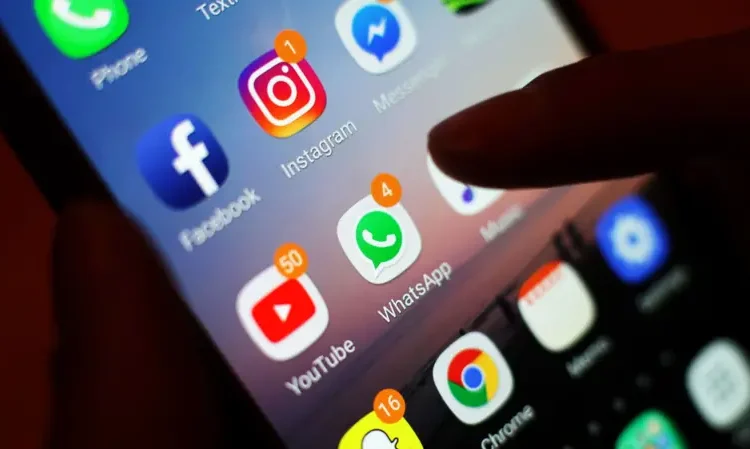
The lower house of the French Parliament has voted in favour of banning children aged below 15 years from social media, amid growing concerns about online bullying and mental health risks.
The National Assembly legislators approved the bill by a vote of 130 to 21. The legislation will now go to the Senate before a final vote in the lower house.
Centrist lawmaker Laure Miller, who presented the bill, told the lower chamber that the law was “setting a clear boundary in society and saying social media is not harmless.”
“Our children are reading less, sleeping less, and comparing themselves to one another more. This is a battle for free minds.”
Laure Miller
Former Prime Minister, Gabriel Attal, who leads Macron’s Renaissance party in the lower house, said he hoped that the Senate would pass the bill by mid-February so that the ban could come into force on 1 September.
He added that “social media platforms will then have until December 31 to deactivate existing accounts” that do not comply with the age limit.
In addition to combating the impact of screens and social media on the mental health of young adolescents, Attal stressed that the measure would counter “a number of powers that, through social media platforms, want to colonise minds.”
“France can be a pioneer in Europe in a month: we can change the lives of our young people and our families, and perhaps also change the destiny of our country in terms of independence.”
Gabriel Attal
The French ban would require platforms to block access to young teenagers through age-verification mechanisms compliant with European Union law.
Far-right lawmaker Thierry Perez also supported the bill, saying that it responded to a “health emergency.” “Social media has allowed everyone to express themselves, but at what cost to our children?” Perez said.
The French legislation also extends an existing ban on smartphones in junior and middle schools to cover high schools. A Harris Interactive survey in 2024 showed 73 percent of the French public supported a ban on social media access for those below 15 years.
As social media has grown, so has concern that too much screen time is harming child development and contributing to mental health problems.
France’s public health watchdog ANSES said this month that social media such as TikTok, Snapchat and Instagram had several detrimental effects on adolescents, particularly girls, though it was not the sole reason for their declining mental health. The risks listed include cyberbullying and exposure to violent content.
Macron Hails Vote On Social Media Ban
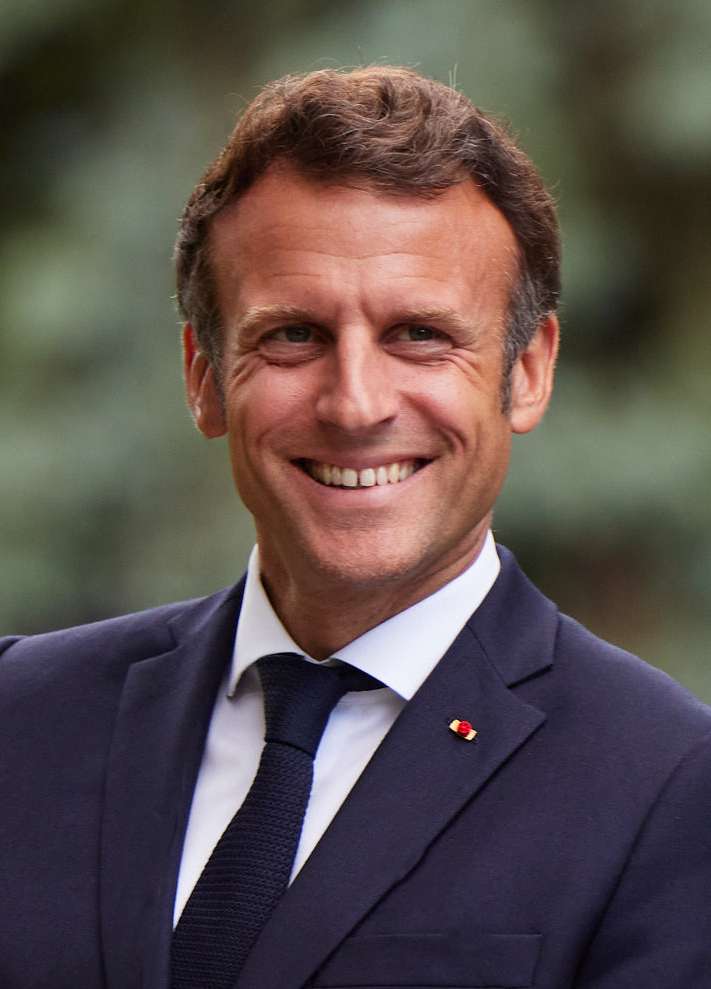
In a post on X, President Emmanuel Macron hailed the vote as a “major step” to protect French children and teenagers.
He had pointed to social media as one factor to blame for violence among young people, reflecting rising public angst over the impact of social media on minors.
Macron said in a video broadcast on Saturday, “The emotions of our children and teenagers are not for sale or to be manipulated, either by American platforms or Chinese algorithms.”
The President said that he wanted the ban in place in time for the start of the next academic year in September.
Australia was the first country to ban children aged below 16 on social media platforms, including Facebook, Snapchat, TikTok and YouTube in December.
Countries including the United Kingdom, Denmark, Spain and Greece are also studying a social media ban. The European Parliament has called for the EU to set minimum ages for children to access social media, although it is up to member states to impose age limits.
Enforcing such bans can be difficult. The Australian government acknowledged the rollout of its ban would be bumpy after children claiming to be younger than 16 years flooded the country’s social media feeds with messages gloating about their continued ability to access networks.
READ ALSO: Trump Hikes South Korea Tariffs to 25%