

The Minister for Trade, Agribusiness and Industry, Hon. Elizabeth Ofosu-Adjare, has finalized a high-level industrial assessment of the Tema Free Zones Enclave, signaling a strategic shift toward aggressive import substitution and price stabilization.
Following a tour of three major manufacturing entities, the Minister reaffirmed that the government is prioritizing “Feed the Industry,” initiatives to ensure that local factories operate at full capacity.
The tour, which included the Deputy Minister for Trade, Agribusiness and Industry, Hon. Sampson Ahi, targeted the operational drivers of the cement and steel sectors to protect consumers from artificial price hikes.
“Reducing imports strengthens the economy, creates jobs, and saves foreign exchange, which ultimately benefits consumers through better pricing. Government will continue to facilitate interventions – particularly in the area of energy – to help industries lower their cost of production.
“We want a win-win situation where industry receives a return on investment and Ghanaians enjoy quality products at affordable prices”
Hon. Elizabeth Ofosu-Adjare, Minister for Trade, Agribusiness and Industry
For Hon. Ofosu-Adjare, the center of this industrial push is the effort to decouple Ghanaian production from global supply chain volatility. By transitioning from imported clinker to local raw materials, the Ministry of Trade, Agribusiness and Industry (MoTAI) aims to insulate the construction sector from exchange rate fluctuations and reduce the demand for foreign currency.
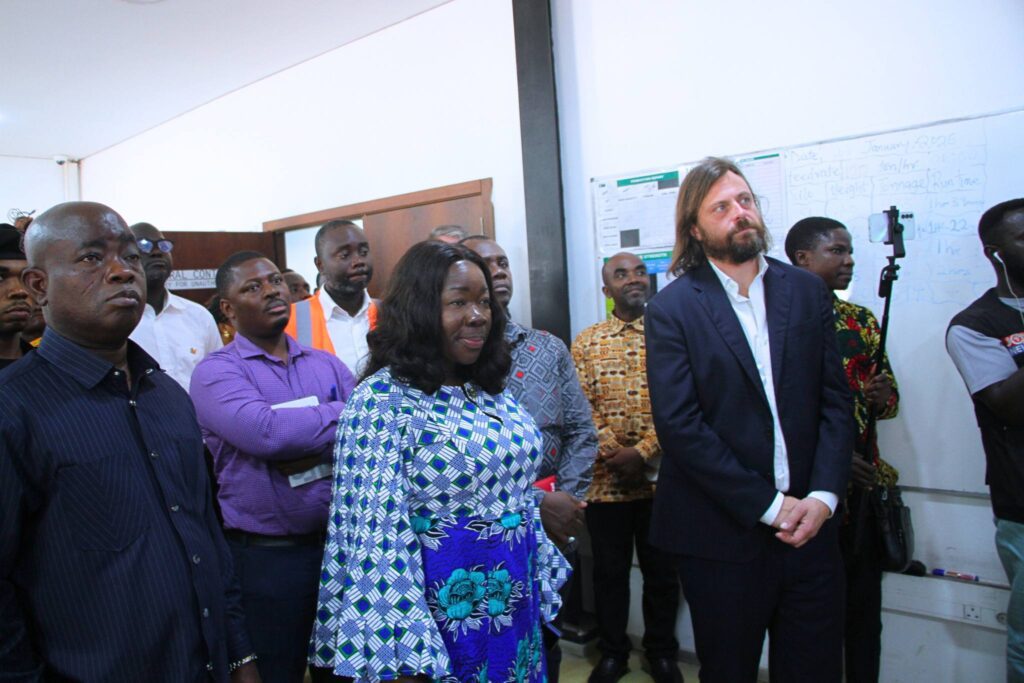
At CBI Ghana Limited, producers of Supacem Cement, the delegation inspected the world’s largest industrial-scale flash calciner for clay. Since its founding in 2016, CBI has invested approximately $145 million in Ghana, with a recent focus on Limestone Calcined Clay (LC3) technology.
This innovation allows the firm to replace up to 40% of traditional clinker with locally sourced calcined clay, effectively reducing carbon emissions and lowering production costs.
Minister Ofosu-Adjare commended the company for maintaining stable price points despite external macroeconomic pressures, describing the adoption of LC3 as a blueprint for the national industrial reset.
Scaling Capacity and Market Stability
The tour continued to Ciments de L’Afrique (CIMAF) Ghana, which currently operates a grinding capacity of 2.2 million metric tonnes.
According to MoTAI, discussions at the facility centered on the direct correlation between the recent stability of the Ghanaian Cedi and the retail price of essential commodities. Management at CIMAF assured the Ministry of the company’s readiness to meet the rising demand for infrastructure projects under the government’s 2026 development framework.
The Minister emphasized that industrial profitability must not come at the expense of consumer protection, stressing that the Ministry will work closely with the Chamber of Cement Manufacturers to address energy costs and access to raw materials.
“The stability of the cedi must translate into tangible benefits for both industry and consumers,” she emphasized.
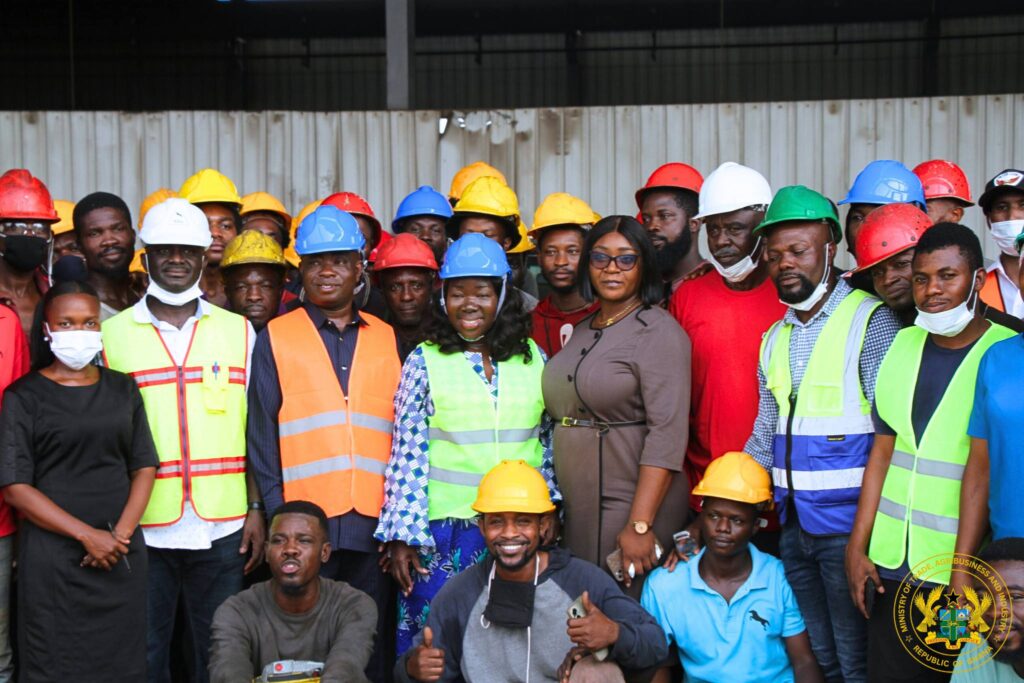
The delegation’s final stop at Rider Steel highlighted the impact of the government’s ban on the export of ferrous and non-ferrous scrap metals. This policy, part of the “Feed the Industry” program, is designed to ensure that local steel manufacturers have a steady supply of raw materials to operate closer to their installed capacities.
MoTAI noted that Rider Steel, which produces 80,000 metric tonnes of steel per annum at its Tema plant, has been a primary beneficiary of this restrictive trade measure.
Hon. Ofosu-Adjare expressed satisfaction with the facility’s use of local inputs and its commitment to job creation, noting that the enforcement of quality standards will remain a top priority for the Ministry throughout the year.
To conclude the tour, Hon. Elizabeth Ofosu-Adjare reiterated that the government is implementing a “Rapid Industrialisation for Jobs,” initiative. This includes the establishment of 24-hour business registration centers and the drafting of a new Competition Bill to prevent monopolistic pricing.
“A resilient and competitive manufacturing sector is the backbone of national economic transformation.
“Government will continue to provide policy support, facilitate inter-agency collaboration, and promote innovation across all industrial sectors. Our goal is to ensure that the industrial base is not only productive but also capable of shielding the economy from external shocks”
Hon. Elizabeth Ofosu-Adjare, Minister for Trade, Agribusiness and Industry
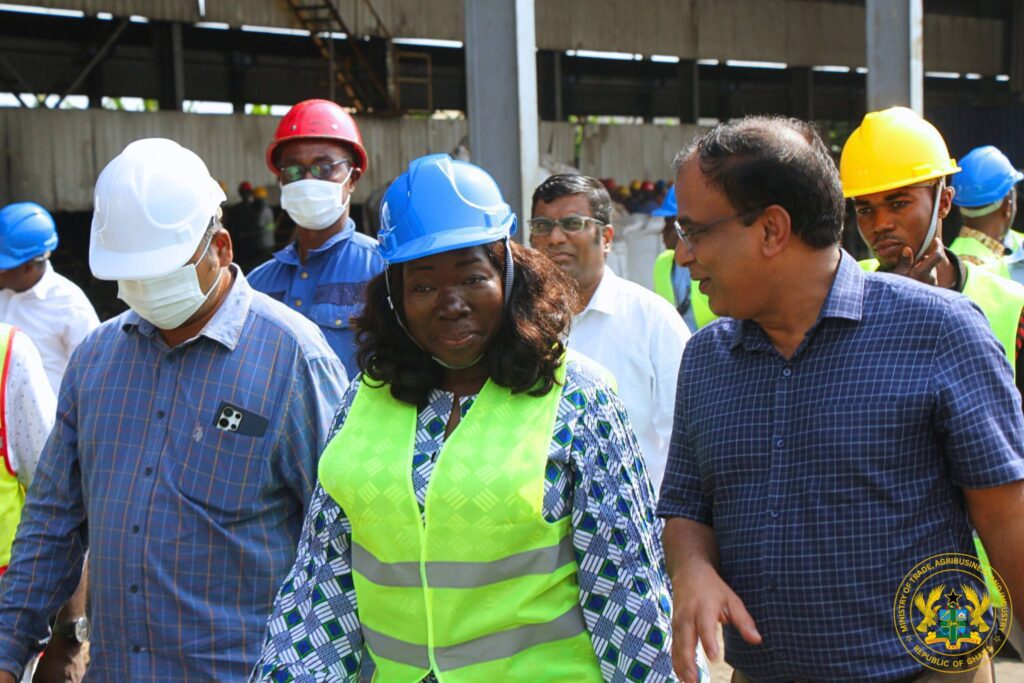
The Ministry’s focus for the remainder of 2026 will be on facilitating inter-agency collaboration to lower the cost of doing business while promoting “Made-in-Ghana” products under the African Continental Free Trade Area (AfCFTA).
READ ALSO: Current Lithium Arrangement is Colonial – Prof. Oquaye