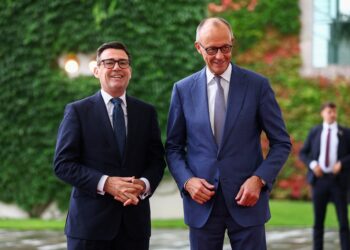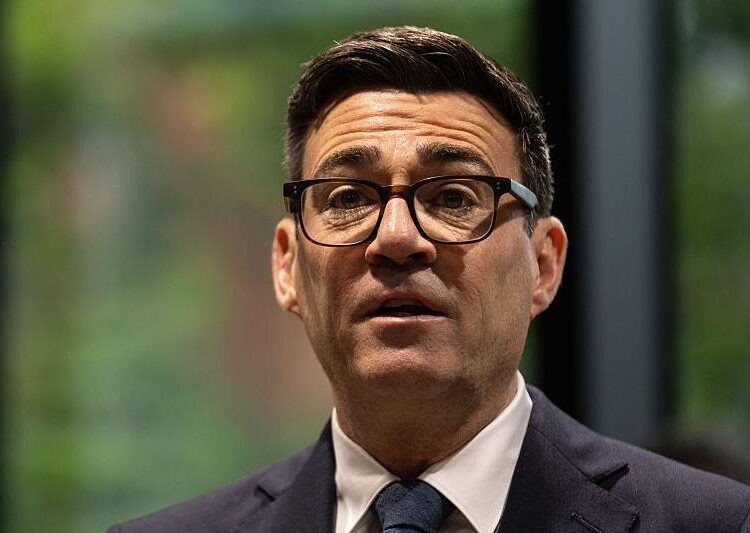
Mayors across England are set to receive sweeping new powers to overrule local councils on major planning applications, as the Labour government seeks to accelerate housebuilding and deliver on its ambition to construct 1.5 million homes by the end of the decade.
The changes will give elected mayors in 13 combined authority areas powers similar to those already held by London Mayor Sir Sadiq Khan, allowing them to “call in” major planning applications for their own consideration rather than leaving decisions entirely in the hands of local councils.
The new powers will apply to proposals involving more than 150 homes, more than 15,000 square metres of commercial space or buildings exceeding 30 metres in height.
According to Housing Minister Matthew Pennycook, the expanded powers as an important tool for mayors seeking to overcome obstacles to development.
He added that the powers were an “essential part of the toolkit that mayors need to effectively deliver new homes and regeneration”.
Pennycook, however, insisted that the government remained committed to the ambition despite acknowledging the scale of the challenge.
He described the target as “really stretching” but argued that the housing crisis demanded an ambitious response.
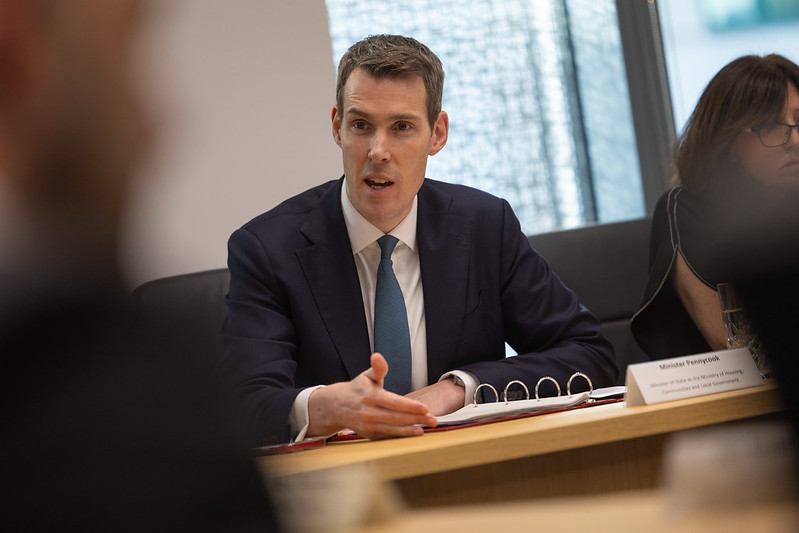
Nearly 180,000 children are currently living in temporary accommodation, he said, making the need for additional housing particularly urgent. “Any smaller target wouldn’t be commensurate with the scale of the challenge,” Pennycook added.
The government’s argument is that stronger regional leadership could help overcome some of the delays associated with the existing planning system, particularly where large developments have implications beyond individual council boundaries.
The new arrangements will apply to mayors in Greater Manchester, Liverpool City Region, the West of England and West Midlands, as well as combined authorities covering North East England, South Yorkshire, West Yorkshire, York and North Yorkshire, Hull and East Yorkshire, Greater Lincolnshire, Cambridgeshire and Peterborough, the East Midlands and Tees Valley.
The government also plans to give mayors the ability to grant “up-front permission” which could allow development to begin without developers having to submit individual planning applications.
A consultation setting out how the new powers will operate is expected to be published in the upcoming weeks.
Burnham Pushes Devolution Agenda as Opposition Warns of Planning Power Grab
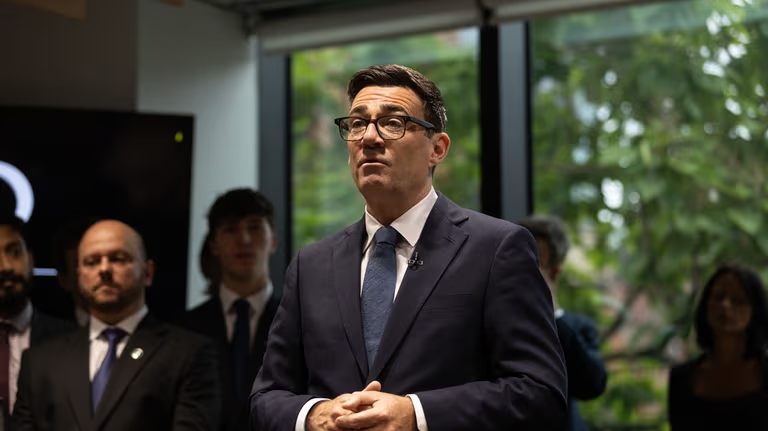
The expansion of mayoral planning powers comes as Prime Minister Andy Burnham seeks to make regional devolution a central feature of his government.
Burnham, who spent nearly a decade as mayor of Greater Manchester before returning to Westminster and becoming Prime Minister, has repeatedly argued that too much political and economic power remains concentrated in London and Whitehall.
His government has pledged to transfer greater responsibility to regional leaders, with housing, transport, economic development and public spending among the areas in which mayors are expected to play a larger role.
Burnham has previously argued that stronger regional leadership can help overcome local political obstacles to development while ensuring that major decisions are considered from a wider economic perspective.
“Challenge does need to be made to local decision-making and actually it cuts both ways. Sometimes it’s the other way round. It’s the local authority putting forward something that’s unacceptable in terms of the impact on the community. It’s a two-way street.”
Andy Burnham
His position reflects a broader argument within the government that local decision-making should not automatically prevent developments that have strategic importance beyond a single council area.
Last month, Burnham promised to give all mayors a share of income tax revenue, saying he wanted to “bring power home” to “every postcode”.
Earlier this week, he also announced a secondment programme aimed at placing high-performing civil servants within mayoral offices to strengthen their capacity to deliver regional programmes.
The latest planning reforms therefore form part of a wider attempt to reshape the relationship between central government, local authorities and regional mayors.
However, the approach has faced criticism even within Labour’s wider political landscape, with opponents warning that concentrating authority in elected mayors could create a two-tier system between areas with mayoral governments and those without them.
The Conservatives accused the government of weakening local democracy by reducing councils’ ability to determine what happens in their own communities.
Shadow Housing Secretary Sir James Cleverly stated that the government was “simultaneously stripping councils across the country of their ability to make planning decisions in their own communities, while making it easier to build traveller sites against local wishes.”
He also questioned the housing performance of Labour mayors and argued that his party had a stronger strategy for stimulating construction.
The Liberal Democrats similarly criticised the reforms, warning that transferring authority away from local councillors could weaken community involvement in planning decisions.
Gideon Amos, the party’s housing and planning spokesperson, said “taking powers away from communities and local councillors is taking powers away from local people.”
“Instead of silencing residents and handing mayors a blank cheque, the government should be empowering local councils with the resources to deliver genuinely affordable homes alongside the infrastructure to support them.”
Gideon Amos
The Greens also questioned whether expanding mayoral powers would address the deeper financial pressures facing local authorities.
Mothin Ali, Deputy Leader of the Greens, described “more powers for mayors to direct local councils” as “more tinkering from the Labour government when local authorities continue to be forced by government into austerity budgets.”
Reform UK went further, accusing the government of pursuing “centralisation in disguise.”
The Burnham government, however, points to London’s experience as evidence that mayoral intervention can help unlock major developments.
Pennycook argues that the existing “call in” powers held by the London mayor had helped “unblock strategic growth sites” in the capital.
READ ALSO: Hull City Secure First Premier League Win Over Manchester United on Top-flight Return