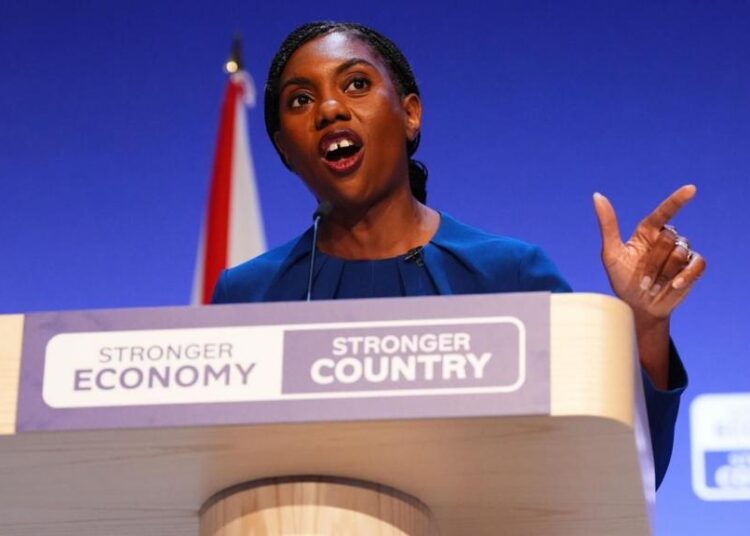
Conservative leader Kemi Badenoch has used her keynote address at the party’s conference in Birmingham to set out a vision for Britain built around lower taxes, stronger borders and greater economic growth
Addressing Conservative activists, Badenoch presented the party as an alternative to the Labour government under Prime Minister Andy Burnham.
The centrepiece of her economic offer is a pledge to scrap inheritance tax on family homes and raise the threshold to £1 million for couples passing their homes to their children.
“The Labour Party thinks it is selfish to pass on what you have earned to your children; we don’t. The Conservatives are and always have been the party of home ownership.
“We understand why putting roots down and having a stake in society matters; passing on your home to your family is one of the most human instincts of all.”
Kemi Badenoch
She nevertheless rejected calls for the immediate abolition of inheritance tax altogether, arguing that any tax reduction must be accompanied by a credible explanation of how it would be financed.
Her speech also placed home ownership at the centre of the Conservative political identity. Badenoch argued that people who work hard and save should be able to pass the fruits of those efforts to their children and grandchildren, presenting the family home as both an economic asset and a symbol of family continuity.
Alongside those commitments, she outlined proposals affecting younger people, including measures to reduce student loan interest and encourage employment among under-25s, while promising to protect pensioners.
The collection of measures underpinned her declaration that the Conservatives had “something for everyone,” as she sought to broaden the party’s appeal while retaining its emphasis on lower taxation, work and ownership.
Badenoch Draws Clear Line Against Reform
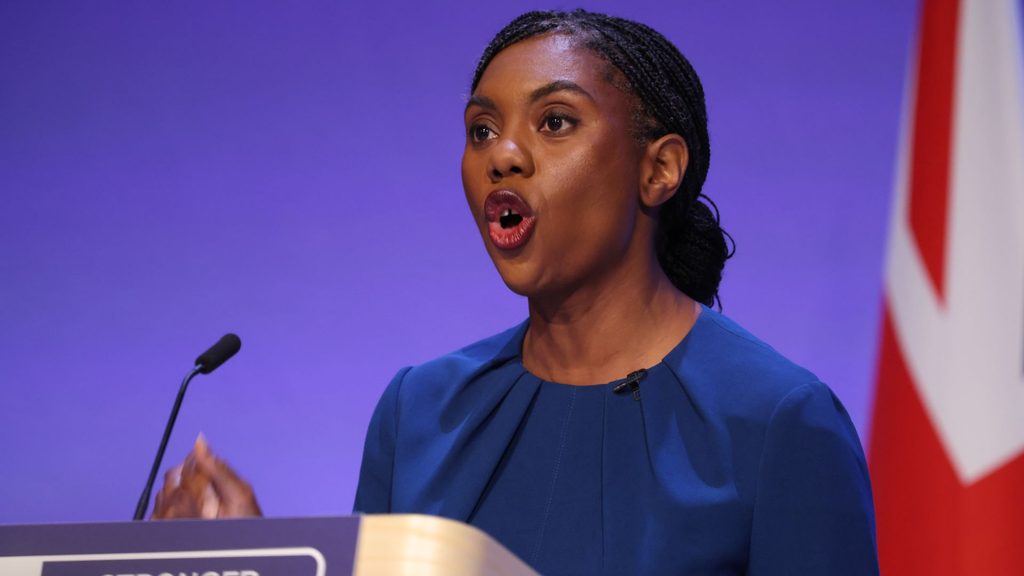
Badenoch’s economic programme was accompanied by a determined effort to define what the Conservative Party should represent, particularly as Reform UK continues to compete for support among right-leaning voters.
The Conservative leader rejected calls for a pact with Nigel Farage’s party, directly addressing members and politicians who have advocated some form of cooperation between the two parties.
“For those people who say unite the right, I say not with them,” Badenoch declared.
She argued that the Conservatives should not surrender their identity in an attempt to consolidate the political right, insisting that “we are the Conservative Party.”
Moreover, she pledged that a Conservative government would “deport illegal migrants, not house them” and also promised to protect women’s privacy, including for those who believe biological sex should remain a significant basis for public policy.
“I don’t know whether you’ve noticed, but I am Black, I am British. I am proud of my country. I’m proud of our history, all that we have done and all that we will do in the world.”
Kemi Badenoch
The remarks formed part of a wider argument that the Conservatives could offer a more inclusive conception of British identity while maintaining their emphasis on national pride.
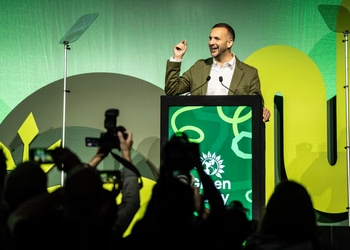
Badenoch also attacked the Green Party over a motion at its conference declaring “Zionism is racism,” condemning antisemitism and reaffirming Conservative support for the Jewish community.
“Exactly three years ago today, we saw the horrific October 7 attacks, the worst slaughter of Jews since the Holocaust. The Conservative Party stands with the Jewish people. We will never stop fighting antisemitism.”
Kemi Badenoch
Comparing the Conservatives with Marks & Spencer, Badenoch argued that the party had to learn from its mistakes, adapt to changing expectations and rebuild public trust.
Growth Placed at Heart of Conservative Programme
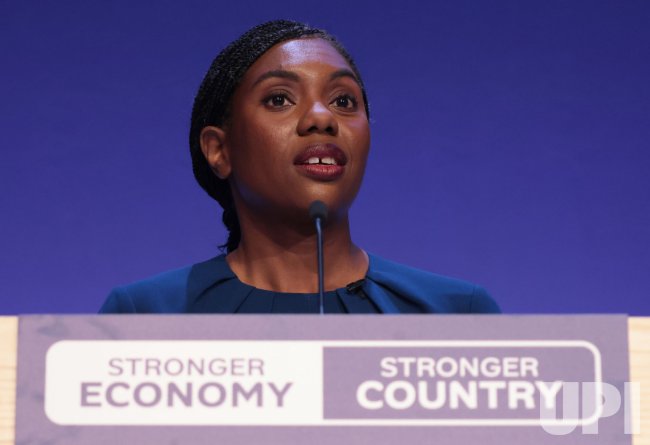
Economic growth provided the final major pillar of Badenoch’s vision, with the Conservative leader promising an approach focused on construction, infrastructure, energy and the removal of regulatory barriers to development.
“I’ve got a plan to get Britain growing again, the kind of growth that you can actually see and feel,” she stated.
Badenoch stated that growth would be central to the programme of the next Conservative government, with her proposals including new nuclear power, expanded infrastructure and changes to planning and environmental rules.
She argued that excessive regulation had prevented development and pledged to remove what she described as obscure rules used by activists to block construction.
Her approach included support for new nuclear projects and an expansion of Heathrow Airport.
Badenoch urged the government to proceed with a third runway at Heathrow, arguing that the airport’s future was a national economic issue rather than a matter that could be treated solely as a regional concern.
Her economic argument also focused on employment, particularly for younger people. Badenoch framed successful growth in practical terms, arguing that the measure should be whether people have greater access to jobs and opportunities.
The growth agenda is closely tied to her criticism of Burnham, whom she accused of offering costly government programmes without adequately explaining how they would be funded.
She also attacked the proposed national care service and rejected any reopening of negotiations over Brexit, describing such a move as “a terrible idea.”
Badenoch used her criticism of Burnham to present a broader ideological divide over the role of government, arguing that Conservatives would focus on economic expansion and individual responsibility rather than greater state intervention.
She concluded by insisting that the Conservatives were prepared for the next election and wanted to return to government.
READ ALSO: Ghana Inflation Rises to 5.2% as Domestic Pressures Persist