As the African Continental Free Trade Area (AfCFTA) moves from policy to practice, the Association of Ghana Industries (AGI) has issued a strategic roadmap for local Small and Medium Enterprises (SMEs) looking to dominate the continental market.
Speaking at the African Prosperity Dialogue at the Accra International Conference Centre, AGI CEO Mr. Seth Twum-Akwaboah warned that while the “Single Market,” offers unprecedented opportunity, only firms with “bulletproof” internal systems will survive the expansion.
“Successful cross-border expansion for SMEs requires strong internal capacity and a supportive business environment. Governance, record-keeping, consistency in supply, quality assurance and the ability to meet regulatory standards are critical for firms seeking to enter Africa’s single market”
Mr. Seth Twum-Akwaboah, AGI CEO
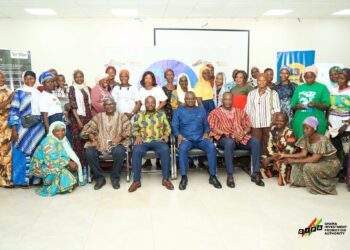
The forum, a high-level knowledge-sharing event hosted by KPMG and organized by the African Prosperity Network, attracted over 1,000 stakeholders.
The diversity of the crowd – ranging from state policymakers to youth entrepreneurs – underscored the urgency of the session titled “Scaling Up Your SME for Cross-Border Business in Africa’s Single Market.” For Twum-Akwaboah, the message was clear: African prosperity cannot be imported; it must be built through the resilience of indigenous industry.
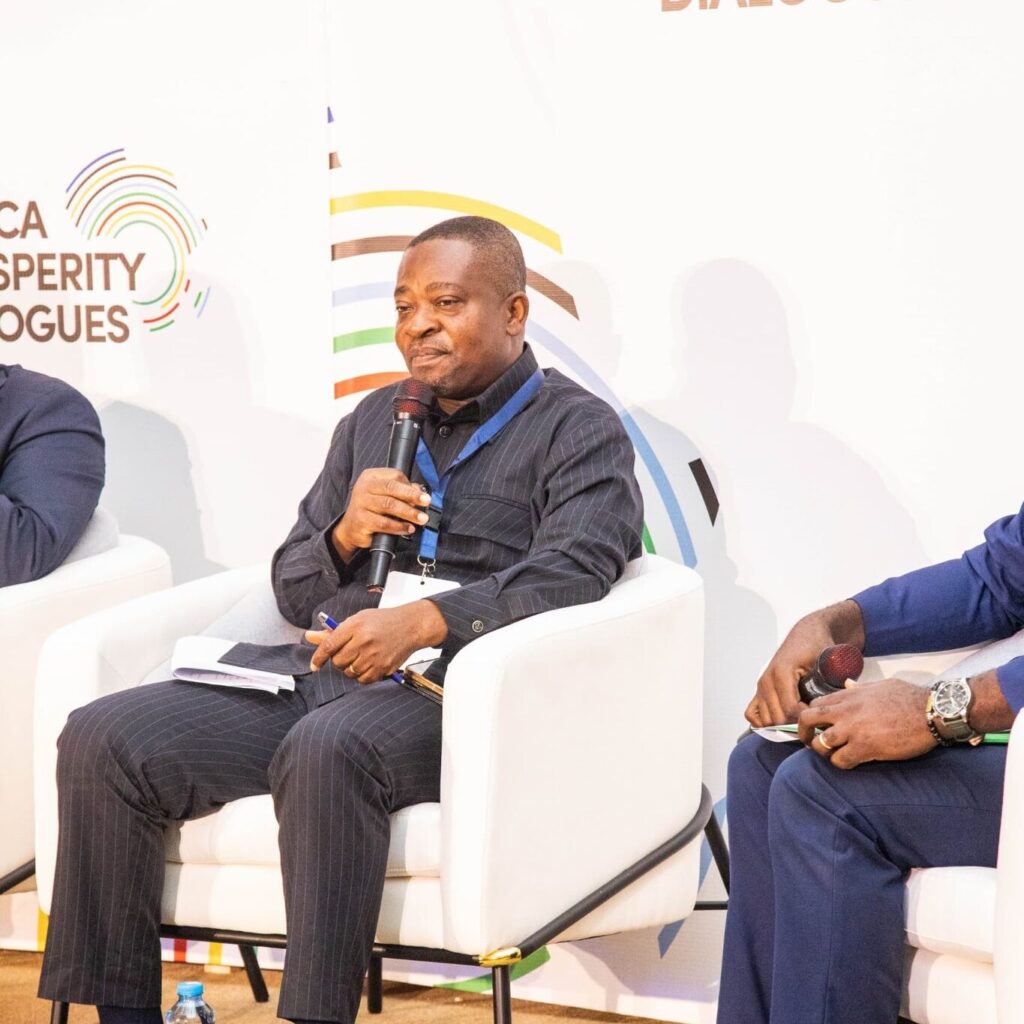
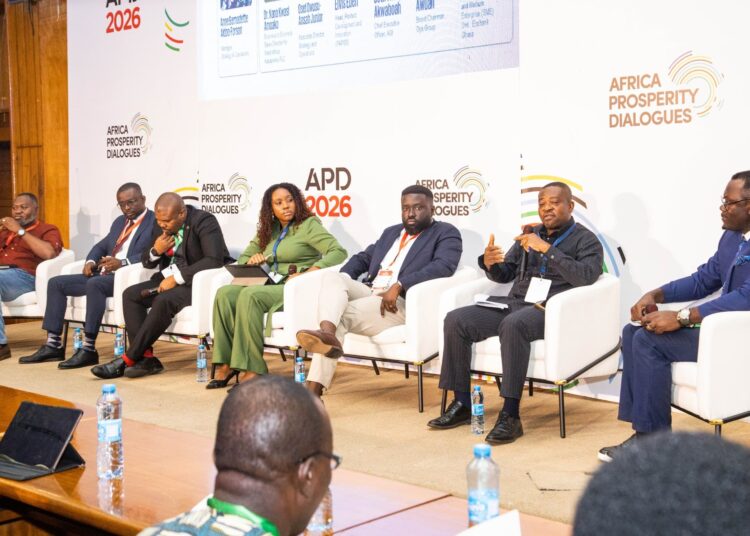
The AGI chief used the panel to deconstruct the “export myth,” arguing that many SMEs fail not because of a lack of demand, but because of a lack of internal discipline. He identified five non-negotiable pillars: professional governance, meticulous record-keeping, supply consistency, rigorous quality assurance, and regulatory compliance.
In a market as vast as Africa, inconsistency is a terminal flaw. Mr. Twum-Akwaboah noted that a single failed order due to poor quality or supply chain breakdown can blacklist a Ghanaian brand across multiple jurisdictions. To mitigate this, he advised a “gradual growth,” model.
By building operational structures that can handle incremental demand, SMEs avoid the “overpromising” trap that often leads to early-stage bankruptcy in international trade. The AGI boss further advised SMEs not to overpromise but grow gradually, build trustworthy partnerships, and strengthen their operational structures to meet market demand.
Collective Advocacy and Networking Power
Beyond internal controls, the dialogue focused on the external ecosystem.
Joining the AGI CEO on the panel were industry titans. The consensus among the experts was that individual SMEs are too small to fight the bureaucratic and logistical hurdles of cross-border trade alone.

Mr. Twum-Akwaboah stressed the importance of belonging to business associations like the AGI. These organizations provide a “shield” for smaller firms, offering collective advocacy to influence trade policy and providing access to market intelligence that would otherwise be too expensive for a single SME to procure.
In the unpredictable landscape of African trade, belonging to a network is not a luxury – it is a survival strategy.
The dialogue also leaned heavily into the broader conference theme of empowering women and youth. With representatives from the Pan-African Payment and Settlement System (PAPSS) on the panel, discussions turned to how digital innovation can level the playing field.
For women-led SMEs, which often face greater hurdles in accessing traditional credit, digital payment systems like PAPSS are removing the currency conversion barriers that previously made small-scale cross-border trade prohibitively expensive.
The AGI CEO encouraged young entrepreneurs to lean into these innovations but cautioned that technology is a tool, not a substitute for solid business fundamentals. The AGI’s role in 2026 will be to bridge this gap – ensuring that the energy of Ghana’s youth is channeled into businesses that are structured for the long haul.
The session was aimed at fostering insightful discussions and practical recommendations which align closely with the broader conference theme, ‘Empowering SMEs, Women and Youth in Africa’s Single Market: Innovate. Collaborate. Trade.’

As the event concluded, the takeaway for the 1,000-strong audience was a mix of caution and ambition. The African Single Market is no longer a distant dream, but a competitive arena where only the best-organized firms will thrive.
Mr. Twum-Akwaboah’s closing remarks served as a call to action for Ghanaian industrialists to look inward and fix their “house” before stepping onto the continental stage.
READ ALSO: Mahama Seeks Deeper Ghana-Zambia Partnership During State Visit