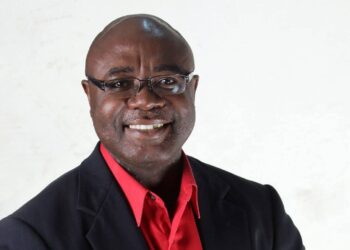
Mr. Isaac Tandoh, the Chief Executive Officer of the Minerals Commission, has called for a decisive shift in Africa’s extractive sector by urging the continent to reject foreign-imposed definitions of “critical minerals.”
Speaking at a high-level roundtable during the 2026 African Mining Indaba, Tandoh argued that adhering to definitions set by the Global North risks relegating Africa to a perpetual source of raw materials rather than a hub for industrialization.
“Africa should define critical minerals in Africa’s own terms, anchored in our development objectives, our people’s needs, and our continent’s sustainable future. Minerals in Africa are not just inputs for the clean energy revolution; they are the bricks and mortar of African factories, power plants, and digital economies.”
Mr. Isaac Tandoh
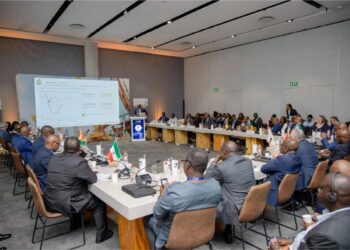
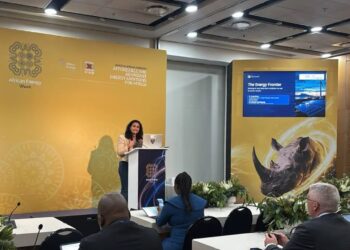
The call for an Africa-centered mineral framework was made at the Ngorongoro Crater Stage in Cape Town, where industry leaders debated whether the term “critical minerals” truly serves the continent’s interests.
Mr. Tandoh emphasized that Africa’s development objectives and the sustainable future of its people must be the primary anchors for how these resources are categorized.
He warned that without a sovereign definition; the continent remains vulnerable to an energy-transition agenda that prioritizes external supply security over local value addition.
The Cost of Foreign Definitions

The current global landscape for critical minerals has largely been shaped by the economic and national security needs of the United States and the European Union.
By defining “criticality” based on supply chain risks to their own high-tech and defense industries, the Global North has effectively created a system that disadvantages African nations.
This foreign-centric approach often incentivizes the rapid extraction and export of raw ores like lithium, cobalt, and copper to meet international net-zero targets while ignoring the domestic infrastructure needs of the source countries.
Consequently, Africa faces a “triple dependency” on foreign actors, where the continent provides the essential ingredients for the global energy transition but captures minimal economic value.
According to the Minerals Commission CEO, the lack of a unified African definition has allowed international buyers to exploit competitive dynamics between neighboring countries, leading to a “race to the bottom” regarding fiscal regimes and environmental standards. As Tandoh noted, “If we simply adopt foreign definitions, we risk exporting raw ore while importing finished goods,” a cycle that perpetuates economic stagnation.
A Three-Tiered Sovereign Framework

To reclaim control over its natural wealth, the Minerals Commission CEO proposed a radical three-tier framework designed to align mineral extraction with continental growth.
This system categorizes resources into Core Development Minerals, which are essential for powering Africa’s own electrification and factories; Global Energy Transition Minerals, which serve international demand but must be leveraged to build regional processing capacity; and Guardrail Minerals, which require stringent governance due to high environmental and social risks.
This proposed structure is built upon three non-negotiable principles: governance, value addition, and adaptability. Tandoh insisted that “transparent licensing, beneficiation, and a Pan-African monitoring system are not optional; they are obligations to future generations.”
By harmonizing these standards across the continent, Africa can move away from being a “warehouse for other people’s transitions” and toward becoming an integrated ecosystem for steel, batteries, and electronics.
The Critical Minerals Charter
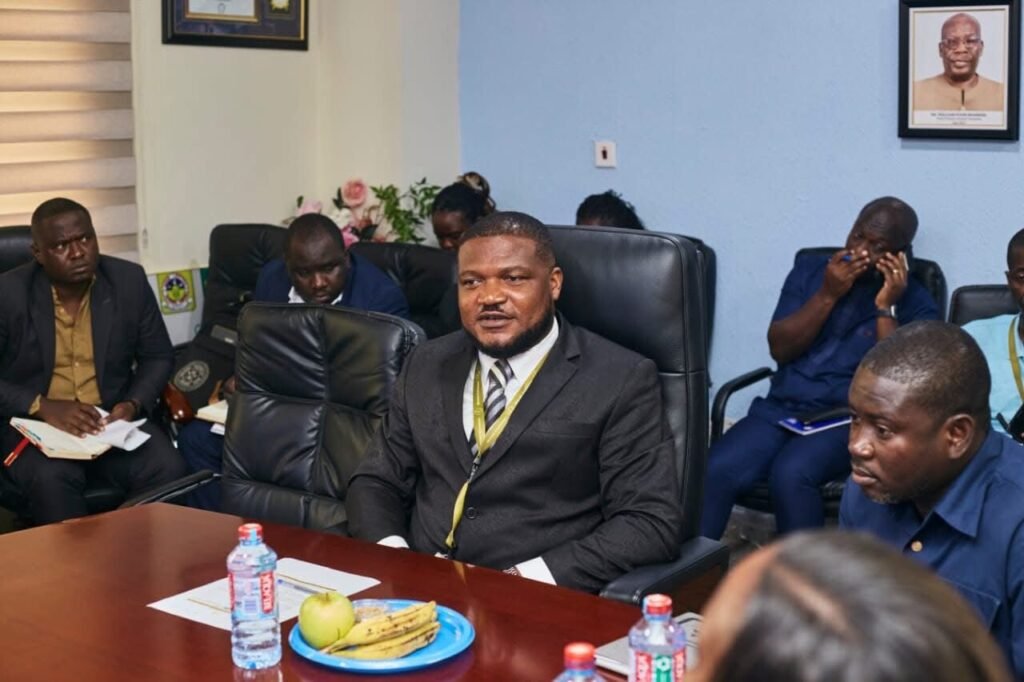
The pinnacle of this vision is the establishment of a Critical Minerals Charter, a document intended to set clear milestones for skills development, environmental stewardship, and mandatory beneficiation targets.
Mr. Isaac Tandoh urged that this charter must be co-created with governments, civil society, and local communities to ensure that the “extractive sector becomes a catalyst for broad-based growth” rather than an enclave of foreign interests.
The CEO’s address at the Indaba serves as a rallying cry for African leaders to engage with global partners as “co-investors in skills and technology transfer” rather than mere buyers of ore. By defining its own path, the continent seeks to transform its geological endowment into a foundation for true sovereignty and long-term prosperity.
READ ALSO: AFC Urges Africa to Align Mineral Wealth with Industrial Demand