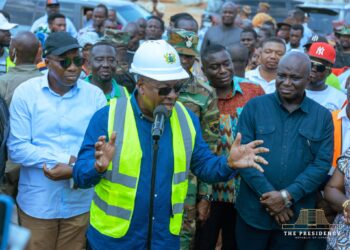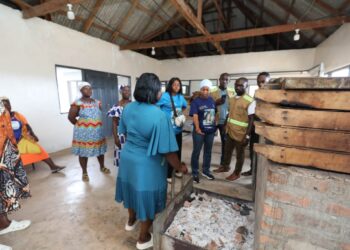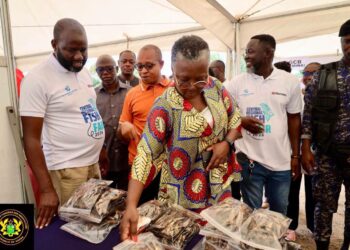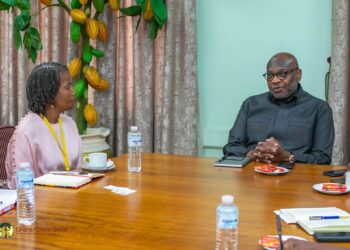
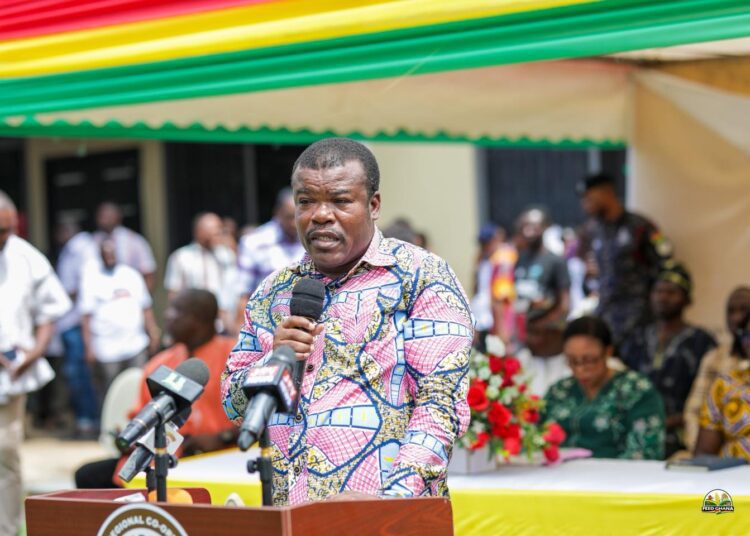
The National Coordinator for the Feed Ghana Programme, Hon. Bright Demordzi, has officially signaled the commencement of a decentralized poultry revolution in the Greater Accra Region – during a recent high-profile ceremony at the Greater Accra Regional Coordinating Council, which marked the transition of the Nkoko Nketenkete initiative from policy planning to direct household impact.
By placing live birds and specialized poultry feed directly into the hands of local beneficiaries, Hon. Demordzi noted that the government is moving to decentralize the nation’s poultry production, transforming ordinary backyards into productive economic units to curb Ghana’s heavy reliance on imported meat.
“The event, which saw the participation of the Greater Accra Regional Minister, Hon. Linda Ocloo, along with Members of Parliament and local executives, serves as the operational blueprint for a wider regional rollout intended to reach every constituency in the capital”
Feed Ghana Programme
The Nkoko Nketenkete initiative is a core pillar of the broader Feed Ghana Programme, designed by the Government through the Ministry of Food and Agriculture (MoFA) to serve as both a food security measure and an economic recovery tool.
By focusing on household-level production, the government aims to create immediate employment for women and youth while rebuilding a value chain that was once a staple of the Ghanaian rural and peri-urban economy.

Hon. Demordzi emphasized that this grassroots approach is essential for achieving long-term self-sufficiency, as it aggregates the output of thousands of small producers to meet national demand.
He affirmed Government’s commitment to rebuild the poultry value chain, use the Nkoko Nketenkete initiative as an economic recovery tool to create jobs and reposition the country towards self-sufficiency in poultry.
This strategy according to Hon. Demordzi directly addresses the structural bottlenecks of high entry costs and feed unavailability that have historically discouraged small-scale farmers. By providing the “starter pack,” of birds and feed, the state is lowering the barrier to entry and fostering a new generation of agripreneurs within the city’s outskirts and residential neighborhoods.
Regional Leadership and Oversight
The successful launch in Greater Accra was the result of intensive coordination between the National Feed Ghana Secretariat and regional authorities.
Prior to the distribution, Hon. Bright Demordzi and his team held strategic discussions with Hon. Linda Ocloo to ensure that the distribution process remains transparent and reaches the most vulnerable households.

The involvement of Metropolitan, Municipal, and District Chief Executives (MMDCEs) ensures that the birds are not just handed out as political gifts but are treated as economic assets that require strict adherence to animal health and biosecurity guidelines.
The presence of Directors of Agriculture at the ceremony highlighted the technical oversight accompanying the birds. These officials were tasked with providing the ongoing extension services necessary to ensure high survival rates and to help beneficiaries navigate the complexities of modern poultry management.
The symbolic distribution at the Regional Coordinating Council is merely the first phase of a larger regional mandate. With each constituency set to receive a dedicated quota of birds, the cumulative effect of these “backyard businesses,” is expected to significantly reduce the national demand for frozen imports.
This initiative is being framed as a “national movement,” that empowers citizens to play an active role in the country’s agricultural transformation, moving away from a model of passive consumption toward one of active production.
As the distribution moves into high gear, the focus remains on sustainability. The government’s provision of initial feed is designed to bridge the gap until the birds reach maturity, at which point the income generated from egg and meat sales can be reinvested into subsequent cycles.
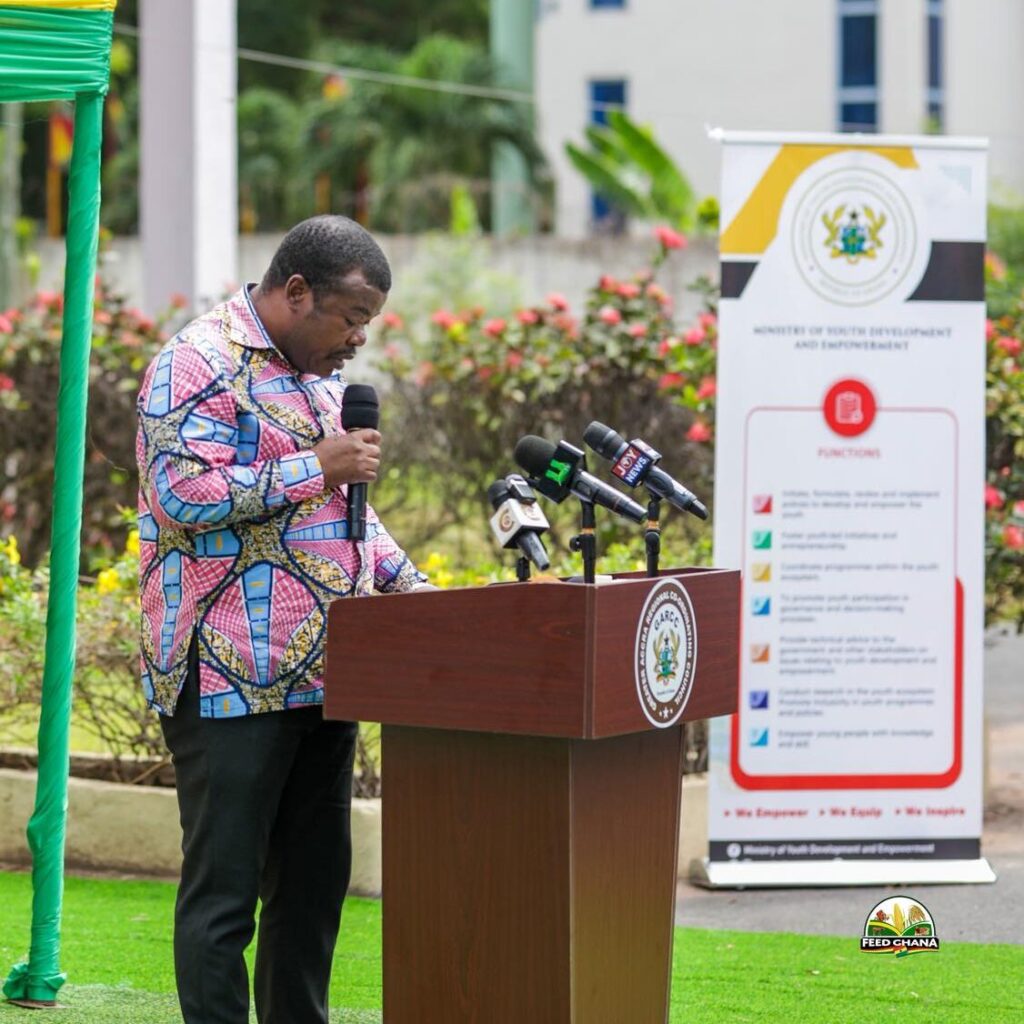
For the Greater Accra Region, the Nkoko Nketenkete project represents more than just a distribution exercise; it is the beginning of a self-reliant future where the path to prosperity starts right in the family backyard.
READ ALSO: Governance Reforms Boost Banking Stability- GAB CEO