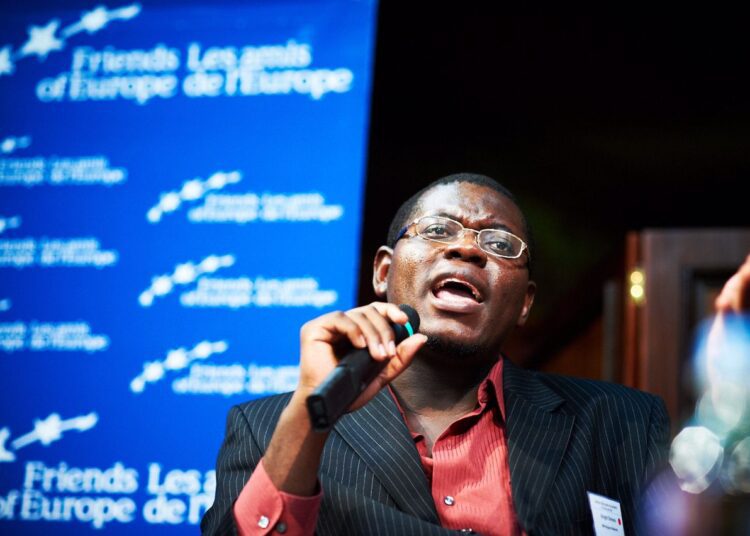
Bright Simons, renowned policy analyst has called for a “digital salvation” of the African extractive sector through the implementation of Digital Mineral Information Rights (DMIR).
This strategy moves beyond the conventional focus on taxing existing mines, instead prioritizing the modernization of geological data management to jumpstart stagnant exploration.
By reimagining geological information as a sovereign digital asset, Bright Simons argued that African states can reverse their declining share of global exploration investment and secure a competitive edge in the green energy transition.
“The path to prosperity does not lie in waiting for the world to come knocking for Africa’s ‘30%’, but in aggressive innovation such as Digital Mineral Information Rights and fiscal regime coding. We must move beyond a diagnosis of what is wrong to the granular engineering of how to fix it.”
Bright Simons
According to the policy analyst, “This involves transforming geological data into a liquid asset class to attract the venture capital that currently ignores the continent.”
The urgency of this digital pivot is underscored by the dramatic collapse of Africa’s share in global exploration spending, which has plummeted from 16% to approximately 10%.
This decline is exacerbated by a sophisticated new threat termed “Geological IP Arbitrage,” where advanced AI firms utilize legacy African data to identify “mirror geologies” in more stable jurisdictions like Brazil or Australia.
To combat this, Bright Simons proposed the “Royale Protocol,” a framework designed to unbundle mineral exploration from extraction.
This protocol incentivizes global data scientists and universities to develop high-fidelity “Predictive Kernels” of the continent’s subsurface by granting them programmable rights to future royalties, effectively turning “dusty compliance burdens” into a liquid, investable asset class.
Beyond the Extraction Trap: The Royale Protocol

The current African mining model is increasingly viewed as obsolete because it fails to incentivize the high-tech discovery phase of the mineral lifecycle.
Bright Simons proposed “Royale Protocol” functions as a decentralized “chain-of-benefits” algorithm.
By assigning ownership and value to the data itself, the protocol ensures that if a miner hits a deposit using a specific digital model, the original data developers are compensated.
This “digital salvation” aims to create a sandbox for regional harmonization, moving the industry away from “comfortable myths” toward a future where “supply-strategy stress-testing” and “fiscal regime coding” dictate the pace of industrialization.
Combatting AI-Driven Data Poaching and Arbitrage

A critical component of this new strategy is defending African resources against “Geological IP Arbitrage.” Currently, the continent is inadvertently “training the algorithms that will be used to de-risk its competitors.”
By formalizing Digital Mineral Information Rights, states can prevent the unilateral scraping of their legacy data by foreign AI firms.
This framework ensures that the intellectual property derived from African soil remains an economic lever for the continent, rather than a tool for diverted investment.
Bright Simons argues that without this protection, Africa remains a mere laboratory for refining the predictive tools that enrich safer, competing jurisdictions.
The STRIVE Model and the Feldspar Pilot

To operationalize this vision, the strategy introduces the “STRIVE” model of mineral prioritization, focusing on the granular engineering of resource management.
A key recommendation is the implementation of a low-stakes “feldspar pilot,” designed to stress-test digital mineral rights in a controlled environment.
This pilot serves as a precursor to broader regional integration, allowing West African states to refine “smart fiscal designs” before applying them to high-value industrial minerals.
By adopting this “digital public infrastructure,” the extractive sector can finally attract the intellectual firepower necessary to transform the continent’s vast, untapped geological potential into measurable economic growth.
READ ALSO: Mahama Mourns Ghanaians Killed in Burkina Faso Attack